Selling Land With Planning Permission: How to Get Full Value
Sep 15, 2026 · 12 min read
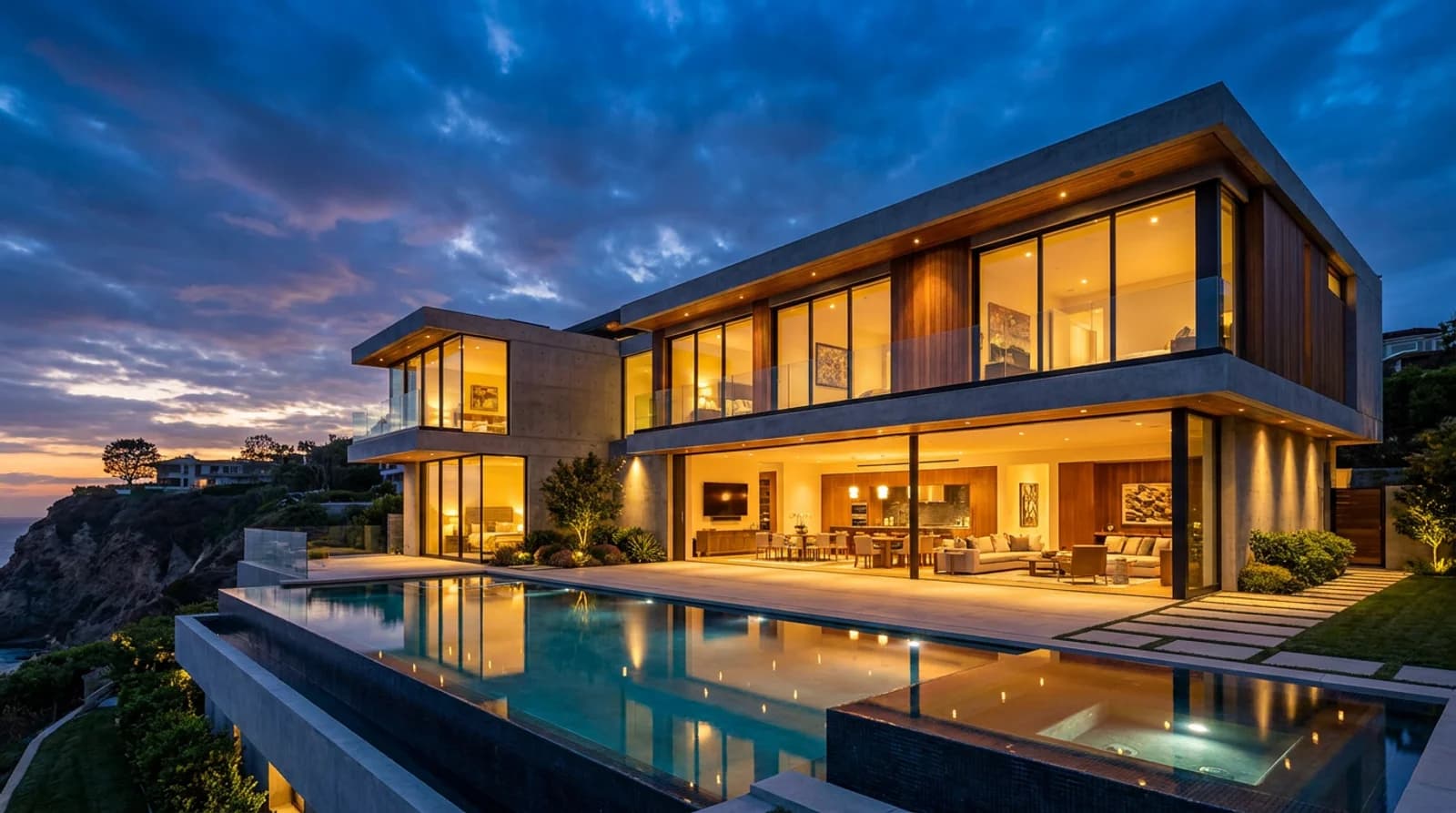
Selling land with planning permission? Price it on the consent, hand over a clean information pack and show buyers the finished house before they visit.
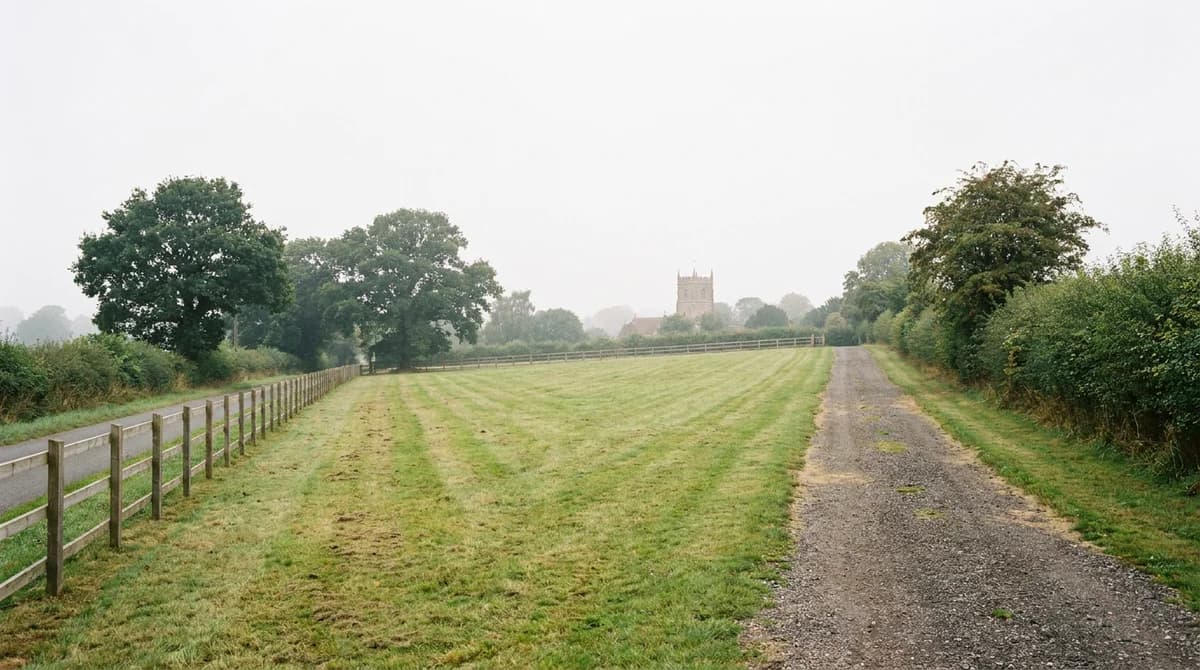
Selling land with planning permission comes down to three things: the consent, an information pack a buyer's solicitor can read in an afternoon, and visuals a buyer can price from. Get those right and the site is priced on the house it can become, not the field it is today. Miss one and every offer arrives conditional.
How Does Planning Permission Change What You Can Ask?
Without consent, land is priced on what it does now: grazing, a paddock, the end of a garden. Hope value for a future consent is discounted hard for risk and delay. With consent, the price is worked out from the top down: the value of the finished house or houses, less build cost, fees, finance and profit, is what a developer can pay for the land. That residual value is why a field changes price the day the decision notice arrives.
The gap between the two bases is large. The Ministry of Housing, Communities and Local Government's land value estimates for policy appraisal put agricultural land across England's Local Enterprise Partnership areas at £16,000 to £26,000 per hectare (April 2019 values). Residential land in the same dataset, modelled on a 35-home scheme, runs from £370,000 per hectare in districts such as Bolsover and Fenland to £9.28 million in Elmbridge. These are policy estimates, not valuations for your plot, but they show the direction.
Four things move the number within that range: the type of permission (full with reserved matters approved beats outline), the conditions still to be discharged, the obligations (Community Infrastructure Levy and Section 106 in England and Wales, development contributions in Ireland), and abnormals such as a long service connection or a difficult access. Know them before the buyer does, then get a valuation from a land agent who sells consented sites.
Who Buys Sites With Planning Permission?
| Buyer | What they are buying | What they need to see | How they pay |
|---|---|---|---|
| Self-builder | One plot with consent for a home they like or can adapt | Approved elevations, a render of the finished house, services and access | Self-build mortgage or savings; often the best price for a single plot |
| Small or regional developer | A few plots or a small scheme with a margin in them | The full pack, CIL and Section 106 liabilities, conditions status, abnormal costs | Cash or development finance; priced by residual value |
| National housebuilder | Larger schemes, usually via an option or conditional contract | Strategic fit, policy allocation, infrastructure | Options and phased payments; rarely single plots |
A self-builder is buying a home and pays closer to end value; a small developer is buying a margin and pays what the residual allows.
Developers are also the most visually demanding buyers. RoomLift platform data across more than 10,000 AI generations in the 12 months to September 2026 shows property developers generate about 47 images per active user, against about 7.5 for real estate agents and 5.4 for homeowners. They render before they buy, so show them the house.
What Goes in the Seller's Pack?
The pack is the difference between an offer and a conditional offer. Every buyer is asking one question: can this be built as consented, and what will it cost to get to site?
- Decision notice. The grant, the application reference and the expiry date.
- Approved drawings. Site location plan with the red-line boundary, block plan, floor plans, elevations and sections, marked as approved.
- Conditions schedule. Every condition, which are pre-commencement, and which are discharged, with the letters.
- Obligations. The Section 106 agreement and CIL liability notice, or the development contribution conditions in Ireland.
- Title. Land Registry title and plan, rights of way, covenants, and confirmation there is no ransom strip between you and the road.
- Services and access. Which utilities reach the boundary, connection quotes, and the highways authority's view of the access.
- Surveys. Topographical, ecology, tree, flood risk and ground investigation, if you have them.
- Materials schedule. The specified render colour, brick, roof tile and joinery. This is also what you feed the renderer, below.
- Visuals. A render of the house, an aerial of the plot and a floor plan. RICS reports listings with floor plans receive 30% more engagement than those without, and land listings almost never include one.
Put everything in one folder before you market.
How Do You Market Land With Planning Permission?
Four routes, each with a different speed, fee and buyer.
| Route | Speed | Fees | Typical buyer |
|---|---|---|---|
| Estate agent and portals | Weeks to months; you set the window | HomeOwners Alliance puts the 2026 average fee at 1.42% including VAT; sole agency typically 1.2% to 1.8% | Self-builders, local small developers |
| Specialist land agent | Similar, with a narrower but better-qualified audience | Agreed per instruction, usually a percentage of the price | Small and regional developers, serious self-builders |
| Auction | Fastest: Auction Link cites exchange within 3 to 4 weeks of marketing and completion about 4 weeks later | Around 2% to 3% plus VAT, plus a catalogue fee of about £300 plus VAT | Cash buyers, small developers, investors |
| Direct to developer | Slowest and least certain; offers are often conditional | No agent fee; your own legal and valuation costs | Regional and national developers, mostly larger sites |
Whatever the route, the listing has to work online. NAR reports 97% of home buyers search for properties online, and photos are the primary factor in deciding whether to request a viewing. Land listings usually break this rule with a single photo of a field. A render, an aerial, a floor plan and the approved elevations fix that, and Video Maker turns the same images into a short plot-to-house clip for social media.
How Do You Show Buyers the Finished House?
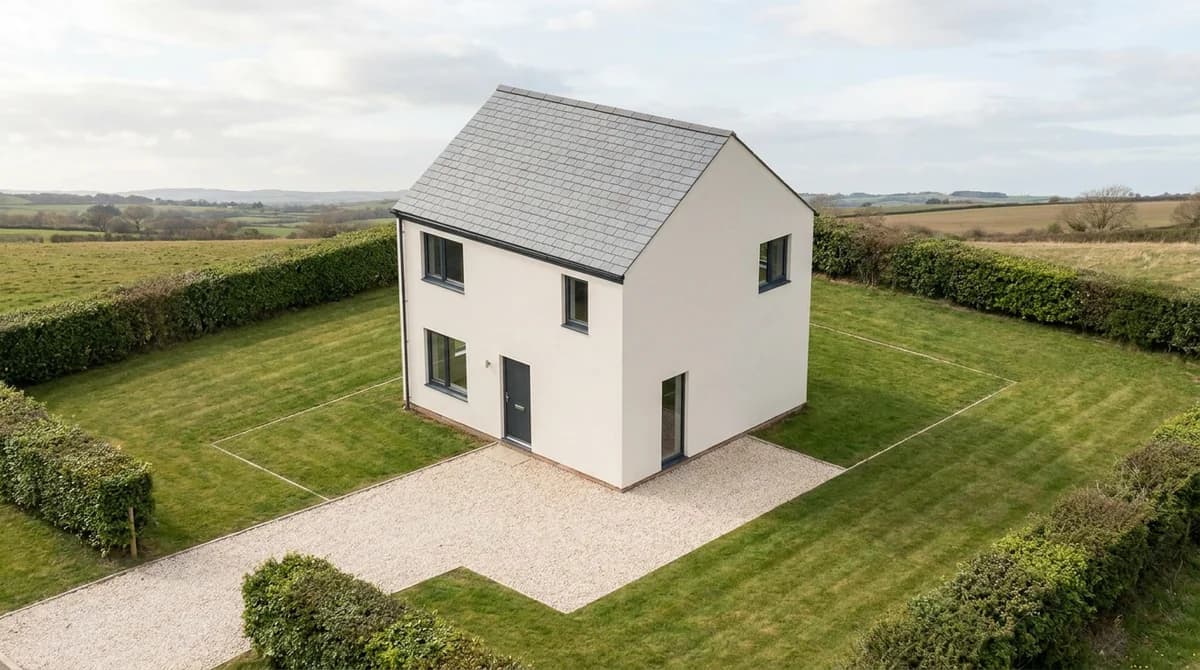
A buyer at the gate sees a patch of grass, and most people cannot picture a house from a set of elevations. The fix is a photoreal image of the finished house and an aerial of the finished plot, made from the approved drawings before the first viewing.
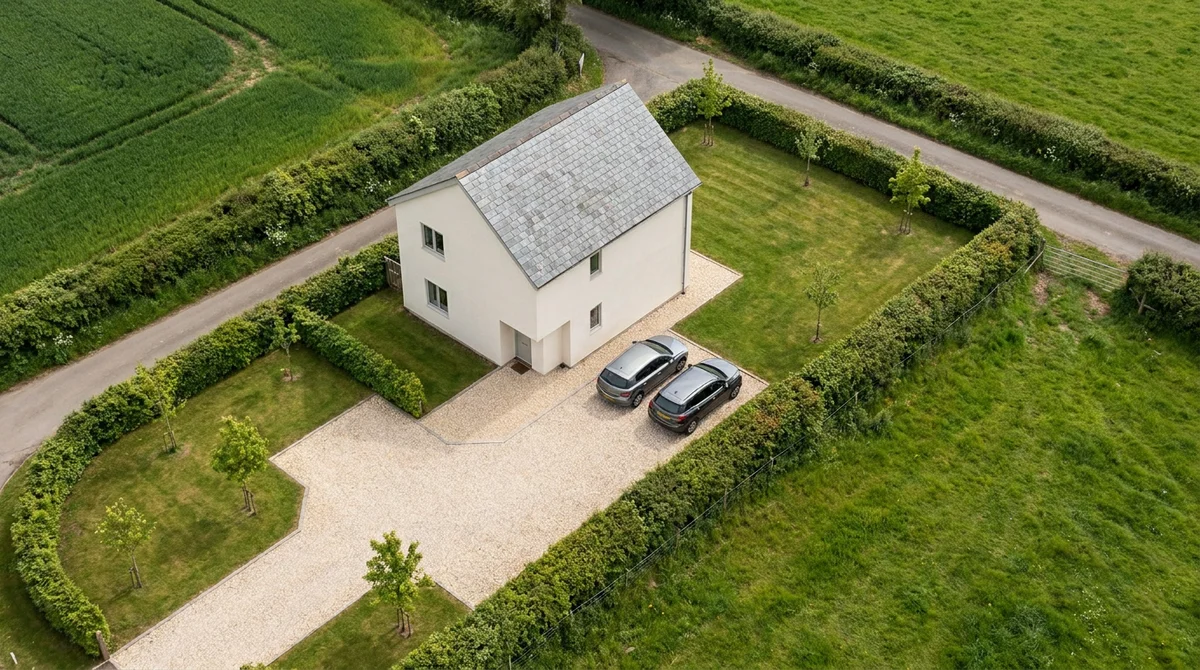
With RoomLift's Drawing to Render, the input is an image of the drawing: a screenshot or JPG export of the architect's 3D view or elevation, not the CAD file, PDF or model. Paste the materials schedule and the render uses the specified render colour, roof and joinery. It keeps the camera angle, footprint, roof shape and window positions as drawn and adds materials, daylight and planting, in about a minute and up to 4K. Drawing to Aerial does the same from a site or block plan, giving a drone-style photograph of the finished plot with driveway, parking and garden where the plan puts them; Plan to Dollhouse furnishes a 3D cutaway floor plan. Details are on the architectural rendering from drawings page.
Drag the slider to see what the massing view becomes:
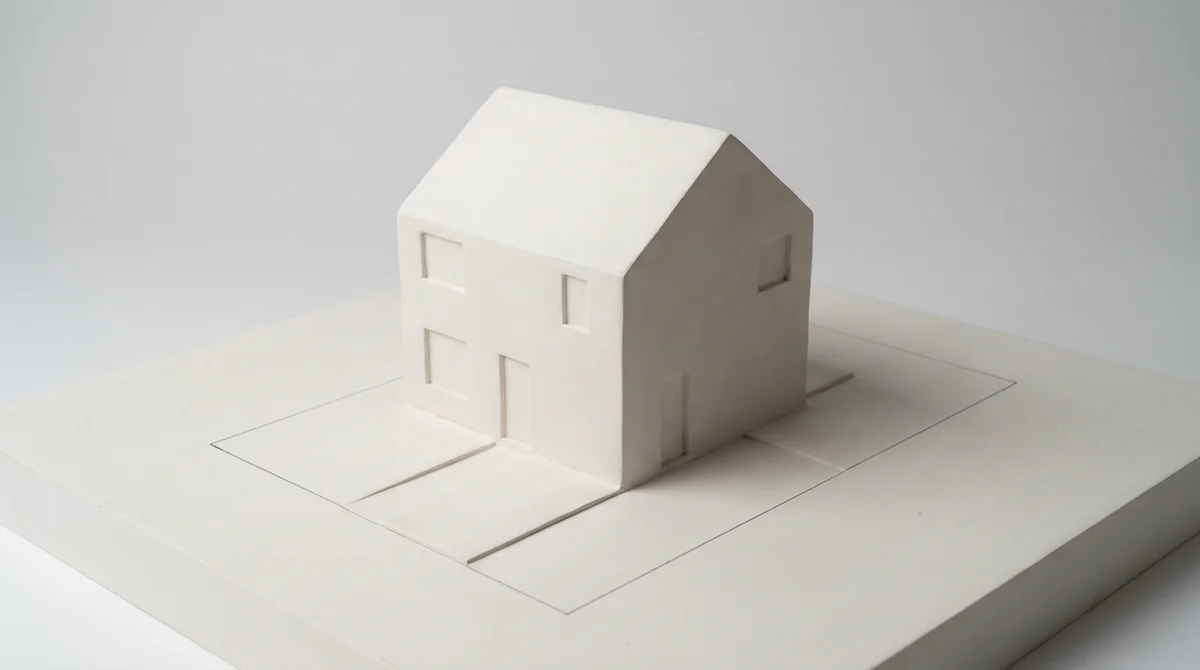
The aerial shows where the house sits, where the cars go, and how much garden is left.
The economics suit a one-off sale. RoomLift puts AI rendering at about $1 to $5 per image (roughly £1 to £4), against $200 to $500 for a traditional render, and new signups get 5 free renders. See architectural rendering cost for studio prices and the AI exterior rendering guide for the photo-based version.
It works for the reason staging works: NAR's Profile of Home Staging found 81% of buyers say staging makes it easier to picture a property as their own. Two rules keep you honest. Label the image as a CGI or AI render for illustrative purposes, and never present it as the planning drawing; dimensions and specification still come from the architect's pack. Developers selling off-plan live by the same rule.
Have the approved drawings and a plot to sell? Turn them into a photoreal render and an aerial in about a minute with RoomLift.
Stage your first room in 20 seconds. No design skills needed.
What Are the Pitfalls of Selling Land to Developers?
Developers buy land for a living and you are probably selling once; most of the pitfalls of selling land to developers come from that mismatch.
| Pitfall | What it looks like | What to do |
|---|---|---|
| Overage or clawback clauses | A lower price now plus a share of any future uplift if they win a bigger consent | Insist on a cap, a time limit and a clear trigger, drafted by your solicitor |
| Conditional offers | A high headline number that only stands if the developer wins their own improved permission | Ask for an unconditional figure alongside it and compare |
| "Subject to planning" delays | The developer ties up your site while they resubmit, and your consent runs down meanwhile | Set a long-stop date, an exclusivity fee and a right to walk away |
| Permission expiry | Three years from grant to begin development in England and Wales (Planning Portal); full permission normally lasts 5 years in Ireland, outline 3 (Citizens Information) | Sell so the buyer inherits at least a year; if it is close, ask your architect about a lawful commencement |
| Selling without the pack | Buyers assume the worst about services, access and conditions and price it in | Assemble the pack before marketing, not after the first offer |
If a developer talks down your permission, remember they still need it: the consent makes the site fundable, and its expiry date is their one real lever.
Do You Pay Tax When You Sell Land With Planning Permission?
Usually, yes. gov.uk lists land among the property sales that can trigger UK Capital Gains Tax when it is not part of your main home. From 6 April 2026 the rates are 18% on gains within the basic-rate Income Tax band and 24% above it, with a £3,000 annual exempt amount for the 2026 to 2027 tax year, and most UK property sales must be reported and paid within 60 days. Land sold from your own garden may qualify for Private Residence Relief, within limits.
In Ireland, Revenue puts the standard rate at 33% for most gains. Either side of the border, speak to an accountant before you agree a price; a permission obtained purely in order to sell can sometimes be taxed as a trade rather than a capital gain.
Frequently Asked Questions
How much more is land worth with planning permission?
There is no fixed multiple: consented land is priced on the end value of what can be built, less build cost and profit, not on what the field earns today. MHCLG estimates put agricultural land in England at £16,000 to £26,000 per hectare, while residential land in the same dataset runs from £370,000 to £9.28 million per hectare by district. Ask a land agent who sells consented sites for a valuation.
Who buys sites with planning permission?
Self-builders who want one plot with consent for a house they can adapt, small and regional developers buying a few plots or a small scheme, and national housebuilders, who rarely look at single plots. All three respond to a render of the finished house: RoomLift platform data shows property developers generate about 47 images per active user, roughly nine times more than homeowners.
What documents do I need to sell land with planning permission?
The decision notice, the approved drawings, the conditions schedule with discharge letters, the Section 106 or CIL paperwork, the title, evidence of services and access, and any surveys. Add a render, an aerial and a floor plan: RICS reports listings with floor plans receive 30% more engagement than those without. Put it all in one folder before you market.
Should I sell land at auction or through an agent?
Auction if you want speed and certainty: Auction Link cites exchange within 3 to 4 weeks of marketing, completion about 4 weeks later, commission around 2% to 3% plus VAT and a catalogue fee of about £300 plus VAT. An estate agent gives a longer marketing window at an average fee of 1.42% including VAT (HomeOwners Alliance). Land agents and direct sales suit larger sites.
How long does planning permission last before it expires?
In England and Wales you generally have three years from the date of grant to begin the development (Planning Portal); if you have not started by then you will probably need to reapply. In Ireland, Citizens Information says full permission normally lasts 5 years and outline permission 3 years. Time the sale so the buyer inherits at least a year.
Do I pay Capital Gains Tax when I sell land with planning permission?
Usually yes, if the land is not part of your main home. From 6 April 2026 UK Capital Gains Tax is 18% on gains within the basic-rate band and 24% above it, with a £3,000 annual exempt amount, and most UK property sales must be reported and paid within 60 days. In Ireland the standard rate is 33%. Speak to an accountant before you agree a price.
Sources & References
- Planning Portal. When does work need to start after planning permission is granted?. Planning Portal.
- GOV.UK. Planning permission. GOV.UK.
- GOV.UK. Capital Gains Tax rates. GOV.UK.
- GOV.UK. Tax when you sell property. GOV.UK.
- Ministry of Housing, Communities and Local Government (2020). Land value estimates for policy appraisal 2019. GOV.UK.
- Citizens Information (Ireland). Planning permission. citizensinformation.ie.
- Revenue (Ireland). Capital Gains Tax. revenue.ie.
- HomeOwners Alliance (2026). Estate Agent Fees. HomeOwners Alliance.
- Auction Link (2026). Costs for Selling a House at Auction. Auction Link.
- National Association of Realtors. Profile of Home Staging. NAR.
- National Association of Realtors. Real Estate in a Digital Age Report. NAR.
- Royal Institution of Chartered Surveyors. RICS. RICS.
Ready to transform your listings?
Stage your first room in 20 seconds. No design skills needed.