How to Sell Off-Plan Property: Visualize Units Before Build
Jul 24, 2026 · 8 min read
How to sell off-plan property faster: use photorealistic renders to let buyers walk through unbuilt units, close reservations before the concrete is poured.
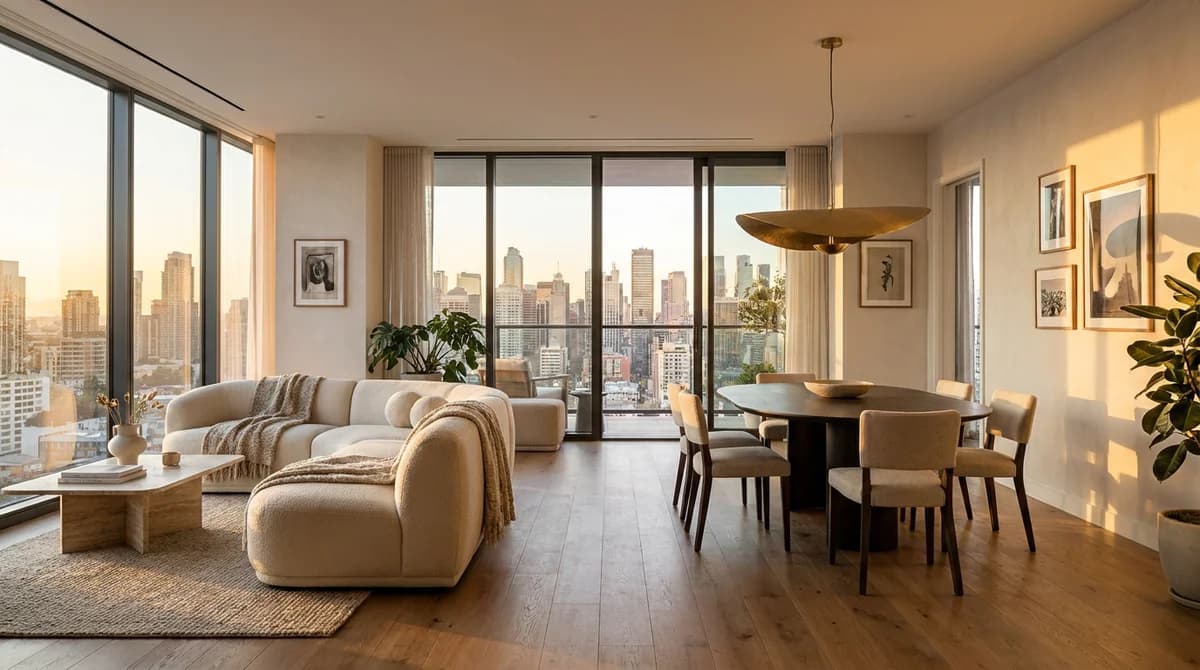
Selling off-plan property comes down to one challenge: buyers are committing money to something they cannot walk through, touch, or photograph. You close that gap with visualization. The developers who sell out fastest give buyers photorealistic renders of every unit type, furnished, lit, and styled, so the abstract floor plan becomes a place a person can picture living. Do that well and you can close reservations before the concrete is poured.
This guide covers how to sell off-plan property using modern visualization: what to show, how to produce it affordably, and how to turn renders into signed reservation agreements.
Why Visualization Decides Off-Plan Sales
When a property is already built, the listing photo is a record of something real. When it is off-plan, the render is the product. There is nothing else for the buyer to evaluate, no walkthrough, no furniture, no light coming through the actual windows. The image carries the entire emotional and practical case for the purchase.
This is the same psychology that drives staging in the resale market. The Real Estate Staging Association reports that staged homes sell for 1 to 5 percent more on average, and 81 percent of buyers say staging makes it easier to picture a property as their own. The National Association of Realtors finds staged homes sell faster than non-staged ones. Off-plan buyers face an even bigger imagination gap, because there is no physical space at all, which makes a believable, furnished render even more valuable than a staged photo of a finished room.

What Off-Plan Buyers Actually Need to See
A single hero render of the lobby does not sell a unit. Buyers reserve when they can see the specific home they would own. Give them a complete visual story:
- Every unit type, furnished. Studio, one-bed, two-bed, penthouse, each layout deserves its own photorealistic, furnished render, not just a wireframe floor plan.
- The real view from the real floor. A third-floor unit and a fourteenth-floor unit see different things. Matching the render to the actual outlook builds trust.
- Multiple furnishing styles. Younger buyers and downsizers want different things. Showing the same shell in two or three styles lets each prospect see their version.
- Key rooms in detail. Kitchen, primary bedroom, and the main living space do most of the persuasion. These are where the buyer imagines their daily life.
- Exterior and amenity spaces. The building facade, lobby, rooftop, and shared areas matter for the lifestyle pitch. See our AI exterior rendering guide for producing those efficiently.
The goal is to leave no room for doubt about what the buyer is getting. Every unanswered visual question is a reason to delay the deposit.
From Empty Shell to Finished Home
The most persuasive thing you can show is the transformation itself: the bare unit beside the finished, furnished version. It makes the value of the build tangible and helps buyers grasp scale, flow, and light in a space that does not yet exist. Drag the slider to see an unbuilt unit go from raw shell to staged show-home:
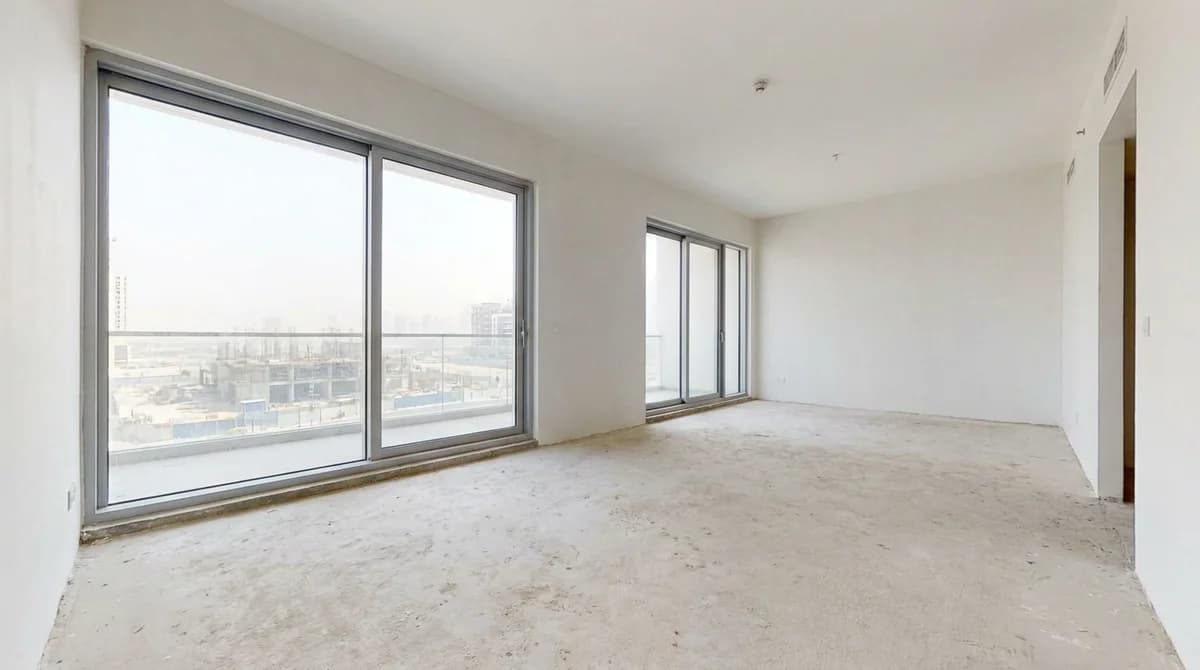
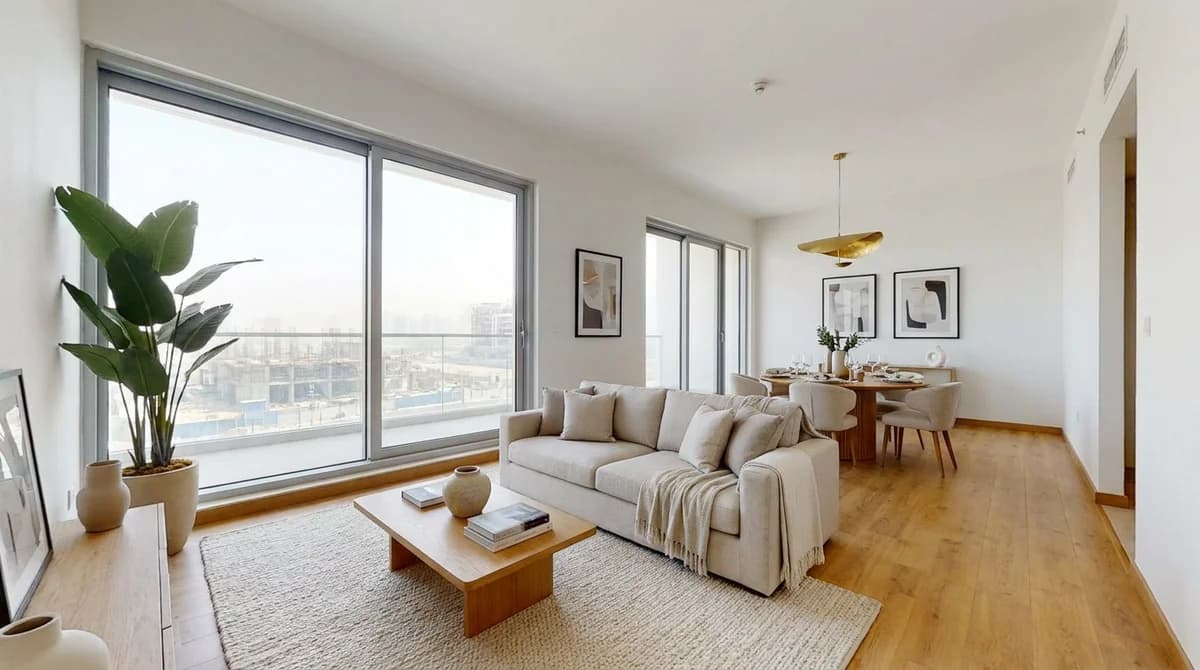
You can produce this pair starting from an architect's render or a simple 3D shell of the empty unit, then staging it digitally, no model unit, no furniture rental, no photographer.
How to Produce Off-Plan Renders Affordably
Visualization used to be the bottleneck in off-plan marketing. Traditional architectural CGI is excellent but slow and expensive, which forced developers to render only one or two showcase units and leave the rest as floor plans. AI rendering changes the math: you can visualize every layout, every finish option, and several furnishing styles for the cost of a single traditional view.
| Method | Typical cost per image | Turnaround | Best for |
|---|---|---|---|
| Traditional architectural CGI | $300-3,000 | Days to weeks | Flagship hero shots, marketing suites |
| Designer-led visualization | $25-100 | 24-48 hours | Curated key rooms |
| AI off-plan rendering | $1-5 | Under 60 seconds | Every unit type, finish, and style |
The practical move is a blend: a few high-end traditional renders for the lobby and facade, and AI rendering for the unit-by-unit coverage that used to be impossible to afford. For interior visualization specifically, our interior design rendering tool turns a basic shell or empty-room image into a furnished, photorealistic interior in seconds. If you want to compare dedicated programs, the interior design rendering software roundup breaks down the options.
A Practical Workflow for Selling Off-Plan
Here is a repeatable process that takes you from drawings to reservations:
- Start from what the architect gave you. A render, an elevation, or a clean 3D shell of the empty unit is enough to begin.
- Stage every unit type. Generate furnished, photorealistic versions of each layout. Keep the architecture accurate, never misrepresent dimensions or finishes.
- Offer style variations. Produce two or three furnishing directions per unit so prospects self-select into the one that feels like home.
- Match views to floors. Where it matters, reflect the actual outlook so the render is honest about what each level sees.
- Put renders everywhere a buyer looks. The listing, the brochure, the sales-suite tablet, the email follow-up, and social ads all need the finished visual, not the floor plan.
- Disclose clearly. Label renders as artist or AI impressions of the planned unit. Honesty protects the reservation when the building is delivered.
Because each render costs a few dollars and renders in under a minute, you can iterate during a sales meeting, swap a style, change a palette, show the same unit warmer or cooler, and answer a buyer's hesitation on the spot.
Turning Renders Into Reservations
A render does its job when it removes the buyer's last objection. Off-plan purchases stall on uncertainty: what will it really look like, will it feel small, is the view worth the premium. Each of those is a visual question, and each one you answer with a concrete image shortens the path to a deposit.
The economics make heavy visualization a clear win. A reservation on an off-plan unit is typically worth tens of thousands in deposit and a sale worth far more, while the renders that secure it cost a few dollars each. When a single closed reservation outweighs your entire visualization budget many times over, the question is not whether to render every unit, it is why you would ever leave a layout as a bare floor plan.
Frequently Asked Questions
How do you sell off-plan property?
You sell off-plan property by helping buyers picture a unit that does not physically exist yet. The essentials are photorealistic renders of each unit type, a clear floor plan, transparent pricing and milestones, and a believable timeline. The faster a buyer sees themselves in the finished space, the sooner they reserve.
Why are renders so important when selling off-plan?
Because buyers cannot tour a property that has not been built, the visual is the product. 81 percent of buyers say staging makes it easier to picture a home as their own, and the same psychology applies to off-plan: a furnished render of the actual layout converts far better than a bare floor plan.
How much does it cost to visualize an off-plan unit?
Traditional architectural CGI runs from a few hundred to a few thousand dollars per view over days to weeks. AI-generated visualization costs roughly $1 to $5 per image in under 60 seconds, which makes it realistic to render every unit type and finish rather than one showcase view.
Can you stage an unbuilt apartment that does not exist yet?
Yes. You start from the architect's render or a basic 3D shell of the empty unit, then use AI staging to add furniture, lighting, and decor in seconds. The result looks like a finished home for a few dollars per image, and you can show the same unit in multiple styles.
How do off-plan renders help close reservations faster?
They remove the buyer's biggest objection, uncertainty about what they are buying. When a prospect can see a furnished, photorealistic version of their specific unit and floor, the abstract becomes concrete, which shortens the decision cycle and reduces the delay before a deposit.
What is the difference between off-plan renders and virtual staging?
Virtual staging adds furniture to a photo of a real, existing room. Off-plan visualization renders a unit that has not been built, starting from drawings or a 3D model rather than a photograph. The end goal is the same, a photorealistic, furnished image, but off-plan work begins before there is anything to photograph.
Ready to transform your listings?
Stage your first room in 20 seconds. No design skills needed.