The Complete Guide to Virtual Staging (2026)
Jun 20, 2026 · 7 min read
The complete guide to virtual staging: what it is, how it works, what it costs, the rules, and how it compares to physical staging — with real before/after examples.
Virtual staging has gone from a niche trick to a standard step in selling a home. This guide is the complete, plain-English reference: what virtual staging is, how it works, what it costs, the rules you have to follow, how it compares to physical staging, and how to do it well. Wherever a topic deserves a deeper dive, we link to a dedicated guide.
What Is Virtual Staging?
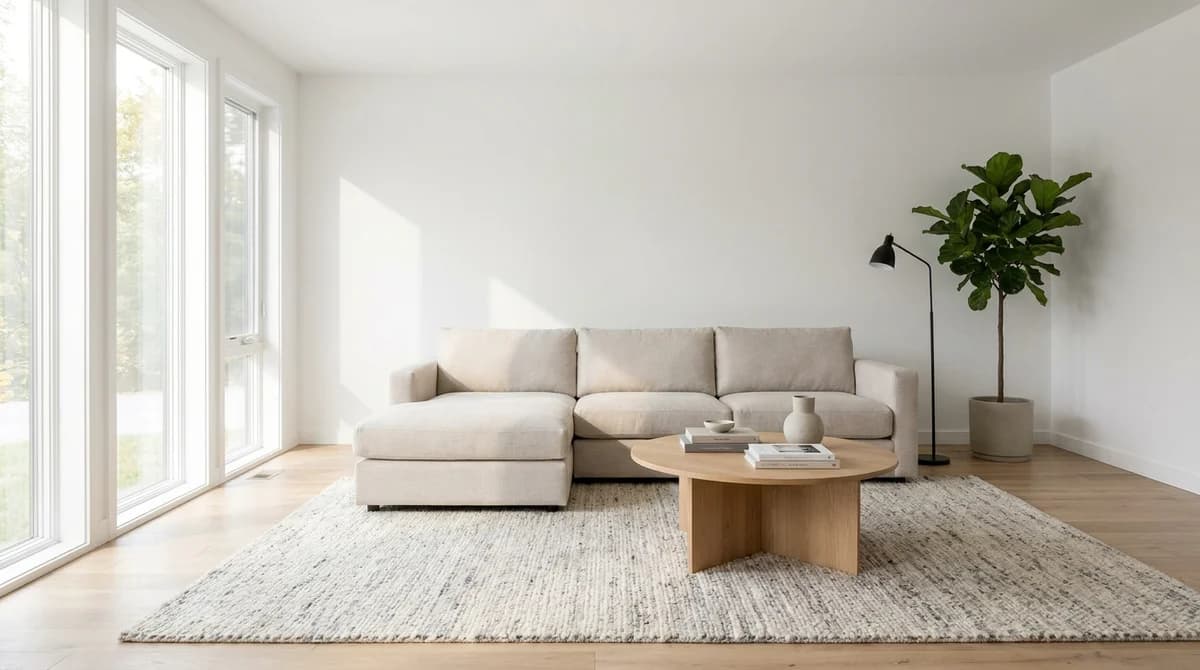
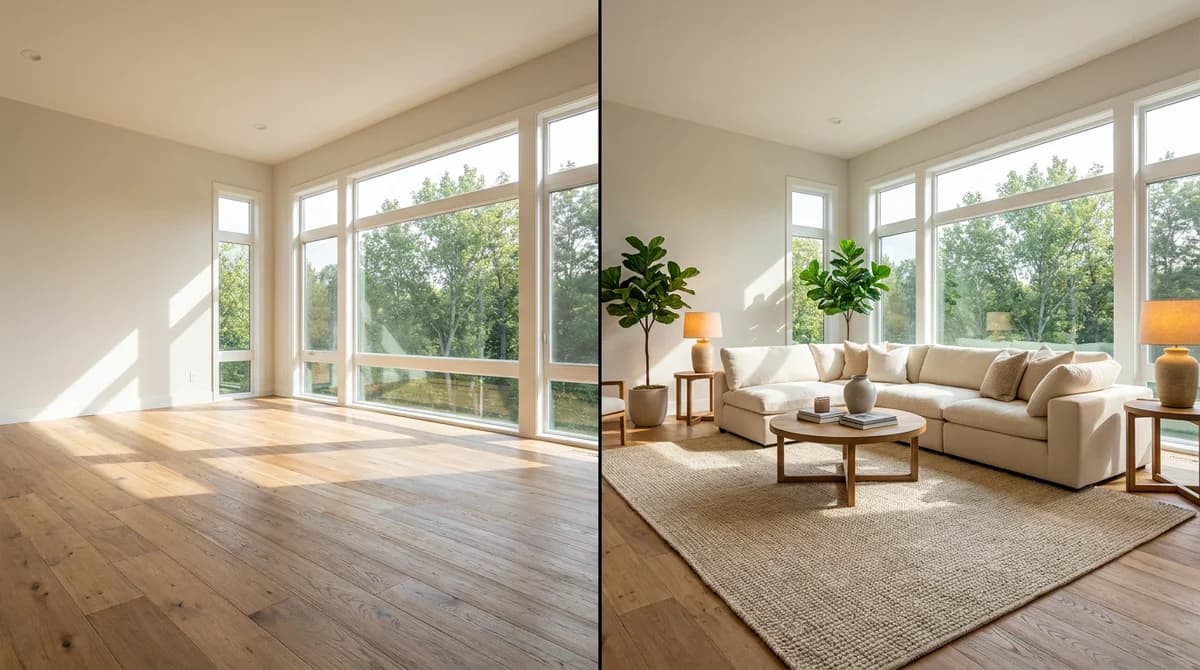
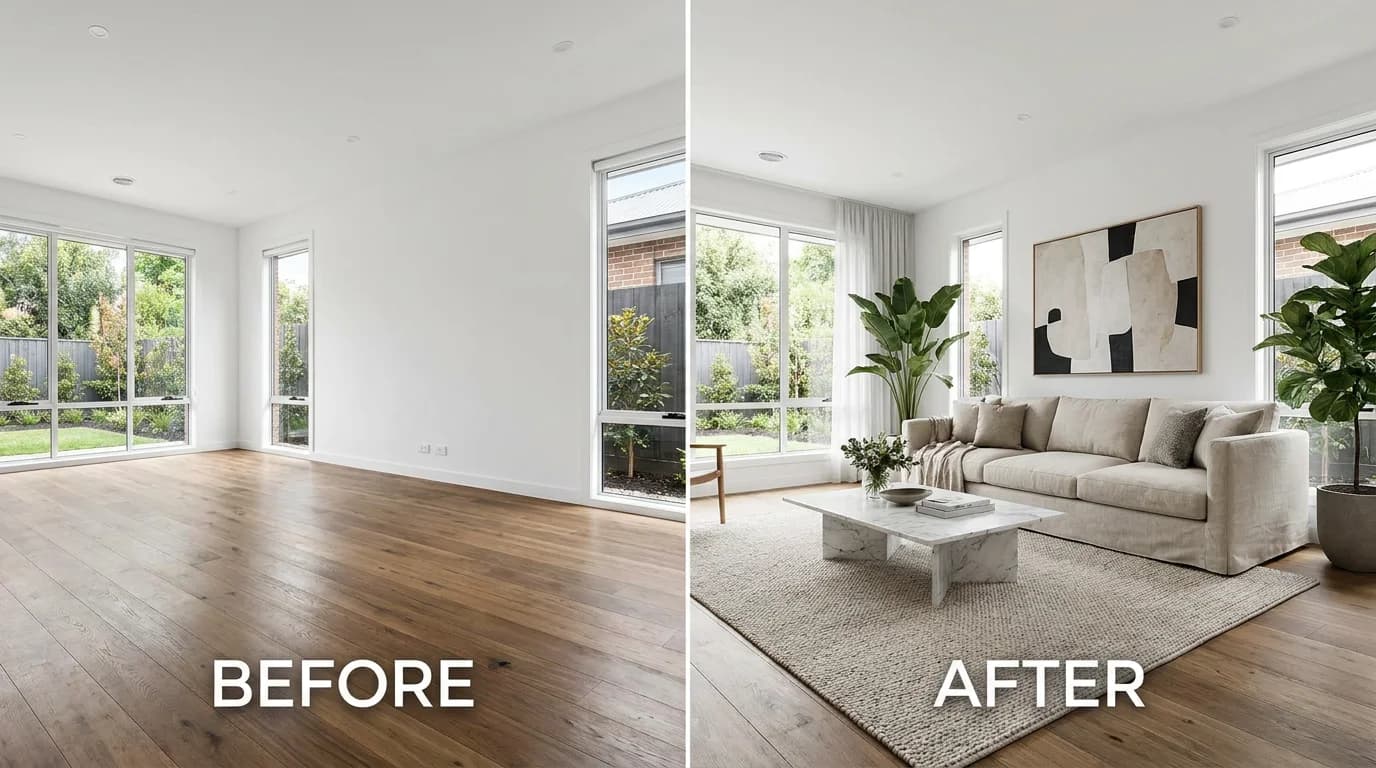
Virtual staging is the process of digitally adding furniture, decor, and accessories to photos of empty or unfurnished rooms. The goal is to help buyers visualize a space as a home without the cost and logistics of moving in real furniture. Modern AI tools produce results that are difficult to tell apart from photos of physically staged rooms, with realistic lighting, shadows, and scale.
Drag the slider to see the difference on a single listing photo:
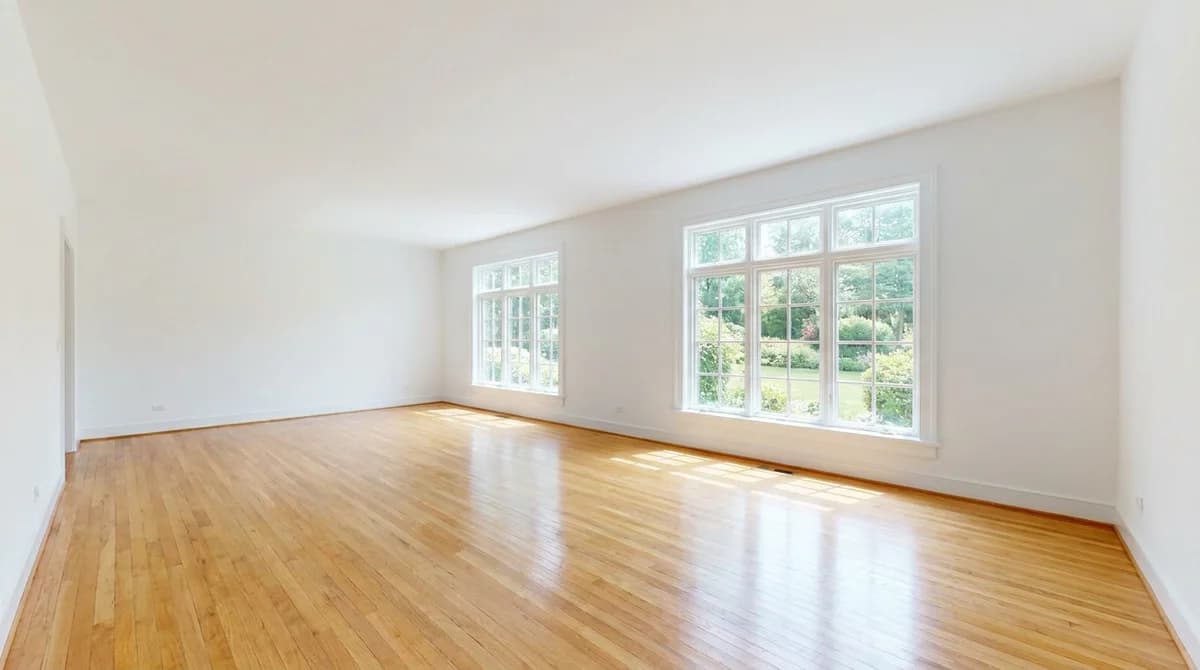
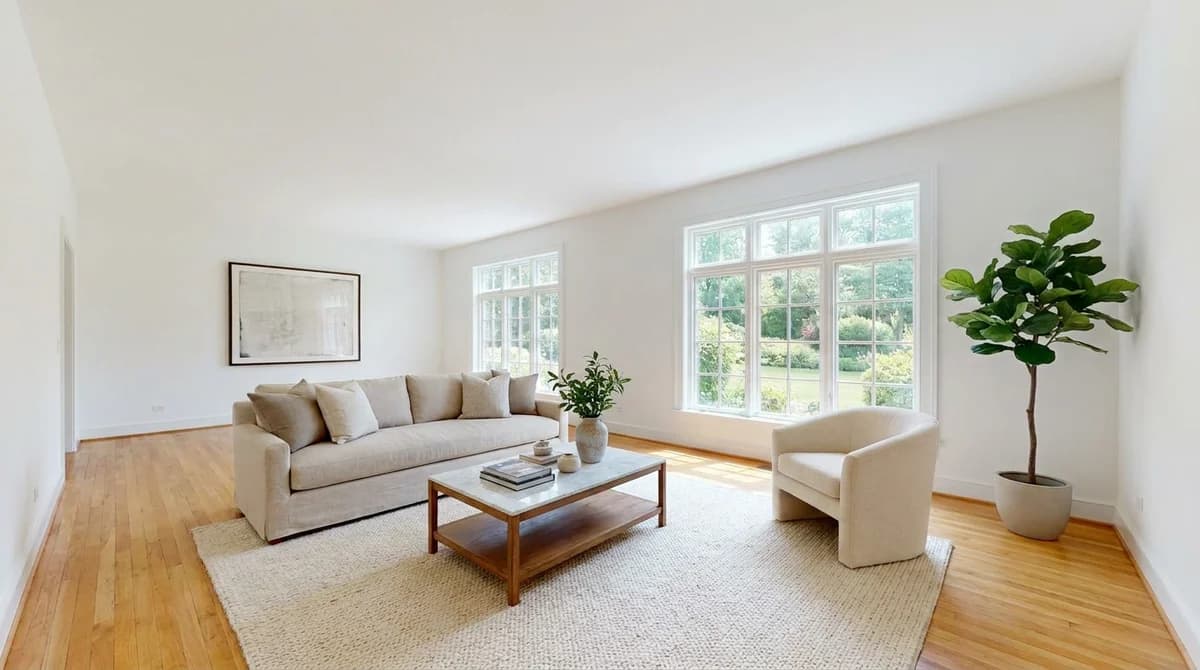
For a beginner-friendly primer, see what is virtual staging. The numbers below explain why it has become standard practice.
How Virtual Staging Works
The workflow is simple and the same across most tools:
- Photograph the empty room in good, even light.
- Upload the photo to a virtual staging tool.
- Choose a style that fits the property and target buyer.
- Generate a photorealistic staged version in seconds.
- Download and disclose — add the image to your listing, labeled as virtually staged.
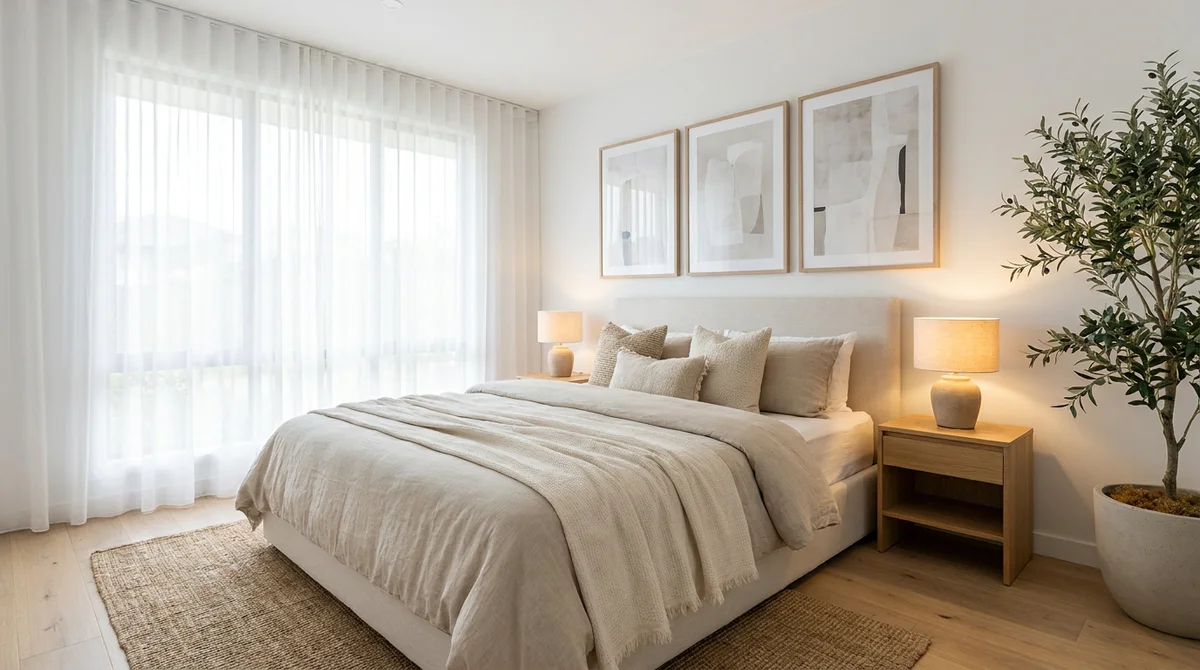
The AI handles furniture selection, placement, scale, lighting, and shadows. No design skills are needed, and you can produce several style options from the same photo at no extra cost.
How Much Does Virtual Staging Cost?
Cost is the biggest reason virtual staging has taken over. Here is how the options compare:
| Option | Typical cost | Turnaround |
|---|---|---|
| AI virtual staging | $1-5 per image | Under 60 seconds |
| Designer-led virtual staging | $25-100 per image | 24-48 hours |
| Physical staging | $500-3,000 per room / month | 3-5 days to set up |
Staging an entire home virtually often costs less than physically staging a single room. For the full breakdown, see how much virtual staging costs and the virtual staging ROI guide.
Virtual Staging vs Physical Staging
Both make a listing more appealing, but they solve different problems:
| Factor | Virtual staging | Physical staging |
|---|---|---|
| Cost | $1-5 per image | $500-3,000 per room |
| Online appeal | Strong | Strong |
| In-person impact | None (rooms stay empty) | Strong |
| Speed | Minutes | Days |
| Style flexibility | High (multiple looks free) | Low |
The short version: virtual staging wins on cost, speed, and flexibility for the online listing; physical staging is worth it for high-end homes that depend on in-person walkthroughs. The full comparison lives in virtual staging vs real staging.
Is Virtual Staging Worth It?
For most vacant or sparsely furnished listings, yes. Empty rooms photograph poorly and make it hard for buyers to judge scale, and virtual staging fixes that for a few dollars per photo. It is less essential when a home already shows well furnished or will sell instantly regardless. We cover the exceptions in detail in is virtual staging worth it, and the supporting data in do staged homes sell faster.
Is Virtual Staging Legal? Disclosure Rules
Virtual staging is legal across the US, but transparency is required.
Disclosure matters: most MLSs require you to label digitally altered photos. Mark staged images "Virtually staged" and include at least one unedited photo of each room so buyers are never misled.
The rule of thumb: enhance how a space could look, never misrepresent what it is. Don't remove permanent defects, change room dimensions, or hide condition issues. Full details are in the virtual staging legal guide.
Virtual Staging Styles and Examples
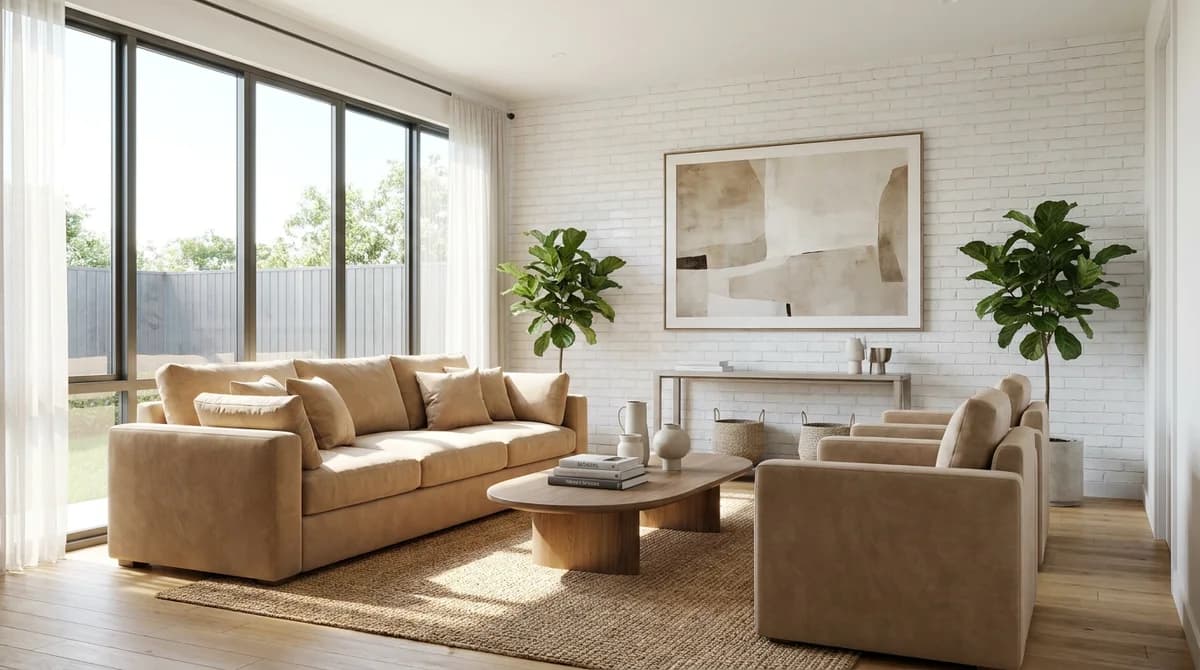
One of virtual staging's biggest advantages is that you can show the same room in multiple styles to appeal to different buyers, from warm transitional to clean modern. Open-plan spaces especially benefit, because furniture helps buyers understand how each zone is used.
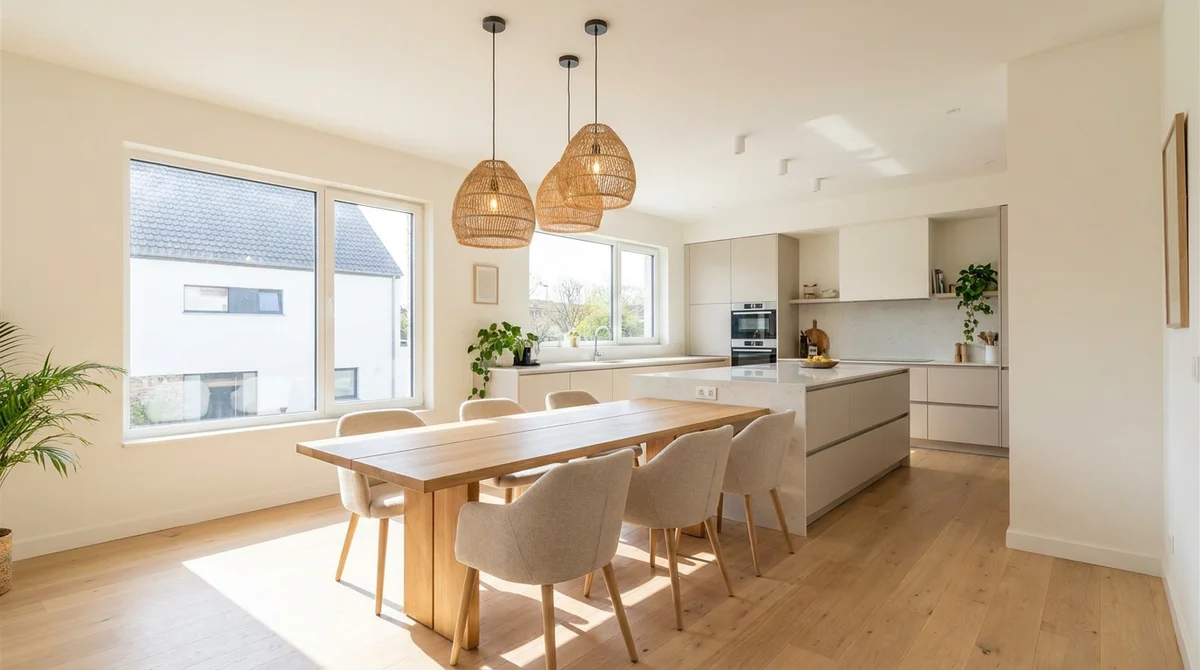
To see more transformations, browse the virtual staging before and after gallery and our guide to staging a home for sale.
Best Virtual Staging Tools
Tools range from free apps with rough output to professional platforms with photorealistic results and real estate workflows. Quality matters: cheap tools produce floating furniture and warped perspectives that hurt more than help. Compare the leading options in best AI virtual staging apps and best virtual staging companies.
Stage your first listing free
Stage your first room in 20 seconds. No design skills needed.
Explore the Full Virtual Staging Guide
This pillar is your map. Dive into any topic:
Real estate agents can also start with the dedicated virtual staging for real estate workflow.
Frequently Asked Questions
What is virtual staging?
Virtual staging digitally adds furniture and decor to photos of empty rooms using AI, helping buyers picture a furnished home. AI tools produce photorealistic results in about 60 seconds for roughly $1-5 per image, versus $500-3,000 per room for physical staging.
How much does virtual staging cost?
AI virtual staging costs about $1-5 per image in under a minute. Designer-led virtual staging runs $25-100 per image, and physical staging costs $500-3,000 per room per month.
Is virtual staging legal?
Yes, in all US states, but most MLSs require you to disclose that photos were digitally altered. Label staged images "Virtually staged," include some unedited photos, and never misrepresent the property's true condition or dimensions.
Does virtual staging help homes sell faster?
Yes. The NAR reports staged homes sell faster, RESA reports they sell for 1-5% more on average, and 81% of buyers find a staged home easier to picture as their own.
What is the difference between virtual and physical staging?
Virtual staging furnishes the listing photos digitally for $1-5 per image but only helps online; physical staging furnishes the actual rooms for $500-3,000 per room and also helps in-person showings, at far higher cost and turnaround.
Ready to transform your listings?
Stage your first room in 20 seconds. No design skills needed.