RoomLift Logo

Traditional Nursery Design

AI-Powered Design Visualization

Upload a photo of your nursery and transform it into stunning Traditional design in under 60 seconds.

Start designing now

No credit card required. 10 free renders.

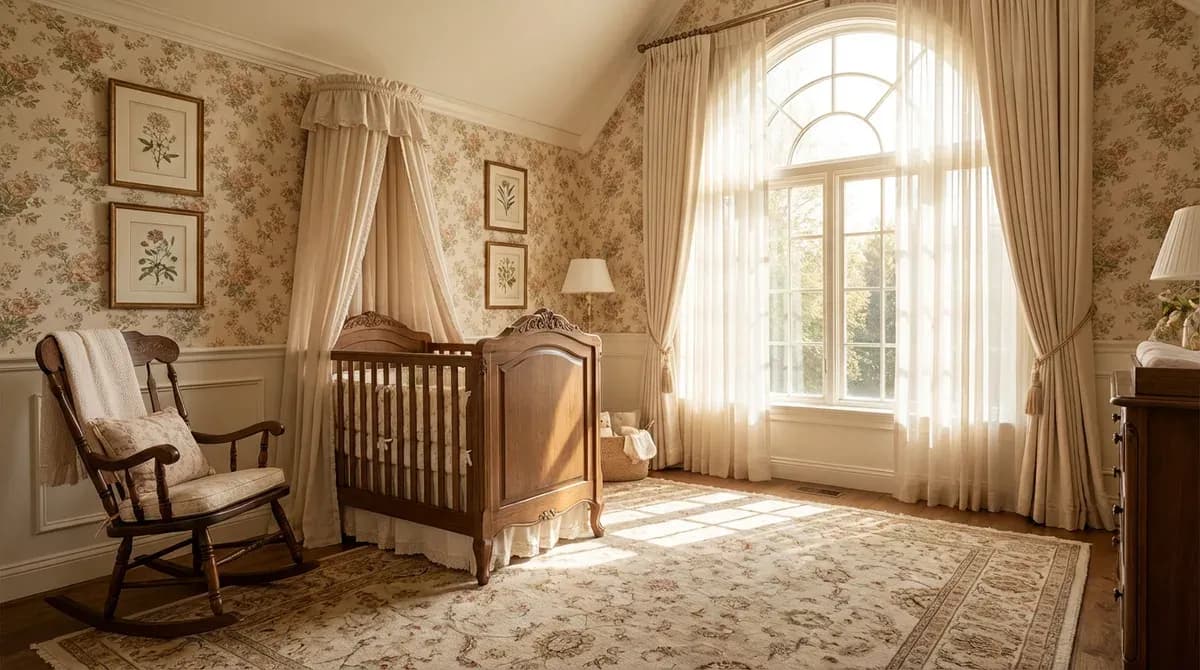
Traditional Nursery design visualization

Color Palette

The essential colors of Traditional nursery design

Ivory
Powder Blue
Antique Gold
Blush Pink
Warm Walnut
Warm Parchment

Design Tips

Expert recommendations for your Traditional nursery

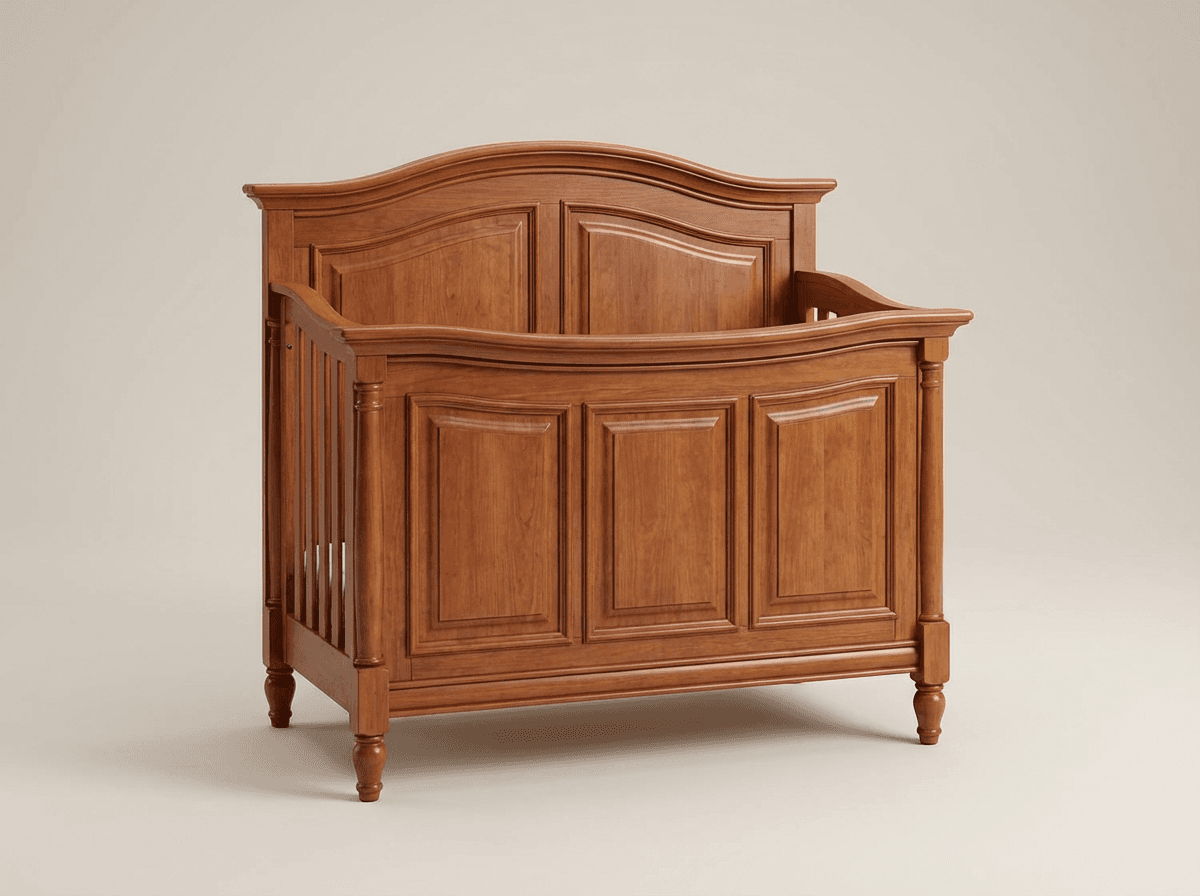
Choose a convertible crib with carved detail and a stained or painted finish

Choose a convertible crib with carved detail and a stained or painted finish

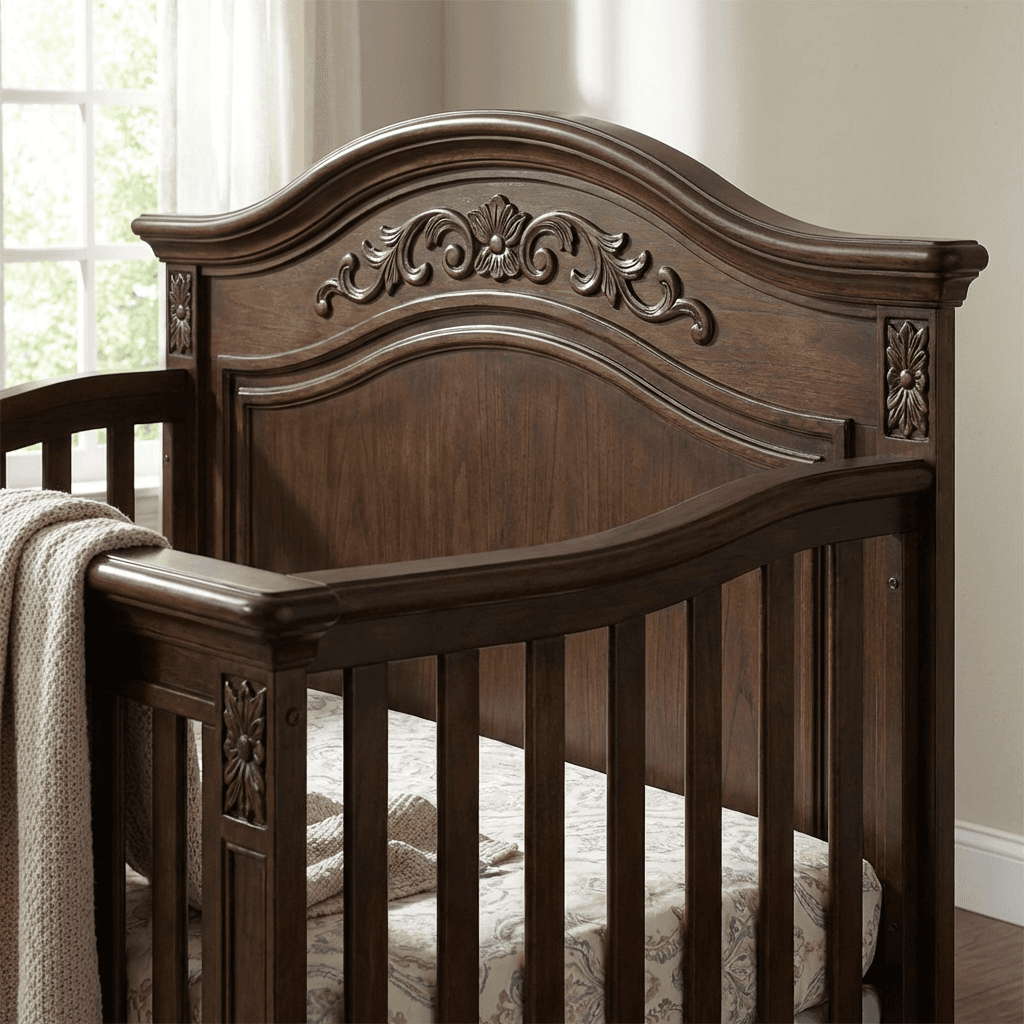
A traditional nursery crib should have substance: a paneled headboard and footboard, gentle curves or scrollwork, and a finish in antique white, warm walnut, or cherry. The best cribs convert to a toddler bed and then a full-size headboard, making the investment last through childhood. The crib's detailing should echo the home's broader traditional vocabulary.

Use wainscoting or beadboard on the lower walls

Use wainscoting or beadboard on the lower walls

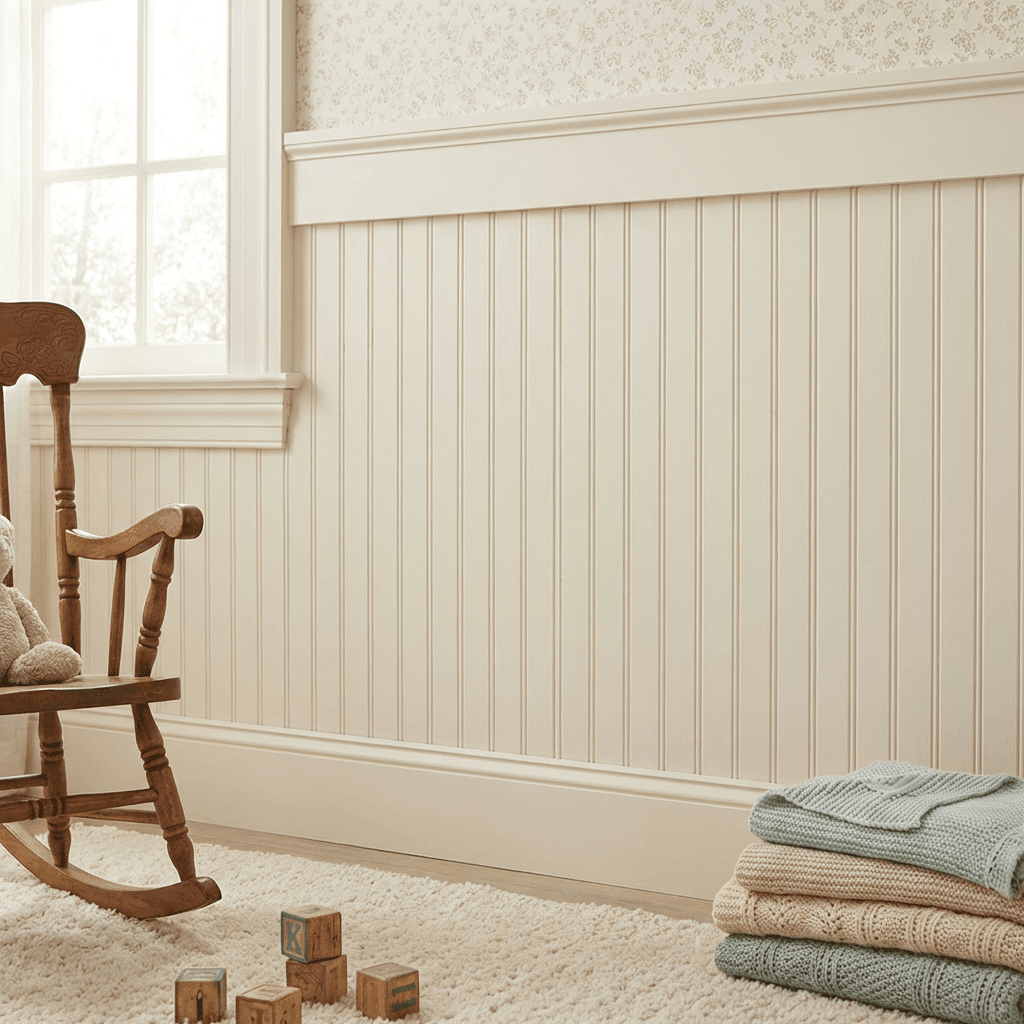
Chair-rail-height wainscoting or beadboard paneling, painted in ivory or soft white, adds the architectural interest that defines traditional interiors. Paint the upper wall in a gentle color — powder blue, blush, soft sage — and top the wainscoting with a chair rail wide enough to display small framed prints. The divided wall treatment makes the room feel taller and more polished.

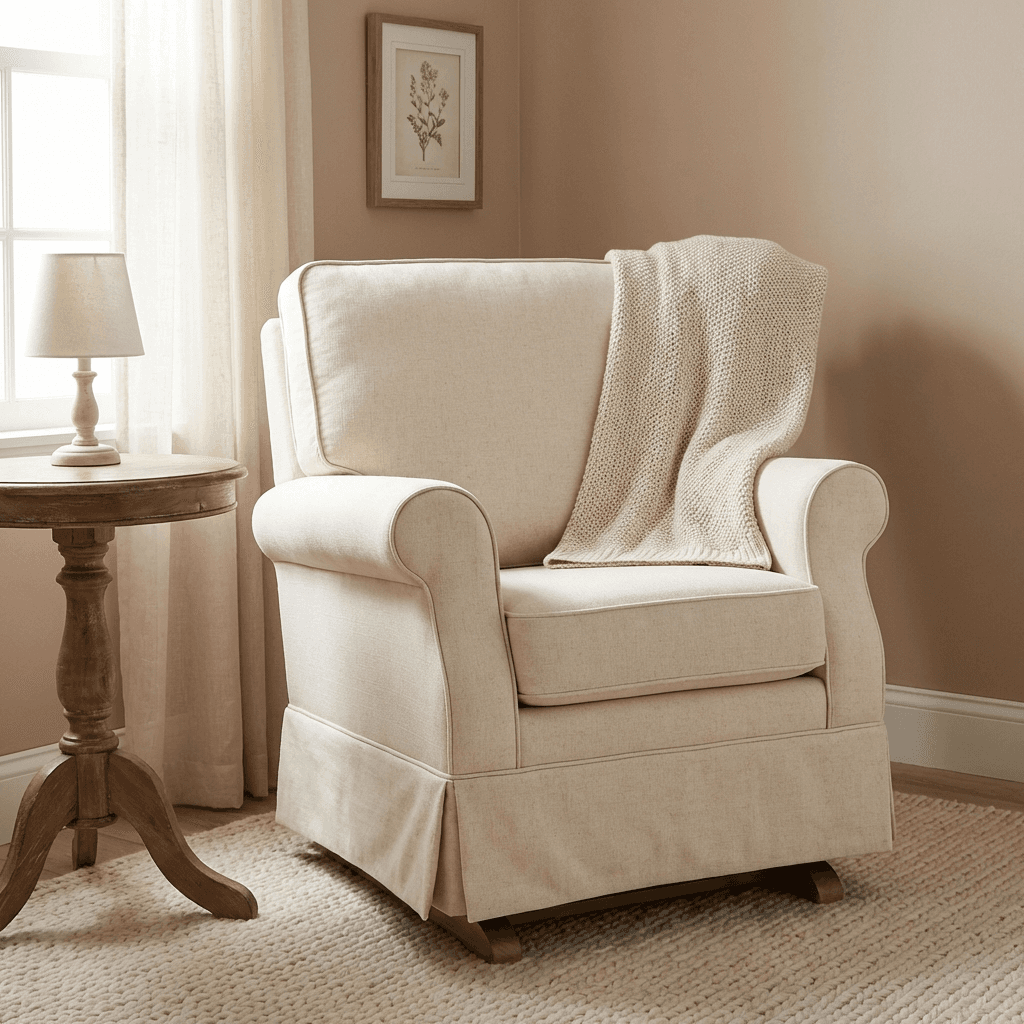
Invest in a quality glider with a traditional silhouette

Invest in a quality glider with a traditional silhouette

A nursery glider with rolled or English arms, a skirted base, and upholstery in a washable linen or cotton fabric feels more like a living room armchair than typical nursery furniture. Add a nailhead-trimmed ottoman that matches. The chair should be comfortable enough for long nighttime feedings and handsome enough to move to another room later.

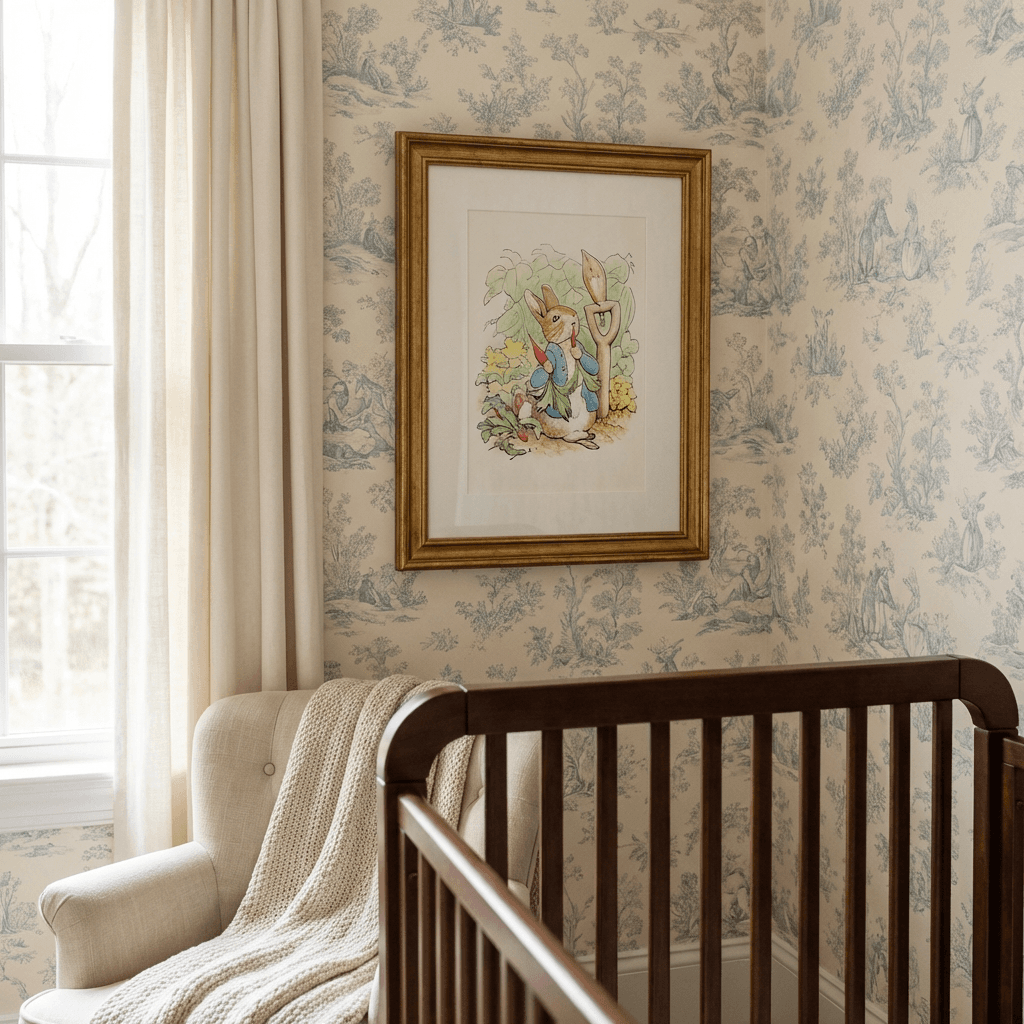
Hang classic artwork at the child's future eye level

Hang classic artwork at the child's future eye level

Framed botanical prints, vintage animal illustrations, or nursery-themed watercolors in gold or white frames add visual interest without the saccharine quality of themed wall decals. Hang them lower than you normally would — 120-140 cm from the floor — so they'll be at eye level once the child is standing and walking.

Furniture Recommendations

Key pieces for the perfect Traditional nursery

Paneled convertible crib

Paneled convertible crib

A 4-in-1 convertible crib in antique white or stained walnut with a paneled headboard, scroll or finial accents, and an adjustable mattress platform. The conversion kit transforms it to a toddler bed, a daybed, and eventually a full-size headboard. Choose JPMA-certified models that meet all current safety standards while maintaining traditional aesthetics.

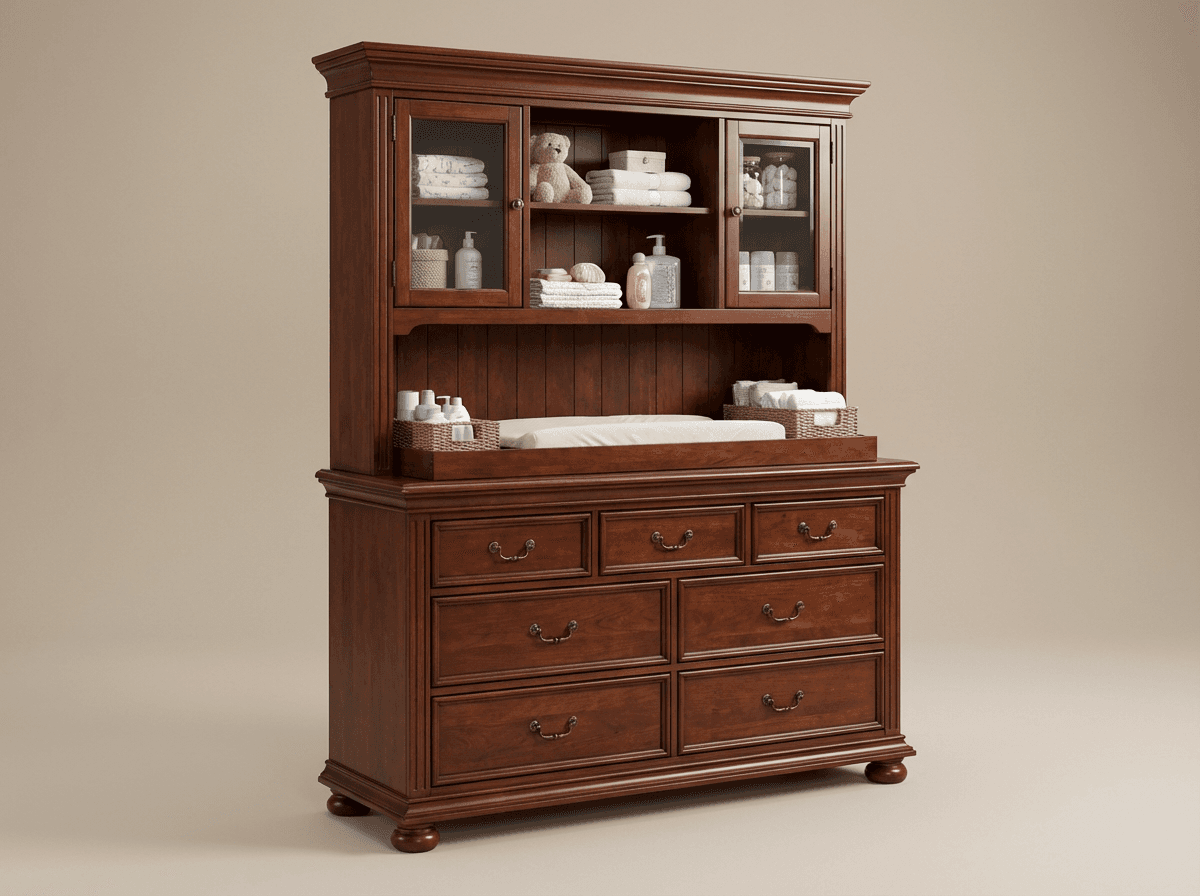
Changing dresser with hutch top

Changing dresser with hutch top

A wide, six-drawer dresser in the same finish as the crib, topped with a removable changing tray and an optional hutch with open shelving for baskets and books. The dresser should be solidly built with anti-tip hardware and soft-close drawers. Once the changing phase ends, the hutch and tray are removed for a standard dresser.

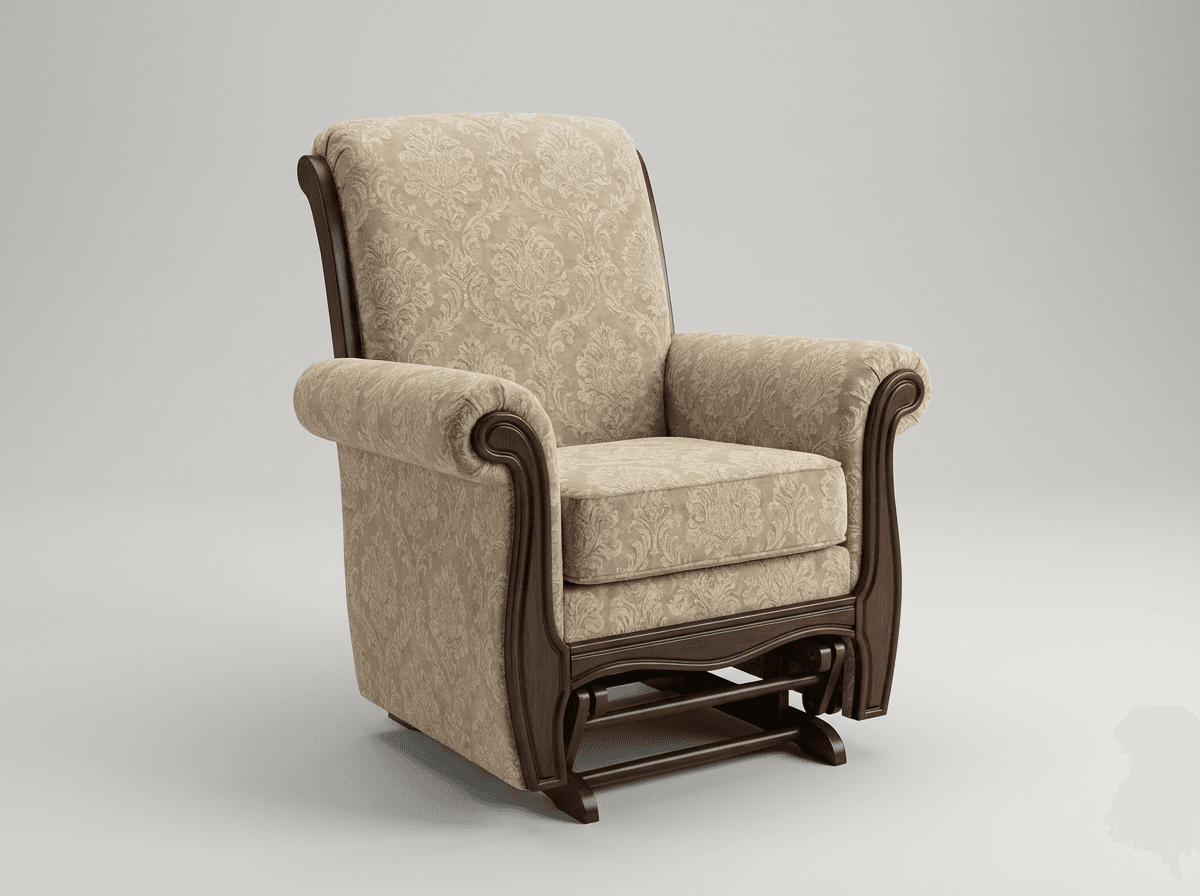
Upholstered glider with rolled arms

Upholstered glider with rolled arms

A smooth-gliding nursery chair with rolled arms, a high back, and a matching gliding ottoman, upholstered in a stain-resistant performance fabric in ivory, oatmeal, or a soft stripe. The chair's traditional silhouette — wide enough for parent and child — makes it a piece you'll want to keep in a living room or bedroom long after the nursery years.

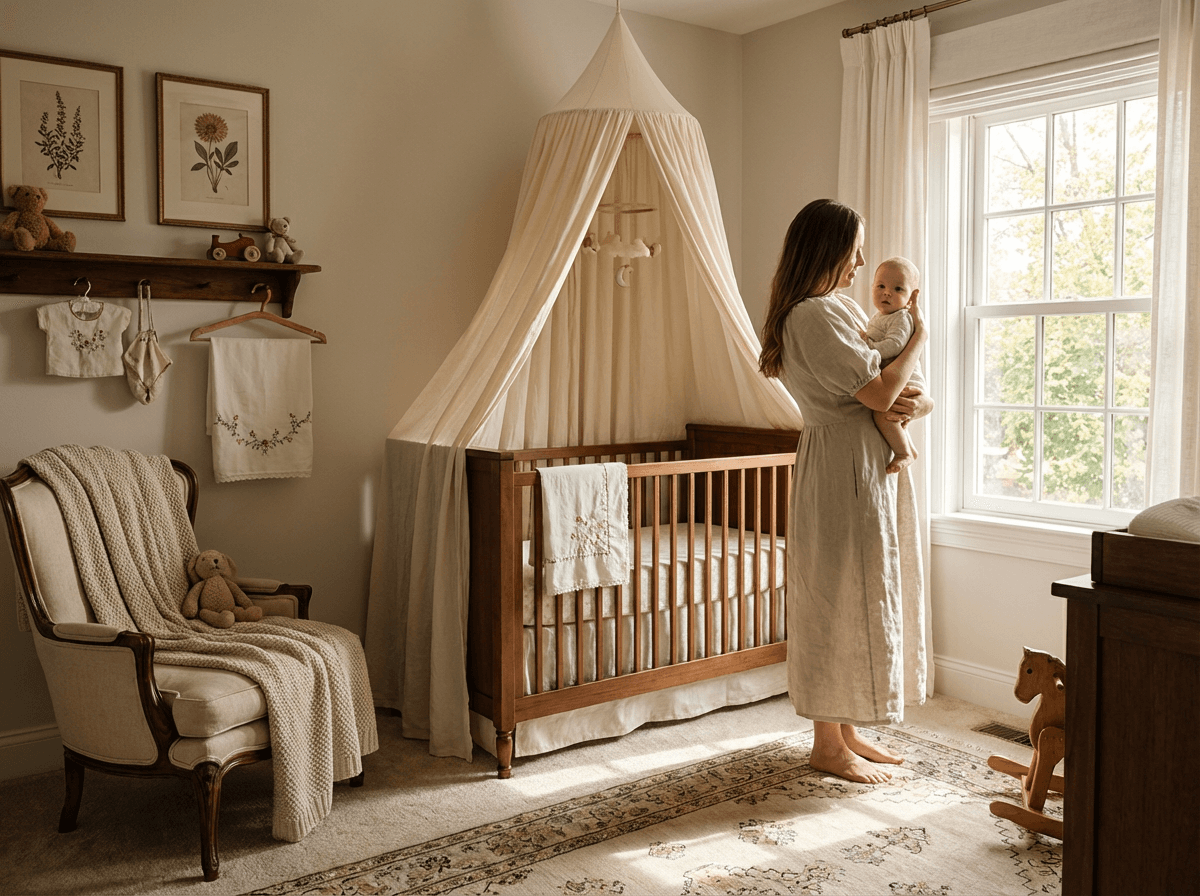
Traditional Nursery interior inspiration
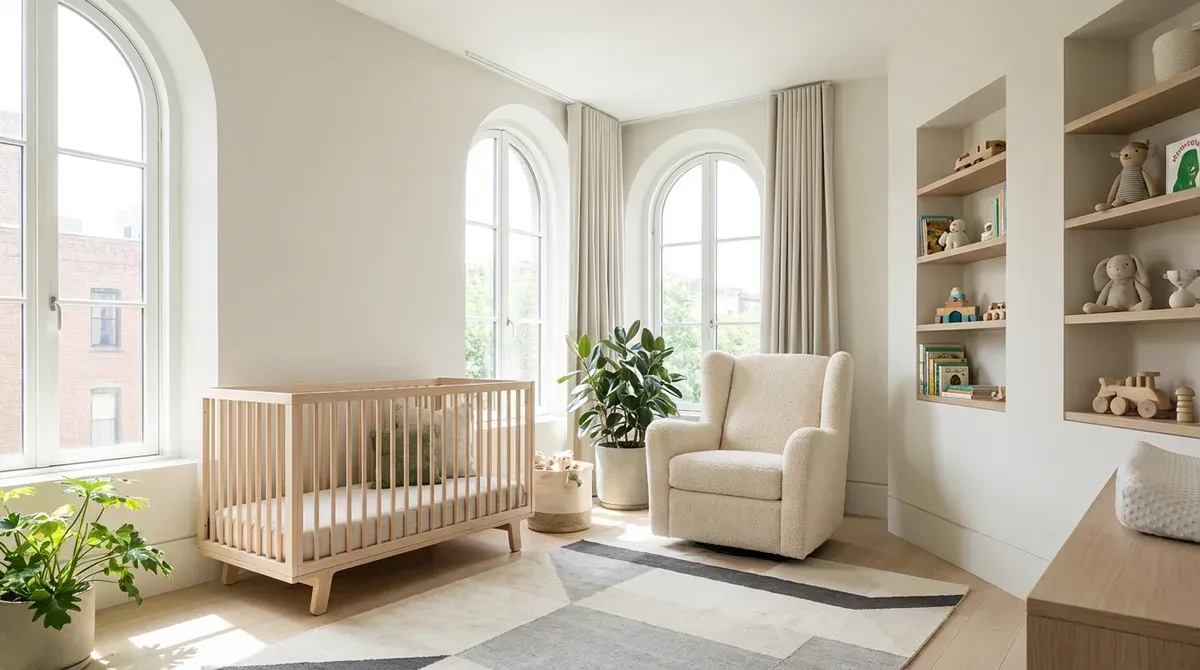
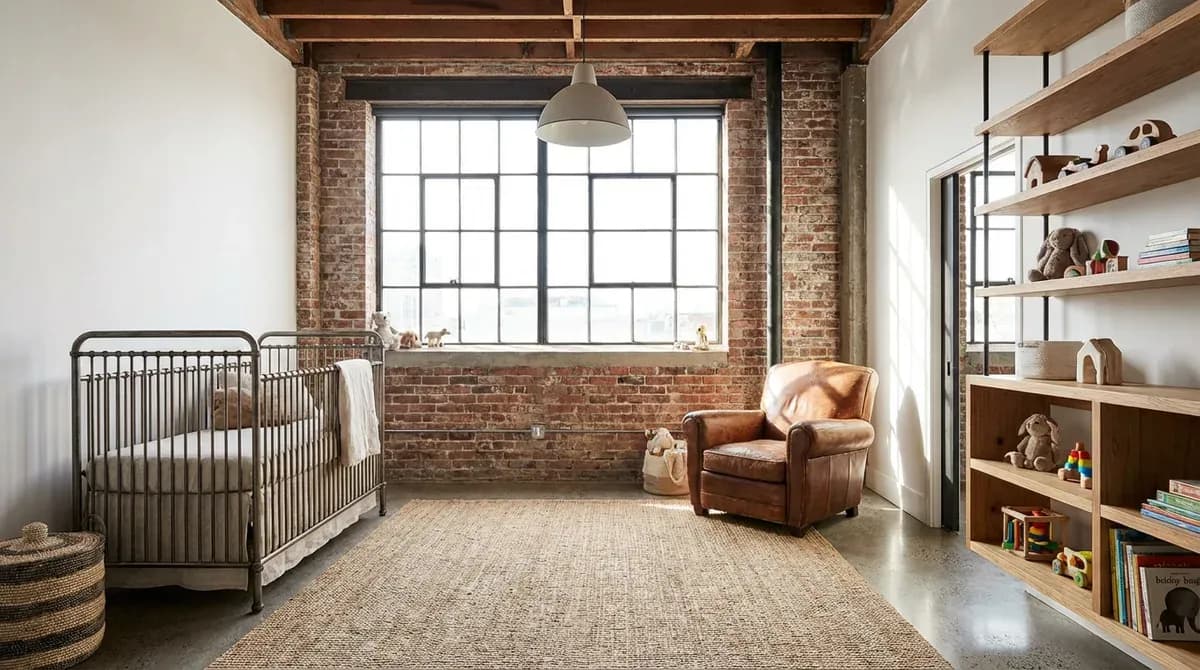
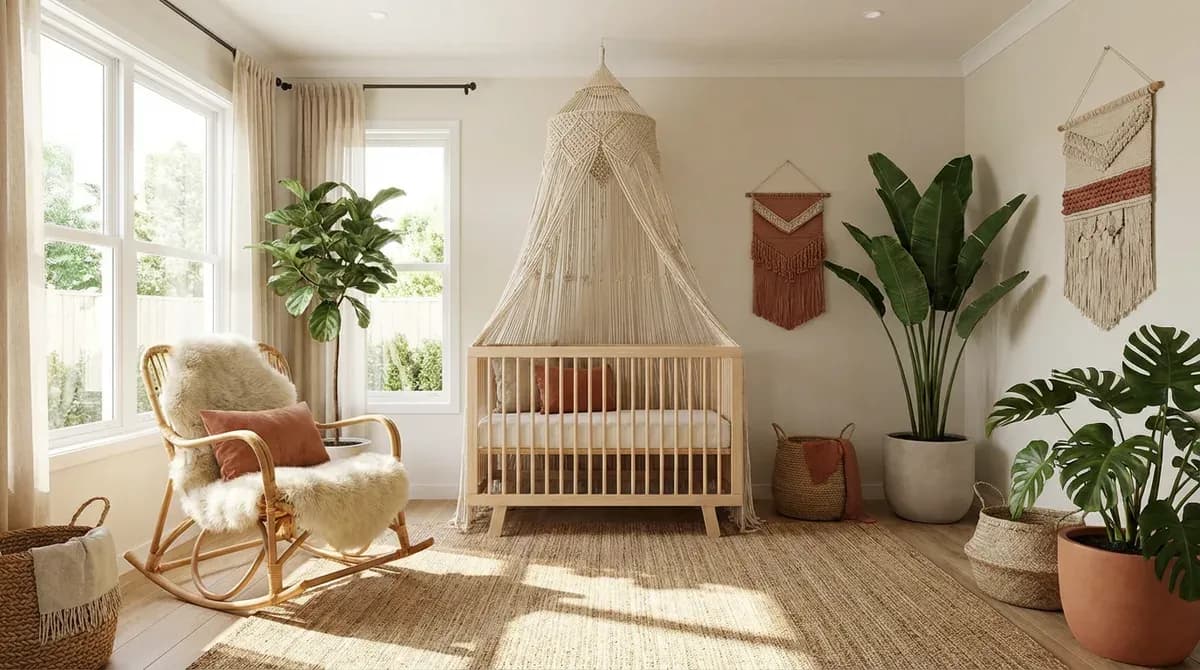
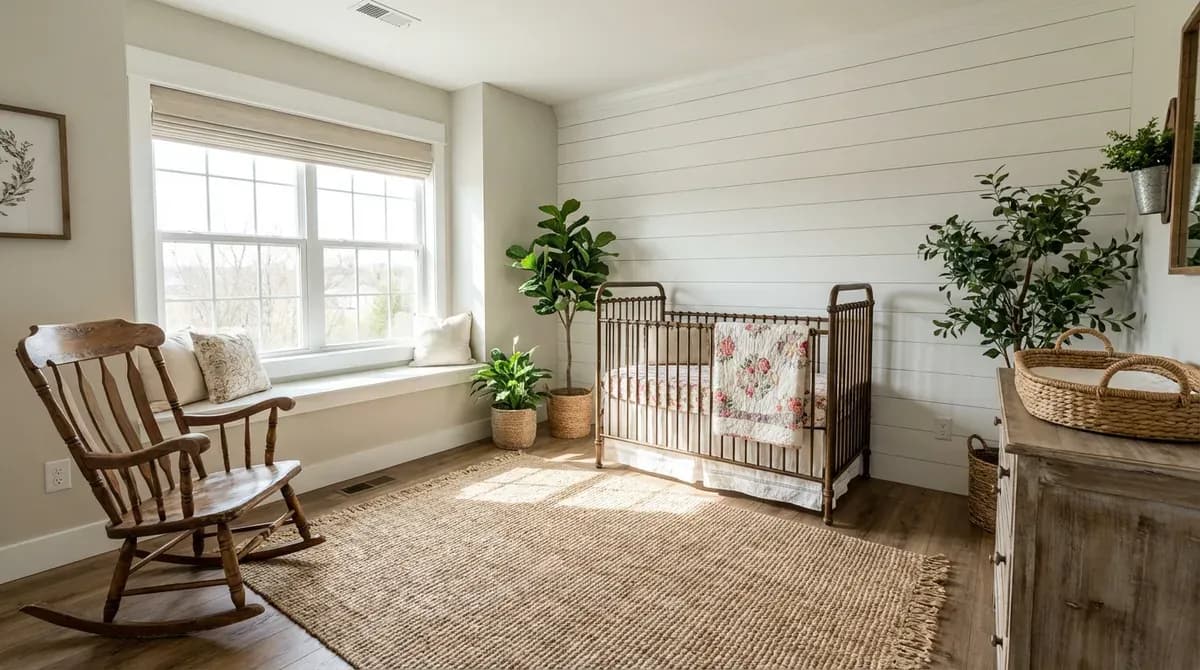
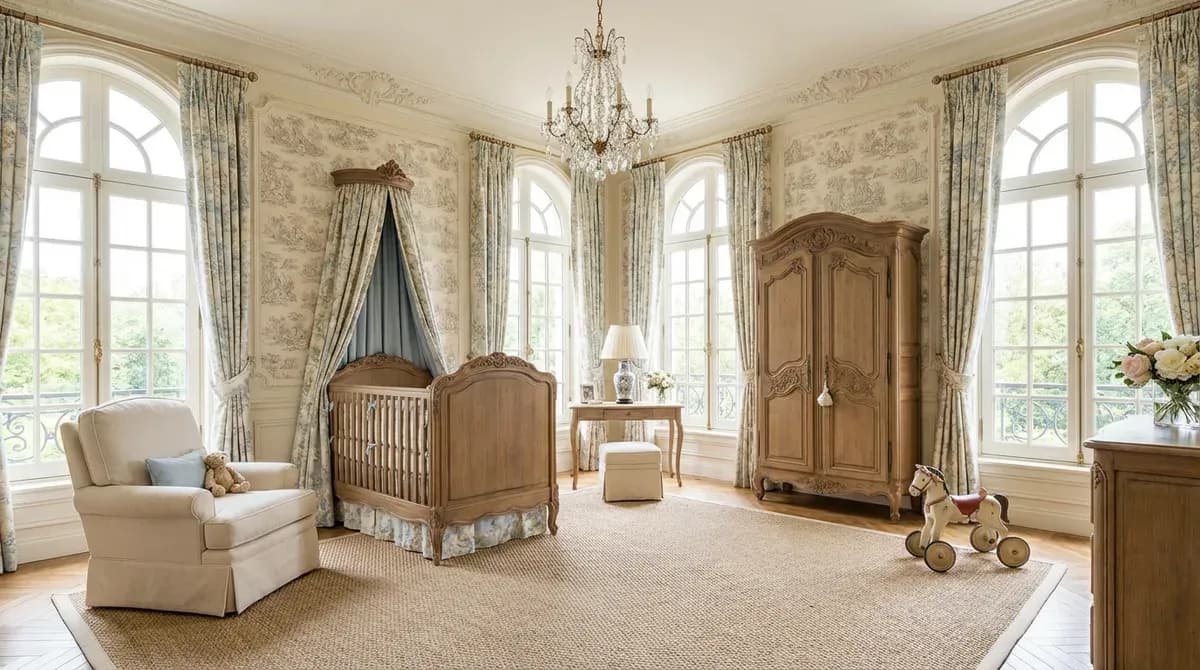
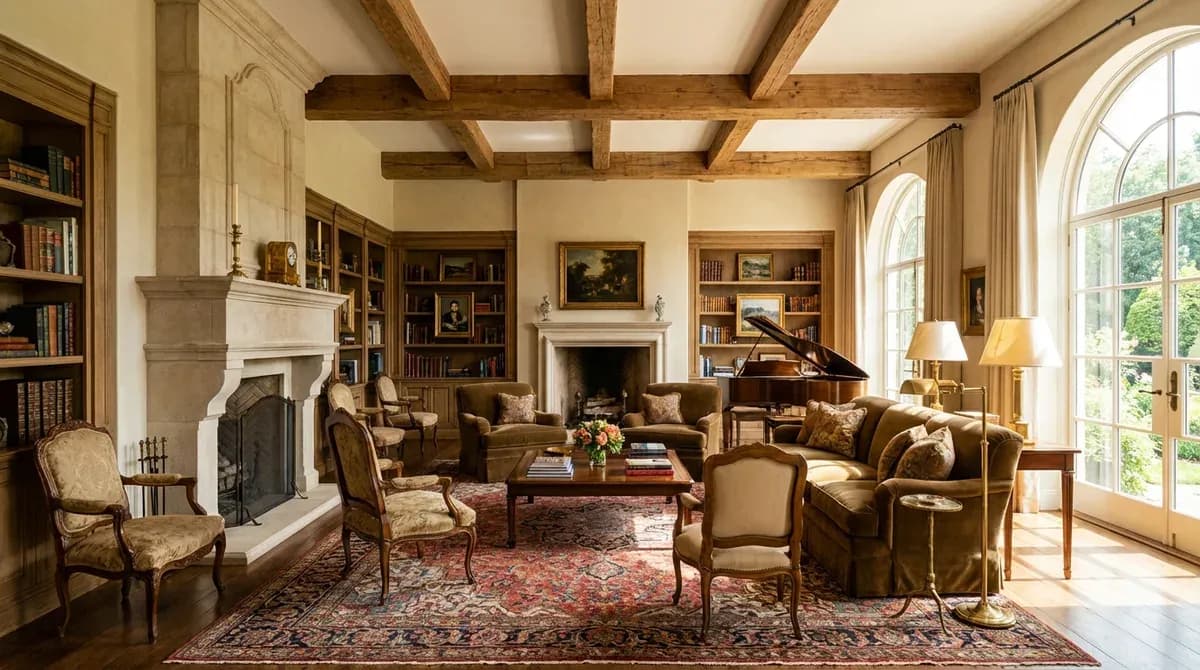
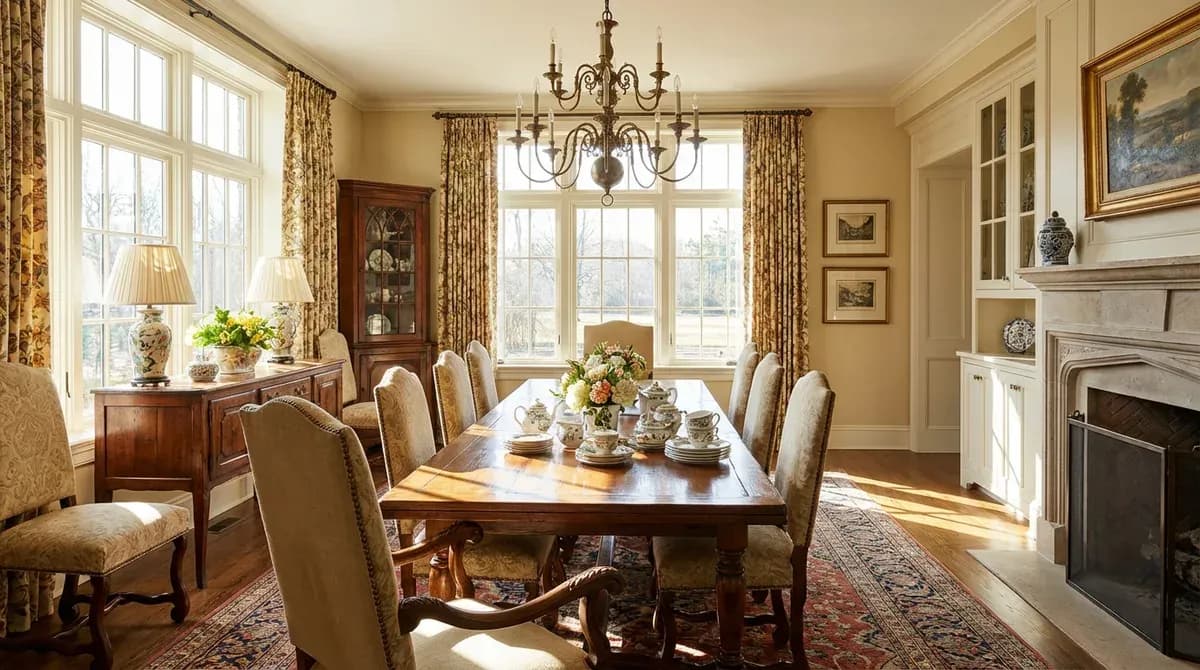
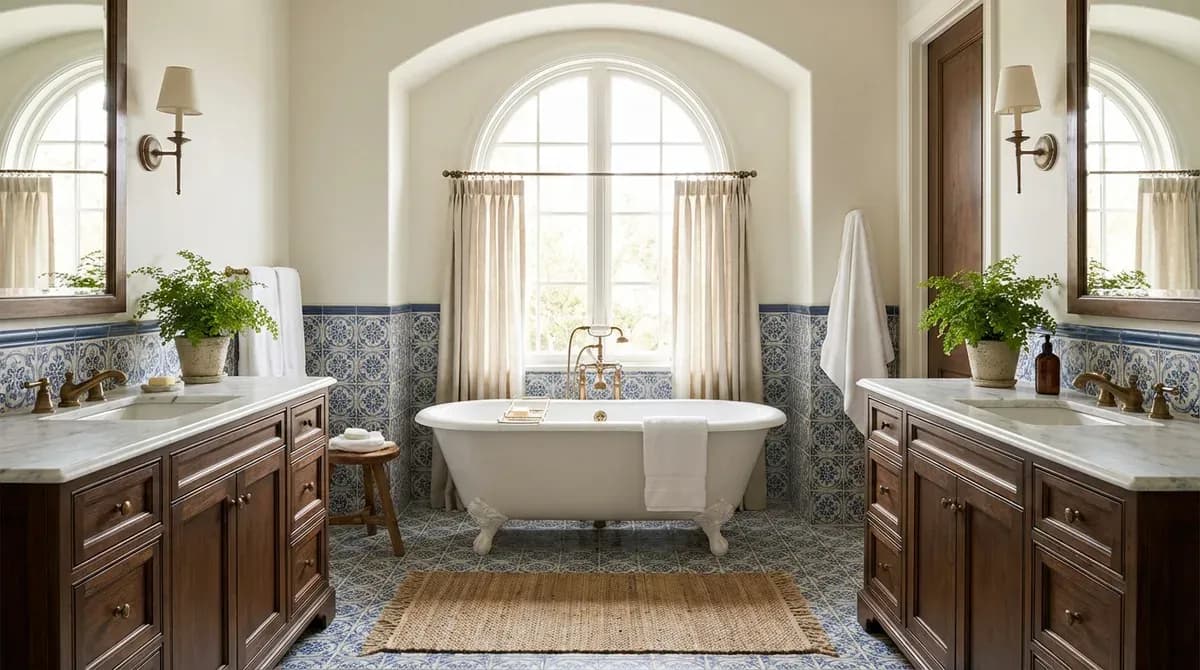
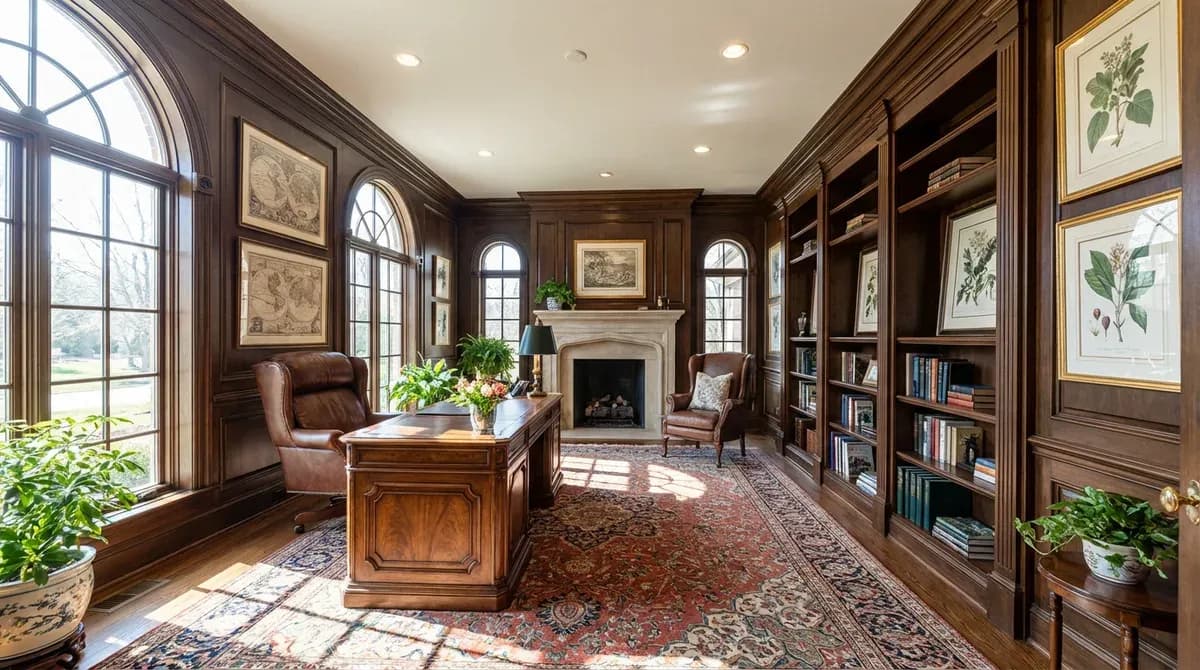
A traditional nursery is a room designed with the long view in mind. While trend-driven nurseries need redecorating every few years, a traditionally designed nursery — with its wainscoting, convertible furniture, and classic palette — transitions gracefully from newborn to toddler to young child with nothing more than a change of bedding and a few new prints on the wall. The palette is gentle but not saccharine. Ivory wainscoting covers the lower third of the wall, topped by a chair rail and upper walls in powder blue, blush, or soft sage. The crib in stained walnut or antique white sits against the primary wall, its paneled headboard and finial accents echoing the room's architectural details. A matching dresser with a removable changing tray flanks the window, and a rolled-arm glider occupies the corner, ready for the middle-of-the-night feedings that define the first year. The details make it traditional: brass drawer pulls on the dresser, a framed set of vintage botanical prints hung at a child's future eye level, a soft wool rug with a subtle border underfoot, and floor-length curtains in a gentle stripe that puddle slightly on the floor. It is a room that welcomes a baby with warmth and quality rather than novelty — and in a few years, it will welcome a child just as gracefully.
This Room in Every Style

Explore more design styles for your nursery

More Traditional Rooms

See Traditional design in other rooms

Frequently Asked Questions

Tutto quello che devi sapere su RoomLift — per designer, agenti e chiunque trasformi spazi con l'AI.

How do I design a traditional nursery that grows with my child?
Invest in a convertible crib (4-in-1), a quality dresser that outlasts the changing phase, and a glider that can move to another room. Use wainscoting and a neutral palette (ivory, powder blue, blush) that works for any age. Avoid themed decor — choose classic artwork and quality textiles that transition from baby to toddler to child.
What colors are timeless for a traditional nursery?
Ivory and cream as a base, with powder blue, blush pink, soft sage, or warm yellow as accents. These colors feel gentle without being babyish and transition well as the child grows. Warm wood tones (walnut, cherry) in the furniture add depth and prevent the room from feeling too pastel.
Is it worth spending more on nursery furniture?
Yes, if you choose convertible and well-built pieces. A high-quality crib that converts to a full headboard serves a child for 15+ years. A solid dresser lasts a lifetime. Cheaper flat-pack nursery furniture often cannot handle the conversion and needs replacing within a few years, making the investment false economy.
How do I make a small nursery feel traditional?
Add wainscoting (even in a small room, it adds character). Use a mini crib with traditional detailing. Mount a floating shelf instead of a bookcase. Keep the color palette light (ivory, blush) to expand the space visually. A single beautiful piece — a carved crib or an ornate mirror — provides enough traditional character without crowding the room.
What window treatment works in a traditional nursery?
Floor-length curtains in a blackout-lined cotton or linen with a soft pattern (stripe, gingham, or toile) hung from a decorative rod with finials. The blackout lining is essential for nap time. Layer with a sheer panel for daytime light filtering. Roman shades in a coordinating fabric are a good alternative for smaller windows.
Inizia a progettare gratis

No credit card required. 10 free renders.