Minimalist Interior Design: The Complete Guide
Jun 12, 2026 · 6 min read
Minimalist interior design strips a room back to what matters: clean lines, neutral tones, and breathing room. Learn the core principles, palette, and how to get the look.
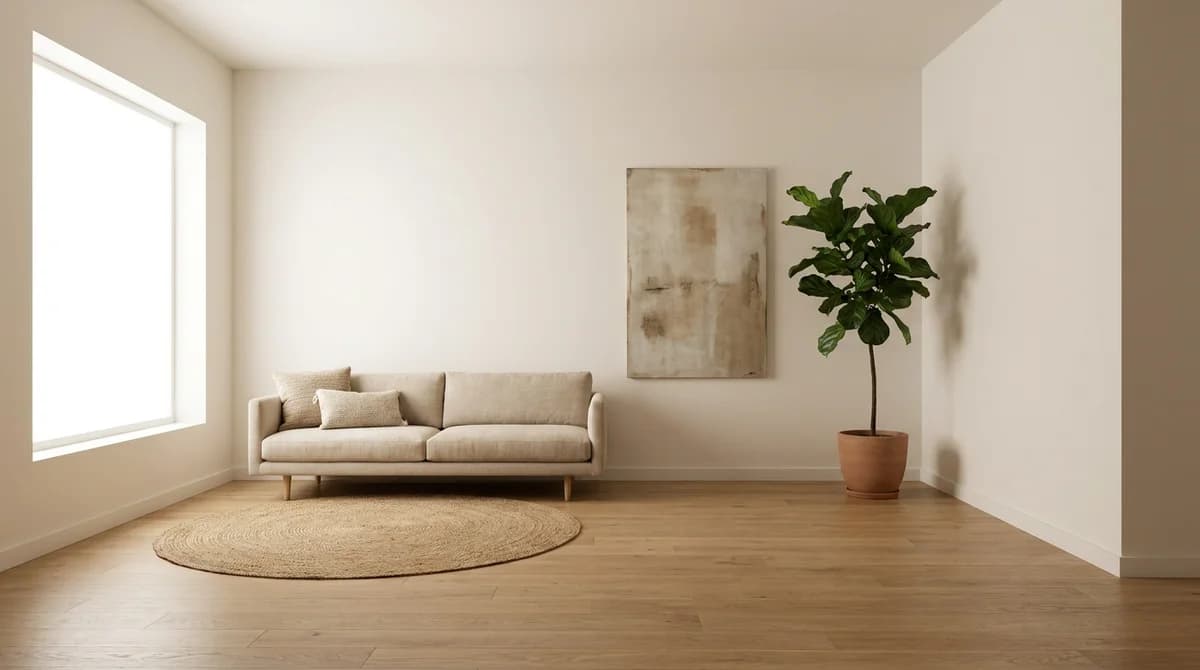
Minimalist interior design is the art of doing more with less. It strips a room back to only what is essential and beautiful, using clean lines, a neutral palette, and generous open space to create a calm, intentional home. This guide covers what minimalist design actually is, its core principles, how it differs from Scandinavian and Japandi, and how to get the look in any room.
What Is Minimalist Interior Design?
Minimalist interior design is a style built on the principle of "less but better." Every element in the room earns its place through function or meaning, and everything else is removed. The result is uncluttered surfaces, a restrained color palette, and plenty of negative space that lets the pieces you keep breathe.
Minimalism has deep roots: the "less is more" philosophy of architect Mies van der Rohe and the simplicity of traditional Japanese interiors both feed the modern style. Done well, a minimalist room never feels empty. It feels deliberate, calm, and quietly expensive.
The Core Principles of Minimalist Design
A few consistent rules define the look:
- Less, but better, fewer pieces, each chosen with care, instead of many fillers.
- A neutral, monochromatic palette, warm whites, grays, and beiges with restrained contrast.
- Negative space is a feature, empty wall and floor space is intentional, not unfinished.
- Clean lines and simple forms, low-profile furniture, flat fronts, no fuss.
- Function first, if it isn't useful or meaningful, it doesn't stay.
- Hidden storage, clutter is designed out so surfaces stay clear.
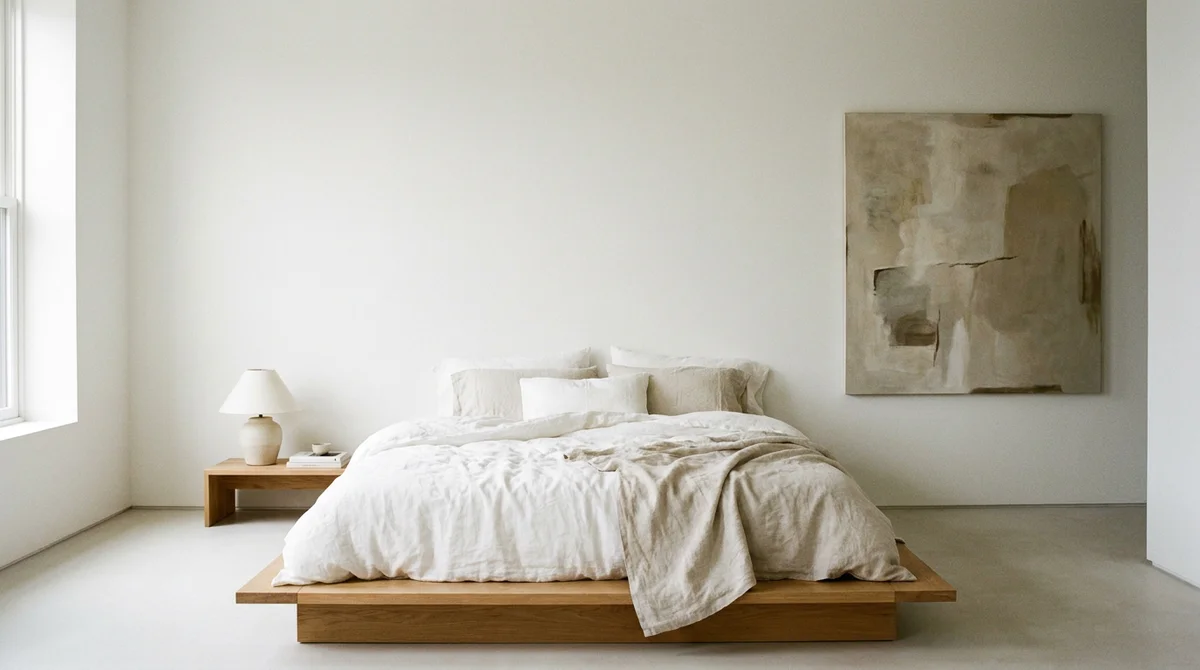
- Texture over color, natural wood, linen, wool, and stone add warmth without noise.
Minimalist vs Scandinavian vs Japandi
These three get confused constantly because they share a neutral, pared-back foundation. Here is how they differ:
| Style | Feeling | Palette | Warmth | Signature |
|---|---|---|---|---|
| Minimalist | Calm, disciplined | Neutral, often stark | Low (add it deliberately) | Empty space, restraint |
| Scandinavian | Cozy, lived-in (hygge) | Neutral + soft pastels | High | Light wood, soft textiles |
| Japandi | Serene, grounded | Warm neutrals + deep tones | Medium-high | Minimalist structure, Japanese craft |
In short: minimalism is the disciplined base, Scandinavian warms it up, and Japandi blends it with Japanese craftsmanship. For a wider tour of styles, see our interior design styles guide, or compare it to its opposite in our maximalist design guide.
A Minimalist Color Palette and Materials
The palette is intentionally tight:
- Base: warm white, soft gray, greige
- Contrast: black, charcoal
- Warmth: natural oak or walnut, plus one organic accent (a plant, a stone bowl)
Because color is restrained, materials and texture carry the room. Mix matte and natural finishes: oak, linen, wool, stone, and a little matte black metal. This is the single biggest difference between a minimalist room that feels serene and one that feels cold.
Minimalist Design Room by Room
Living room
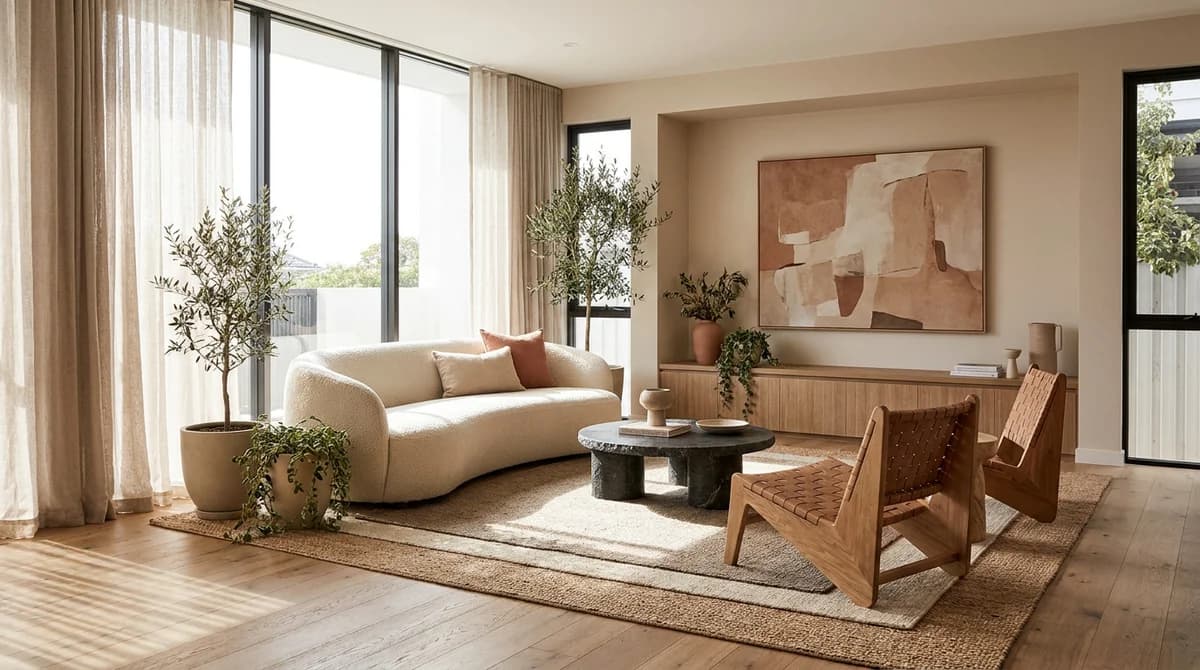
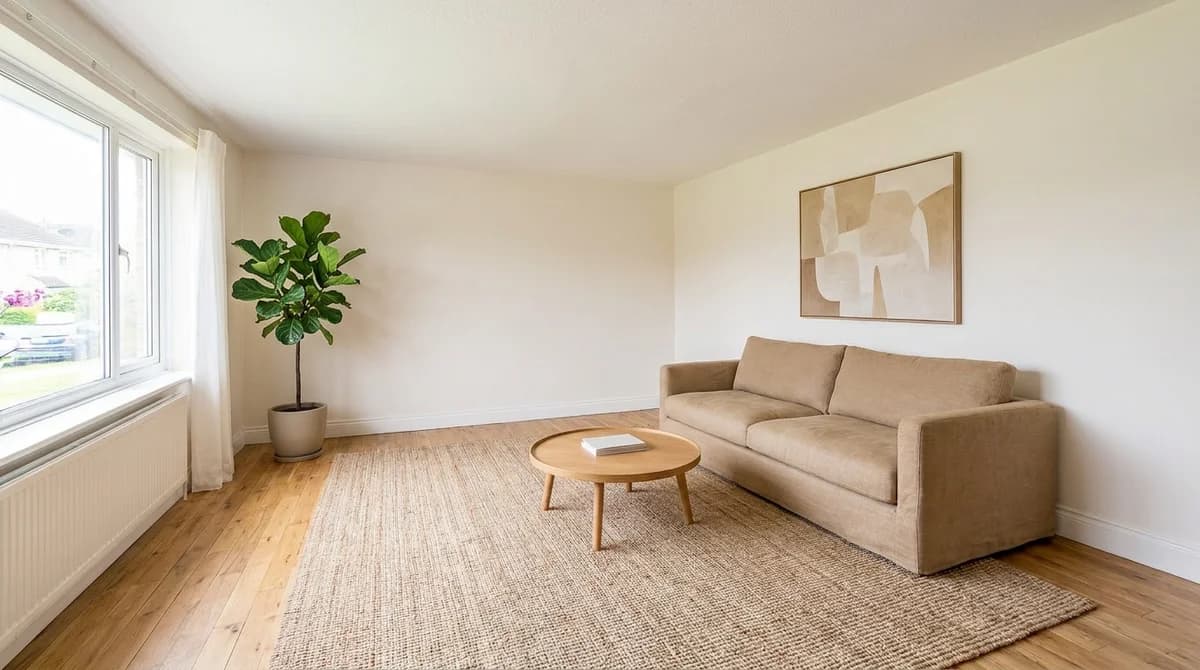
One low, neutral sofa, a simple coffee table, a single large artwork, and a rug to ground the space. Keep the floor and surfaces clear, and let a large window do the decorating.
Bedroom
A low platform bed with layered neutral linen, one nightstand, and a single piece of art. The calm comes from what you leave out.
Kitchen
Handleless flat-front cabinetry, integrated appliances, and clear counters. Choose one material moment (a stone backsplash or oak open shelf) and stop there.
The Most Common Minimalist Mistake
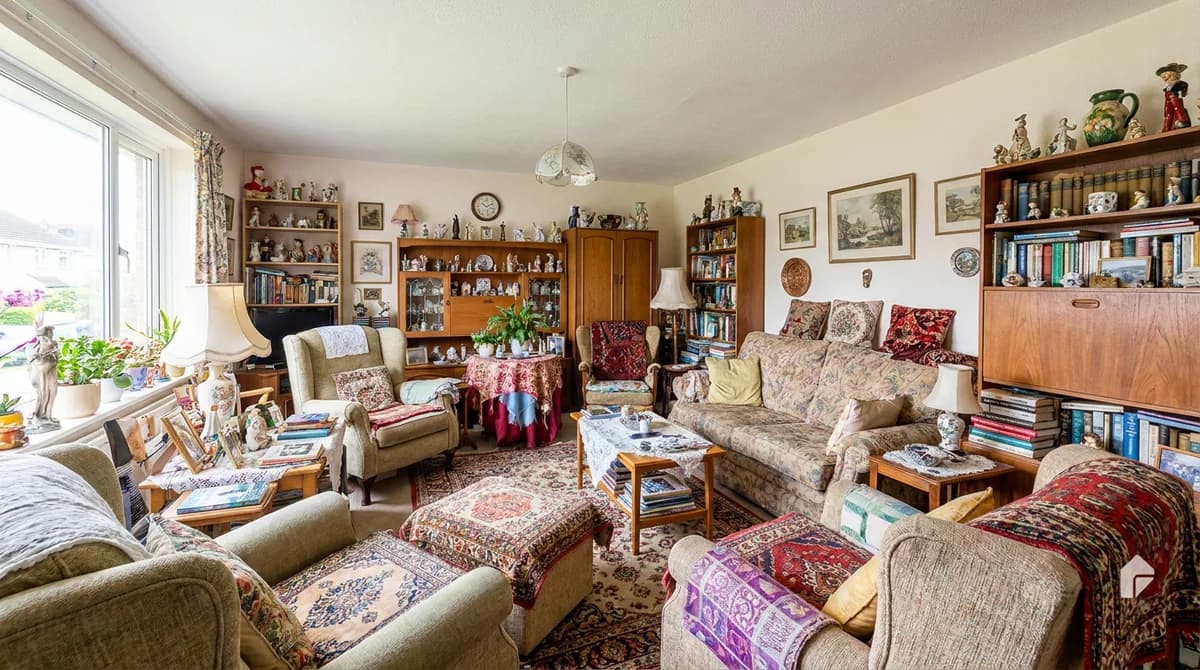
The biggest mistake is confusing minimalism with emptiness. A room that is bare and all-white reads as cold and unfinished, not calm. Minimalism is about intentional reduction with warmth layered back in through texture, natural materials, and soft light. The second most common mistake is the opposite: "clutter creep," where surfaces slowly fill back up. Hidden storage is what keeps a minimalist room minimalist.
See the Difference: Cluttered to Calm
The same room can go from overwhelming to serene by removing, not adding. Drag the slider to see a busy, over-furnished living room redesigned as a calm minimalist space:
How to Get the Minimalist Look (with AI)
The hardest part of minimalism is deciding what to remove. The fastest way to commit is to see the result before you touch the room. With RoomLift, upload a photo of your space, choose a minimalist direction, and generate a photorealistic redesign in under a minute. Test it against transitional or Scandinavian in the same room, then declutter toward the version you like. It works just as well for living rooms and bedrooms.
Frequently Asked Questions
What is minimalist interior design?
Minimalist interior design is built on "less but better." It keeps only what is essential and beautiful, clean lines, a neutral palette, clear surfaces, and generous negative space, so a room feels calm and intentional rather than empty.
Is minimalist design the same as Scandinavian design?
No. They share neutral palettes and clean lines, but Scandinavian design is warmer and cozier, with more wood and soft textiles. Pure minimalism is more disciplined and prioritizes empty space. Japandi blends the two.
What colors are used in minimalist design?
Warm whites, soft grays, beige, and taupe, with black for contrast and natural wood for warmth. Any color appears in small, deliberate doses.
How do I make my home more minimalist?
Declutter to only what is useful or loved, unify your palette to a few neutrals, choose fewer but larger pieces, add hidden storage, and maximize natural light. Previewing the redesign on a photo of your room first helps you decide what to cut.
Why does minimalist design sometimes feel cold?
Because it relies on hard surfaces and a flat palette with no texture. Add warmth through natural wood, layered linen and wool, a plant, and soft lighting, not more objects.
Ready to transform your listings?
Stage your first room in 20 seconds. No design skills needed.