Interior Design Styles: The Complete Guide (15+ Types Explained)
Feb 23, 2026 · 10 min read
A definitive guide to interior design styles — from Japandi and Mid Century Modern to Farmhouse and Maximalist. Learn the defining characteristics, key elements, and color palettes of 15+ major styles.
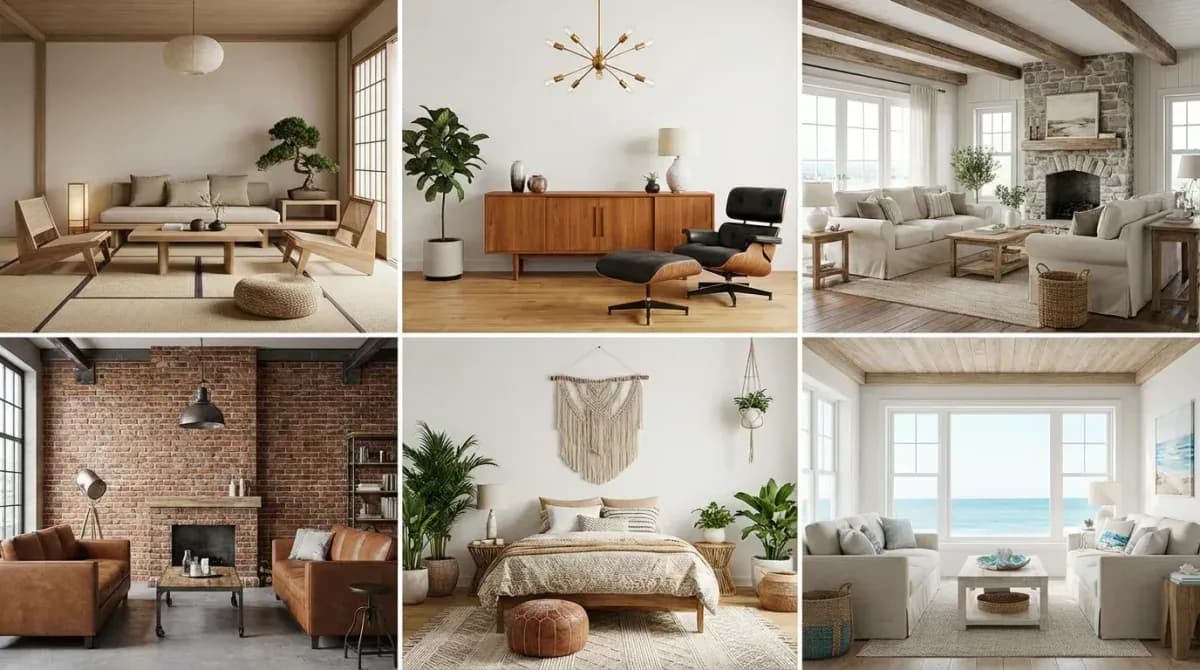
Interior design style is the visual and philosophical language that gives a space its character. The right style makes a room feel coherent, intentional, and genuinely livable. The wrong style creates visual tension — furniture fighting the architecture, colors conflicting with the light, and an atmosphere that never quite settles.
This guide covers 15+ major interior design styles practiced today — their defining characteristics, key elements, color palettes, and who they're for.
How Interior Design Styles Are Defined
A design style isn't just an aesthetic preference. It's a coherent system of choices: furniture silhouettes, material priorities, color relationships, spatial relationships, and the cultural or historical context that gave the style meaning. Understanding these systems helps you apply any style authentically rather than superficially.
According to a 2025 Houzz survey of 350,000 homeowners, 67% report feeling more satisfied with their homes after a design renovation that follows a consistent style direction, compared to 41% who made piecemeal changes.
Japandi
Best for: Minimalists who want warmth. Designers working with clients who want calm, purposeful spaces.
Japandi merges Japanese minimalism with Scandinavian simplicity into what many designers consider the most refined interior style of the current era. It emerged from a shared cultural philosophy: that good design and everyday function should be inseparable.
Key characteristics:
- Warm neutral palette: cream, warm white, sand, taupe, charcoal, soft black
- Natural materials: oak, walnut, bamboo, linen, ceramics, washi paper
- Low-profile furniture with clean lines and quiet craftsmanship
- Deliberate negative space — rooms feel unfinished to the untrained eye, complete to those who understand it
- Wabi-sabi influences: handmade objects, natural imperfections, tactile surfaces
Who uses it: Urban professionals, designers working with clients in the 30–55 age bracket, luxury residential projects.
Visualize your room in Japandi style →
Scandinavian
Best for: Families who want light, functional spaces. Designers prioritizing practicality without sacrificing style.
Scandinavian design emerged from the Nordic countries' practical response to long winters and limited daylight. It prioritizes maximum light, functional furniture, and a neutral palette with occasional color accents.
Key characteristics:
- White or light gray walls to maximize light reflection
- Functional furniture with clean lines — no unnecessary ornamentation
- Hygge elements: candles, soft textiles, warm lighting
- Wood accents in light tones: birch, pine, ash
- Accent colors used sparingly: dusty blue, sage green, blush pink
Difference from Japandi: Scandinavian design has slightly more color, a lighter palette, and a less austere feel. Japandi adds the Japanese influence — darker wood tones, stronger wabi-sabi elements, and a more contemplative atmosphere.
Modern Minimalist
Best for: Urban apartments. Clients who find visual complexity stressful.
Modern minimalism reduces design to its essential elements. Every item earns its place; nothing is decorative without also being functional. The result is spaces that feel expansive, disciplined, and serene.
Key characteristics:
- Palette: white, off-white, warm gray, black
- "Less is more" furniture selection — fewer pieces, better quality
- Hidden storage systems that maintain clean surfaces
- Materials: concrete, glass, polished metals, smooth stone
- Architecture as decoration — structural elements do the design work
Mid Century Modern
Best for: Properties from the 1950s–1970s. Designers working on renovation projects where the architecture has inherent MCM bones.
Mid century modern (MCM) is the design language of post-war America — optimistic, functional, and formally rigorous. Its furniture silhouettes (tapered legs, organic curves, modular configurations) remain as appealing today as when Eames and Saarinen designed them.
Key characteristics:
- Warm wood tones: walnut, teak, rosewood
- Furniture with tapered legs and organic, sculptural forms
- Bold accent colors of the era: mustard yellow, avocado green, terracotta, teal
- Statement lighting: Sputnik chandeliers, arc floor lamps, Nelson bubble lamps
- Large geometric rugs anchoring the seating area
Visualize your room in Mid Century Modern style →
Modern Farmhouse
Best for: Suburban homes. Family properties in markets where warmth and livability are primary buyer values.
Modern farmhouse design is America's most popular interior style by search volume. It blends rustic farmhouse warmth with contemporary clean lines — achieving the "lived-in but curated" feel that resonates with the widest demographic range.
Key characteristics:
- Shiplap and board-and-batten wall treatments
- Exposed wood ceiling beams (real or faux)
- Barn-style sliding doors in wood or black metal
- Apron-front (farmhouse) sinks in kitchens
- Neutral palette: white, warm gray, black accents, natural wood tones
- Matte black hardware throughout
Visualize your room in Modern Farmhouse style →
Industrial
Best for: Urban lofts, converted spaces, and clients who want a raw, masculine aesthetic.
Industrial design draws from factory and warehouse aesthetics: exposed brick, concrete, steel, and the visual honesty of structural systems. Done well, it creates spaces of powerful character that feel both contemporary and timeless.
Key characteristics:
- Exposed brick walls or concrete surfaces
- Steel and iron structural elements used decoratively
- Dark palette: charcoal, slate, black, with warm wood tones for balance
- Edison bulb pendant lights and cage-style fixtures
- Reclaimed wood furniture and surfaces
- Open shelving with visible plumbing and ductwork
Bohemian (Boho)
Best for: Creative individuals who prioritize personal expression. Spaces where conventional "neutral" staging would feel flat.
Bohemian design celebrates life fully lived: layers of collected objects, textiles from different cultures, plants at every scale, and a warm palette that feels rich without feeling heavy. Boho rooms photograph as deeply personal and aspirational.
Key characteristics:
- Layered rugs of different patterns and sizes
- Macrame wall art and woven textiles
- Rattan, wicker, and natural fiber furniture
- Abundant plants (trailing, hanging, floor-level clusters)
- Warm earth tones: terracotta, burnt orange, sage, caramel
- Global pattern mix: Moroccan, Indian, Peruvian influences
Visualize your room in Boho style →
Coastal
Best for: Properties near water. Clients who want a relaxed, light-filled atmosphere regardless of location.
Coastal design captures the sensory ease of beach living: light-washed interiors, natural textures, and a palette of blues, whites, and sandy neutrals. It's less literal than "nautical" design (which uses anchors and ropes) and more atmospheric — evoking the feeling of light through sea air.
Key characteristics:
- Palette: white, cream, sandy beige, soft blue, seafoam, driftwood gray
- Natural textures: jute, rattan, seagrass, weathered wood, linen
- Shiplap or beadboard wall details
- Layered blues in textiles from sky blue to deep navy
- Natural light maximized through sheer curtains or no curtains
- Sea glass, coral, and driftwood as decorative accents
Maximalist
Best for: Bold, expressive clients. Spaces where personality should dominate.
Maximalism is the philosophy that abundance creates beauty. Where minimalism removes, maximalism adds — layering color, pattern, texture, and collected objects until the room feels genuinely unique to the person living in it.
Key characteristics:
- Bold, saturated color — often multiple colors in the same room
- Pattern mixing: florals with geometrics, stripes with animal prints
- Gallery walls covering entire surfaces with art and objects
- Rich materials: velvet, silk, brass, lacquer
- Statement furniture that commands attention rather than receding
- No bare walls, no empty surfaces
Transitional
Best for: Clients who want a polished, market-neutral result. Renovation projects that need to appeal broadly.
Transitional design is the intentional blending of traditional and contemporary elements — structured furniture with clean-lined silhouettes, classic architectural details with modern finishes. It's the most versatile and widely-applicable style in professional interior design.
Key characteristics:
- Neutral palette with warm undertones
- Traditional furniture forms updated with contemporary materials
- Mix of antique/vintage pieces with contemporary items
- Classic architecture (crown molding, wainscoting) alongside modern fixtures
- Balanced symmetry without the rigidity of purely formal Traditional design
Traditional
Best for: Period properties, classic architectures, clients who value established elegance over trend.
Traditional interior design draws from European (primarily English and French) design history — ornate furniture, rich fabrics, symmetrical arrangements, and spaces that feel formal and enduringly sophisticated.
Key characteristics:
- Rich jewel tones and classic neutrals: burgundy, navy, forest green, cream, gold
- Furniture with carved details, cabriole legs, and upholstered surfaces
- Symmetrical room arrangements
- Crown molding, coffered ceilings, wainscoting
- Formal area rugs in classic patterns (Oriental, Persian)
French Country
Best for: Kitchens and dining rooms where warmth and charm are paramount. Rural properties and Provence-inspired homes.
French country design captures the relaxed elegance of rural Provence — aged wood, soft stone surfaces, soft linens, and an atmosphere of effortless lived-in beauty. It's warm and romantic without being fussy.
Key characteristics:
- Soft, muted palette: lavender, sage, butter yellow, soft blue, cream
- Worn and distressed wood finishes — furniture with history
- Stone floors and exposed ceiling beams
- Provincial patterns in textiles: toile, gingham, floral
- Ceramic and terracotta accessories
Art Deco
Best for: Urban apartments with strong architecture. Clients who want glamour and visual sophistication.
Art Deco emerged in 1920s Paris as a celebration of modernity, luxury, and bold geometric form. Its influence on interior design created spaces of dramatic elegance — strong geometric patterns, luxurious materials, and a palette of gold, black, and jewel tones.
Key characteristics:
- Strong geometric patterns: sunburst, chevron, fan motifs
- Luxurious materials: marble, brass, mirrored surfaces, lacquer
- Rich palette: black, gold, emerald, deep blue, burgundy
- Streamlined furniture with geometric upholstery
- Statement lighting with brass and glass fixtures
Wabi-Sabi
Best for: Clients pursuing a deeply calm, authentic aesthetic. Spaces where manufactured perfection feels wrong.
Wabi-sabi is a Japanese philosophy before it is a design style — finding beauty in imperfection, transience, and incompleteness. Applied to interior design, it creates spaces of profound quiet: handmade objects, natural materials in their unfinished state, and a palette derived from nature's muted tones.
Key characteristics:
- Pale, natural palette: aged white, warm gray, clay, moss, stone
- Handmade ceramics and objects with visible imperfections
- Natural materials in their raw or minimally processed form
- Aged and worn surfaces celebrated rather than replaced
- Negative space as a primary design element
Contemporary
Best for: Current residential design without strong historical reference. Clean, updated interiors that feel distinctly of the present moment.
Contemporary design describes interiors that reflect the current moment in design culture rather than a fixed historical style. Unlike "modern" design (which refers to a specific early-to-mid 20th century movement), contemporary design evolves continuously — incorporating current trends in material, color, and form.
Key characteristics:
- Current-season color trends applied with restraint
- Clean lines and minimal ornamentation
- Mix of materials: wood, metal, glass, stone, textured textiles
- Open floor plans that emphasize flow over enclosure
- Bold statement pieces alongside neutral backgrounds
How to Choose the Right Interior Design Style
The most effective way to select a design style is to test it in your actual space. Different rooms, light conditions, architectural details, and existing elements respond differently to each style.
Use AI interior design tools to generate photorealistic renders of your room in multiple styles simultaneously. Compare Japandi against Scandinavian, Modern against Transitional, Boho against Coastal — in your actual space, with your actual dimensions and light conditions. The right style will be immediately obvious when you see it.
Try RoomLift free — 5 renders, no credit card required →
Sources & References
- American Society of Interior Designers (2024). Interior Design Outlook and State of the Industry. ASID Research.
- Houzz (2024). Houzz Home Study: Emerging Design Trends. Houzz Research.
Ready to transform your listings?
Stage your first room in 20 seconds. No design skills needed.