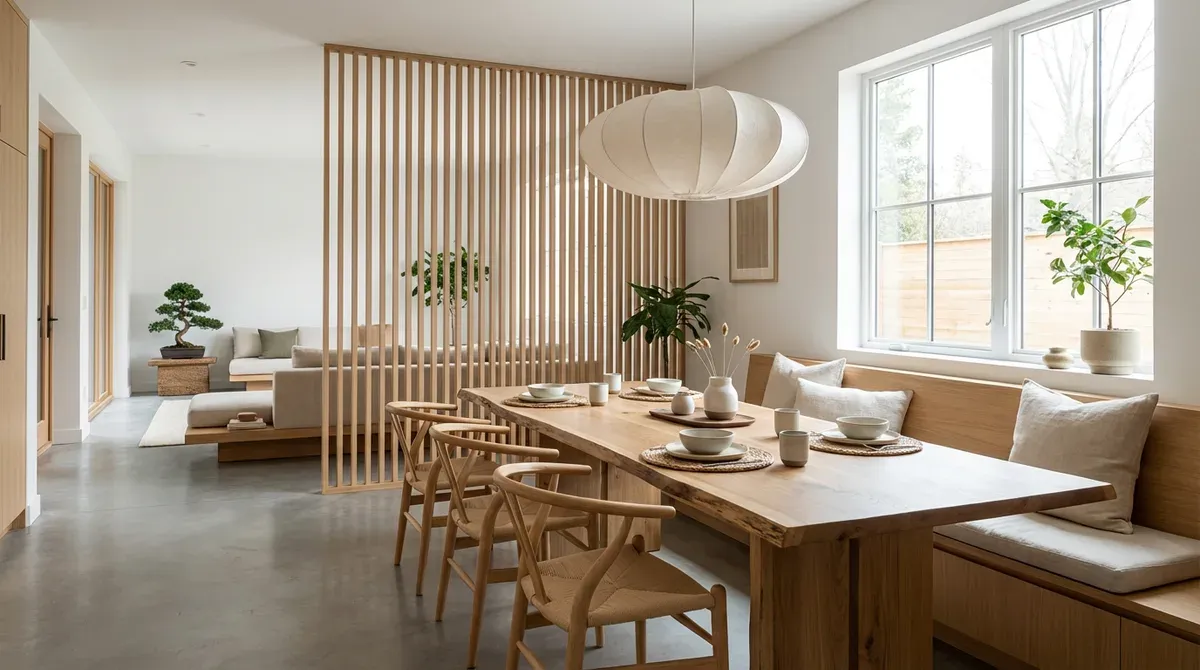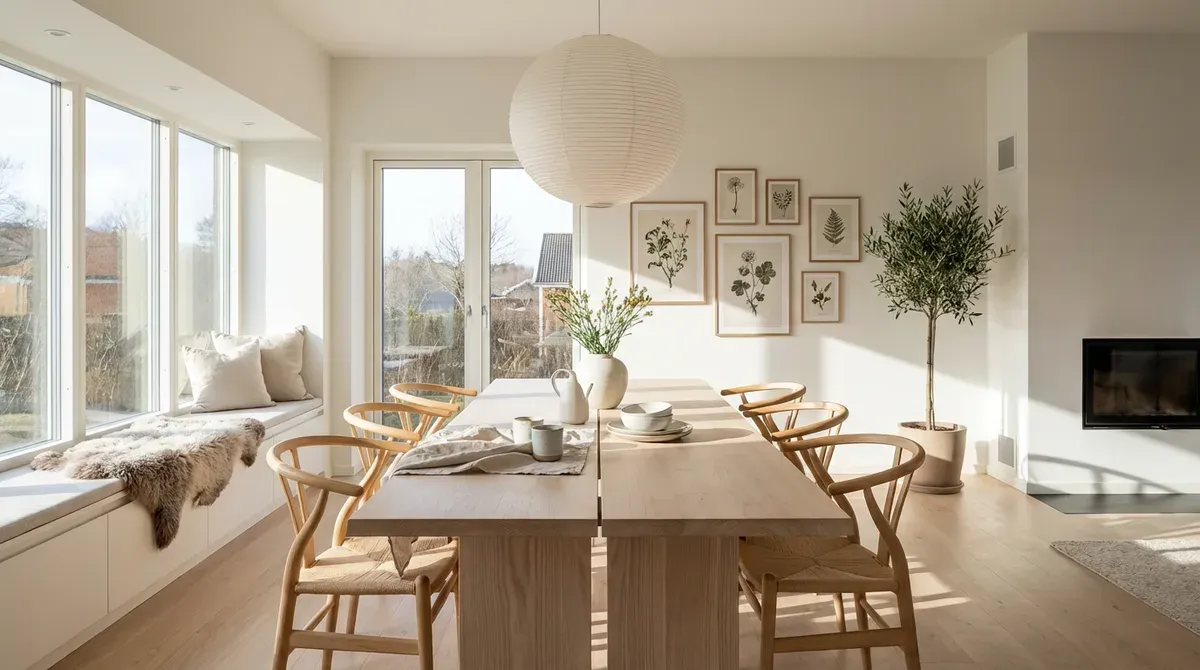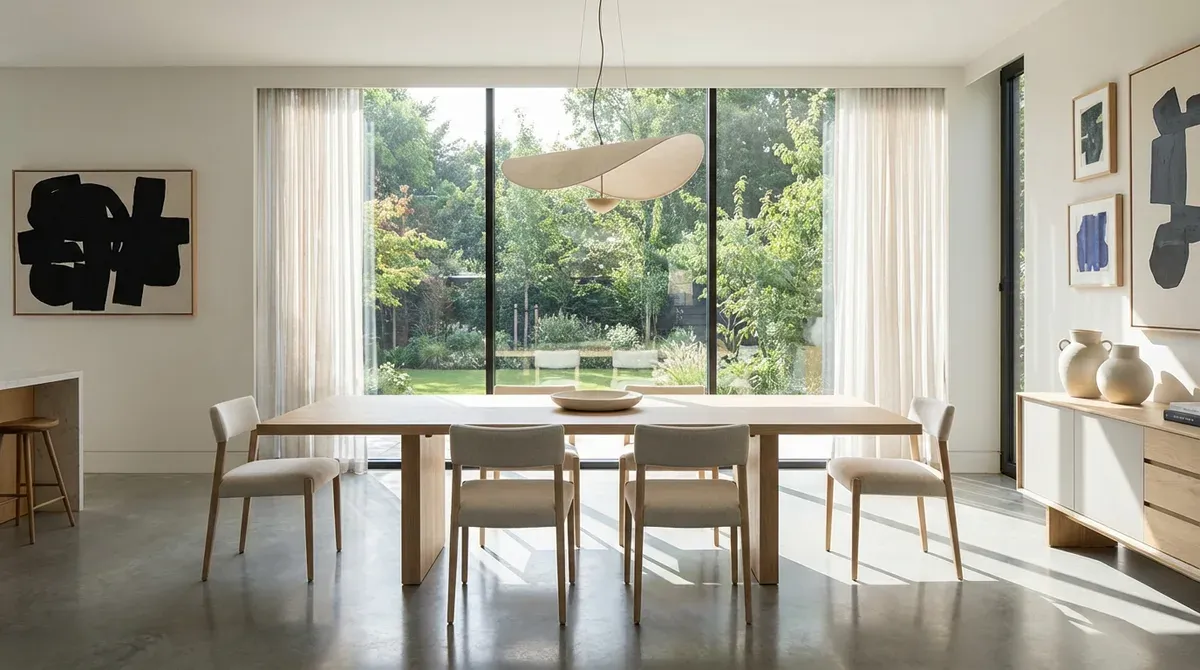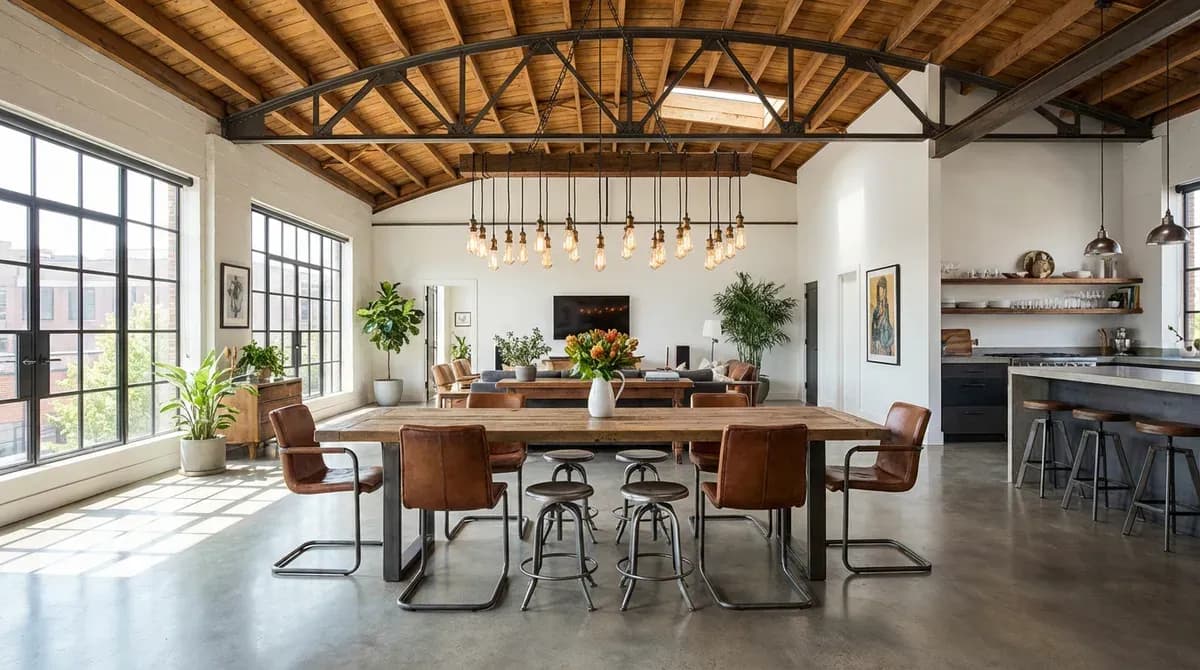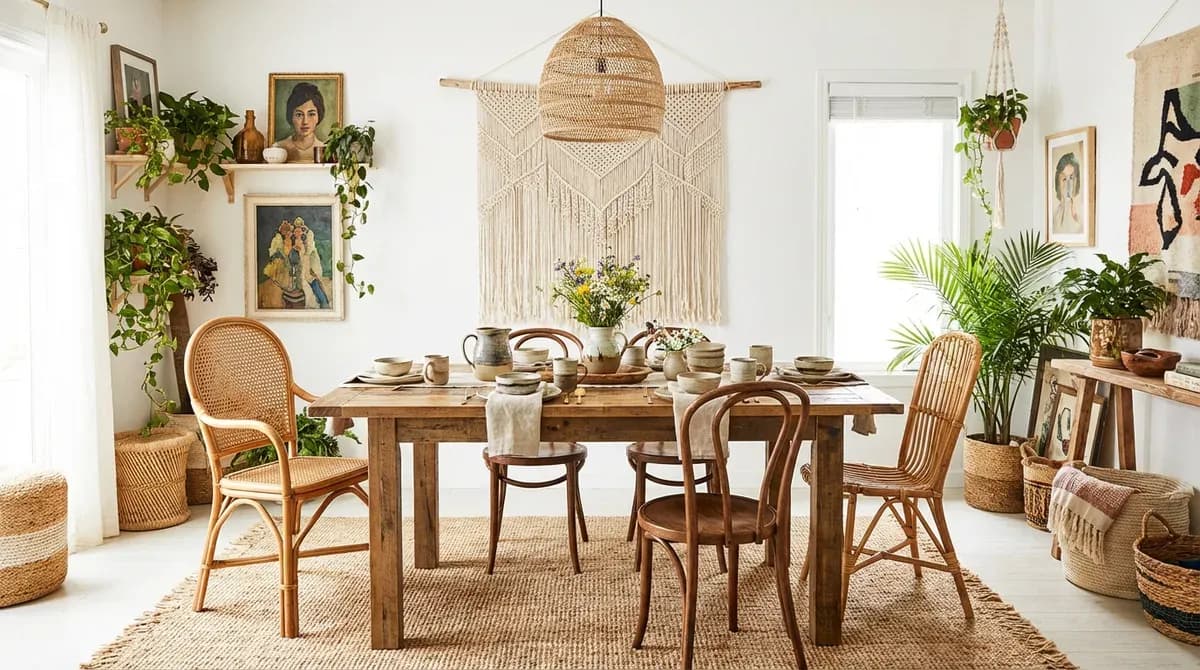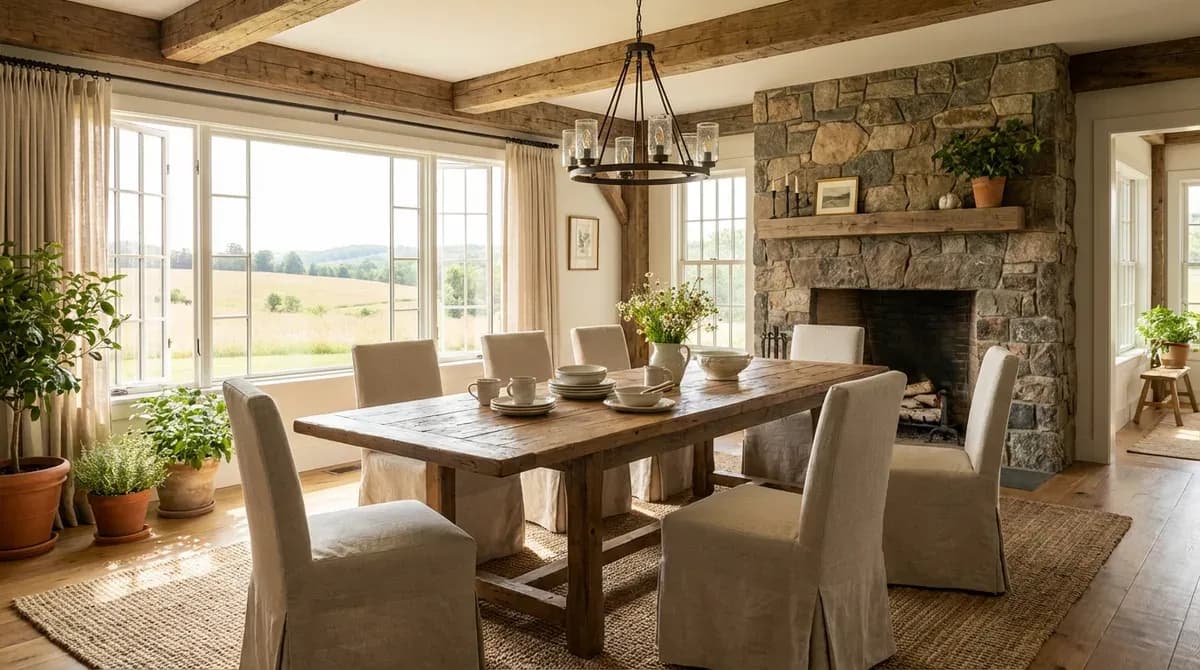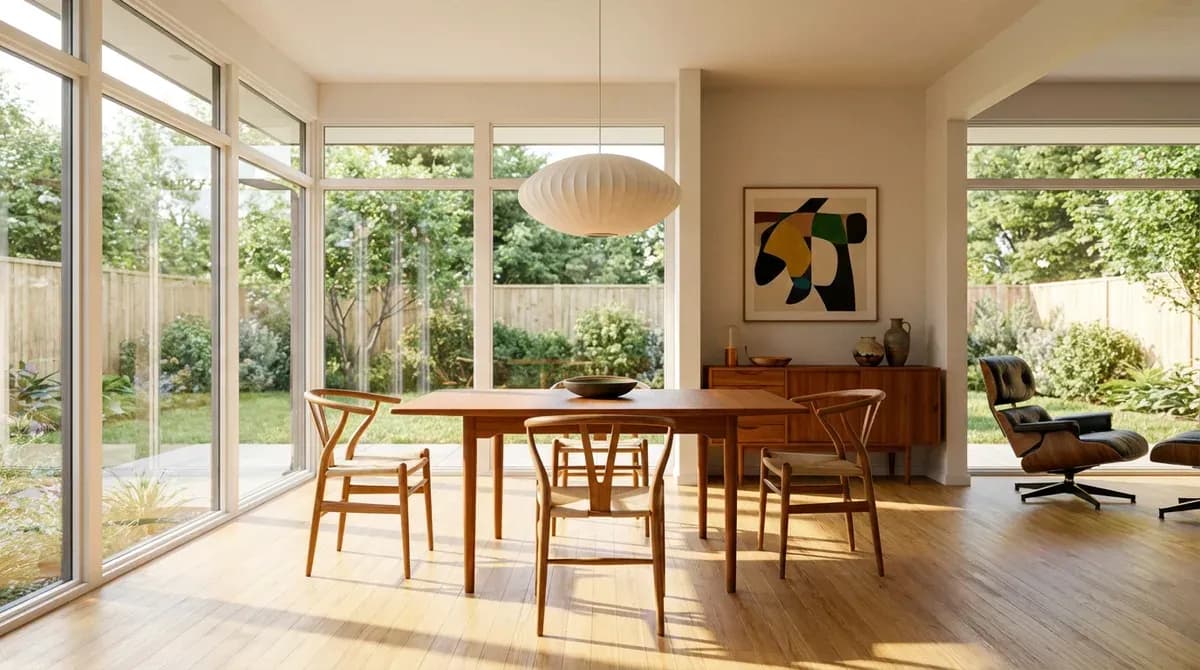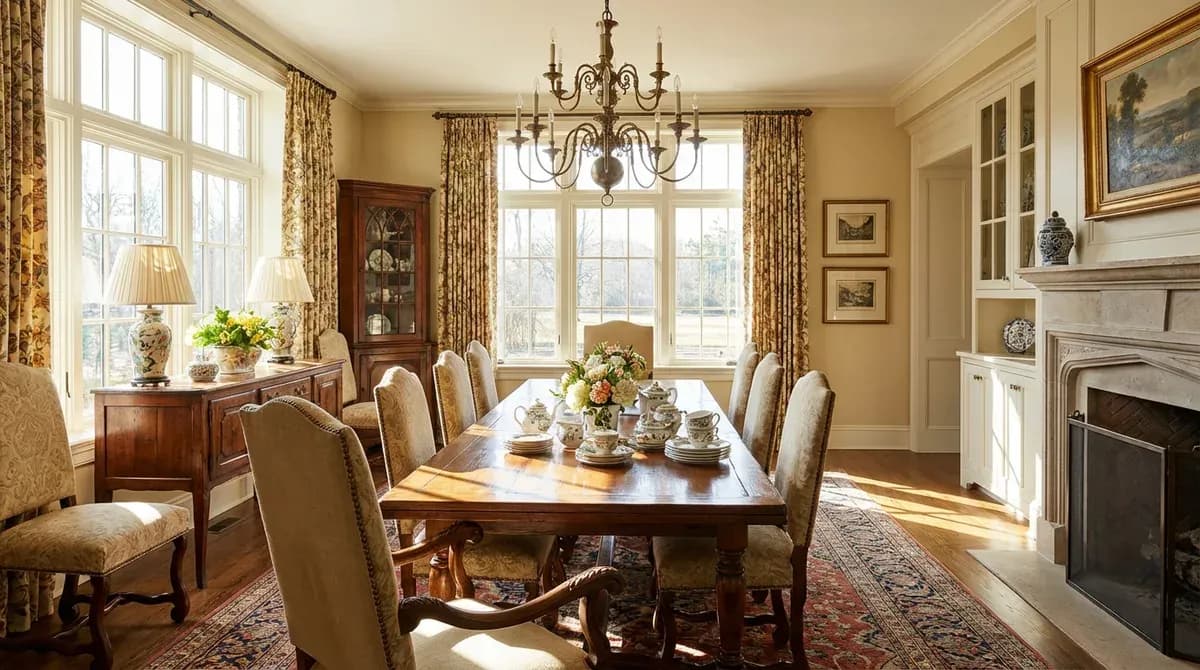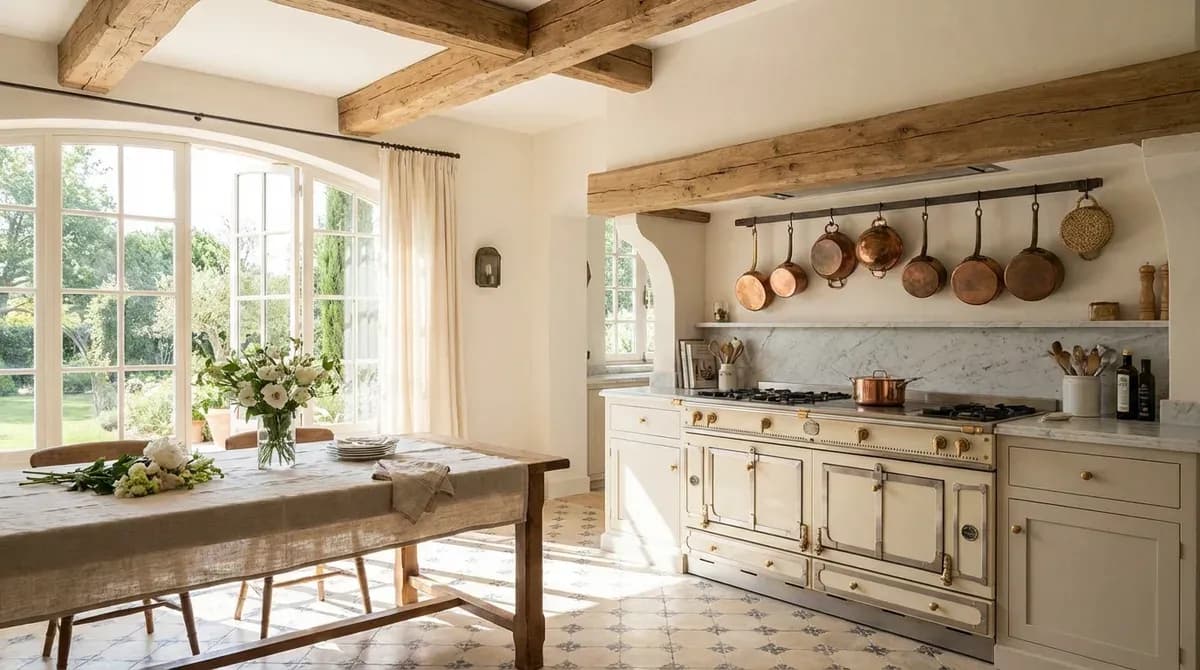
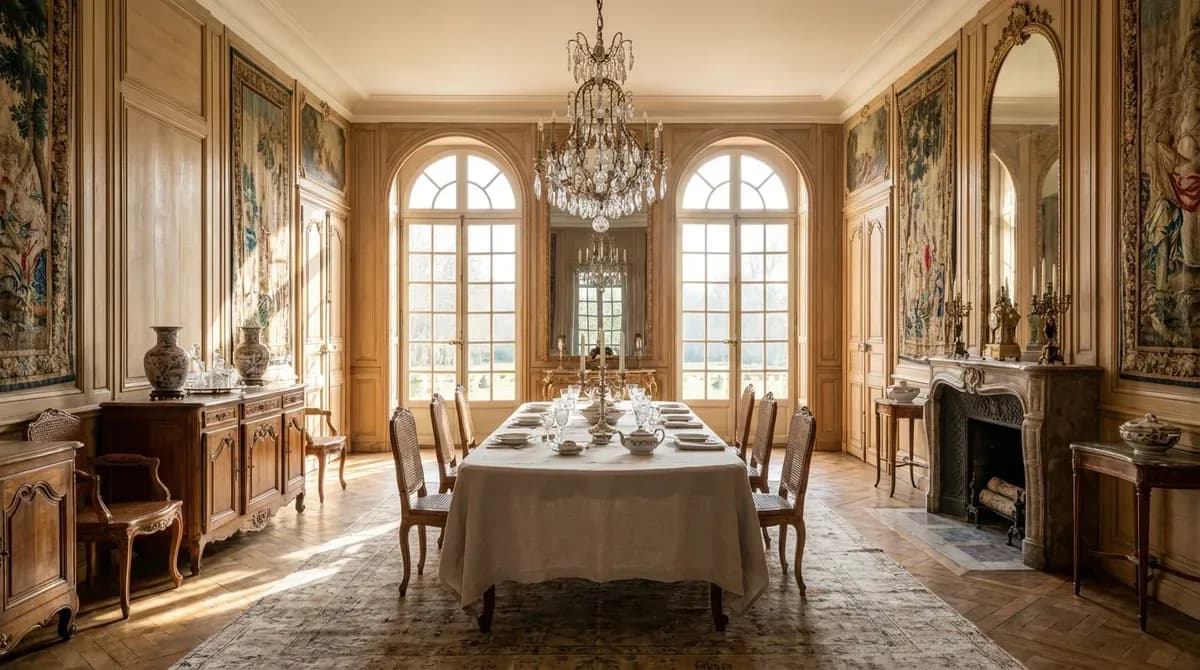
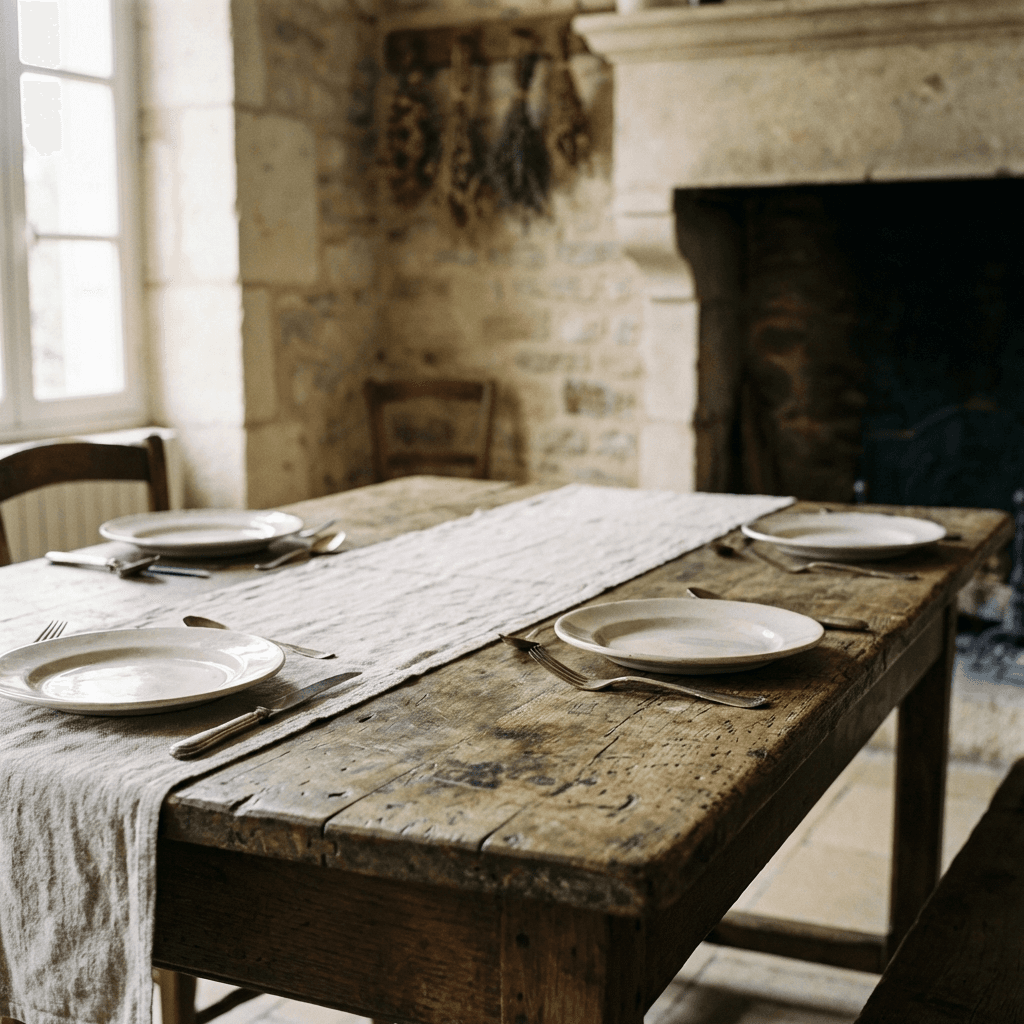
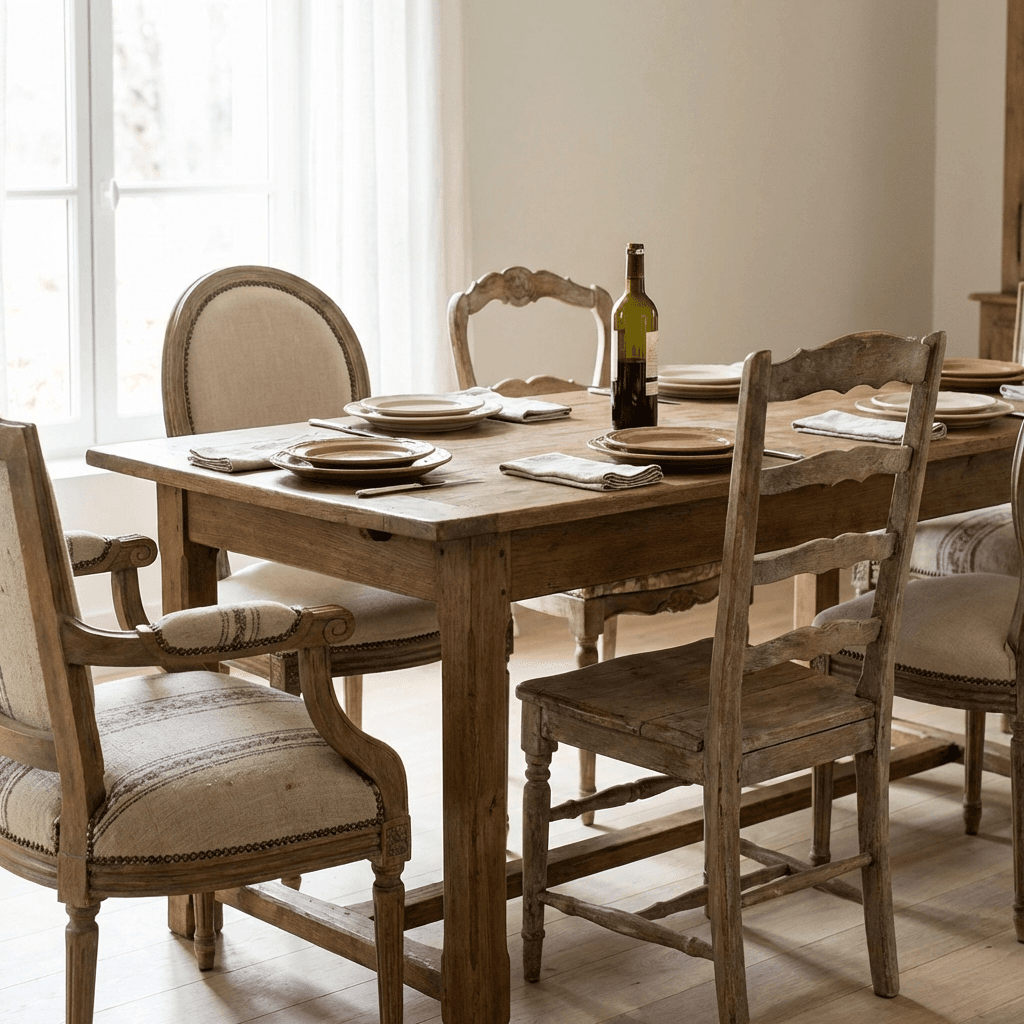
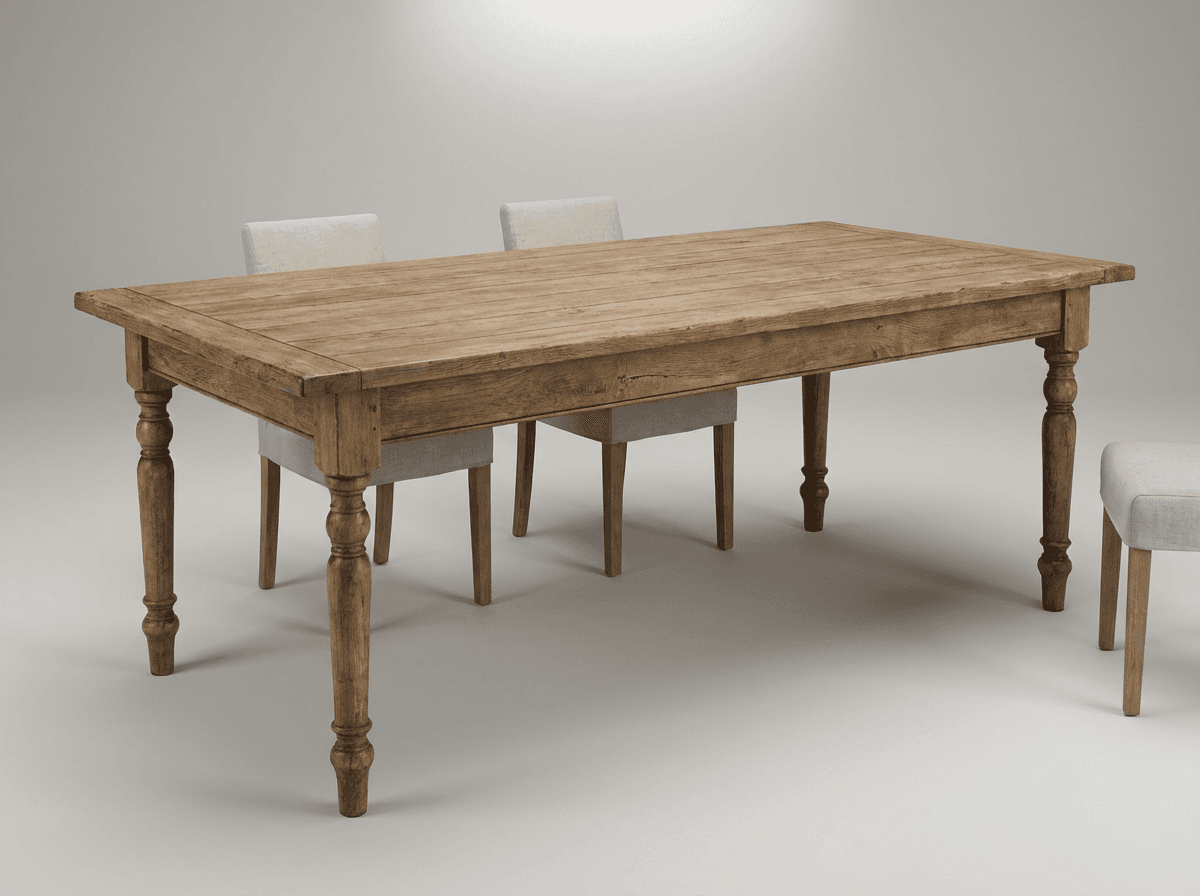
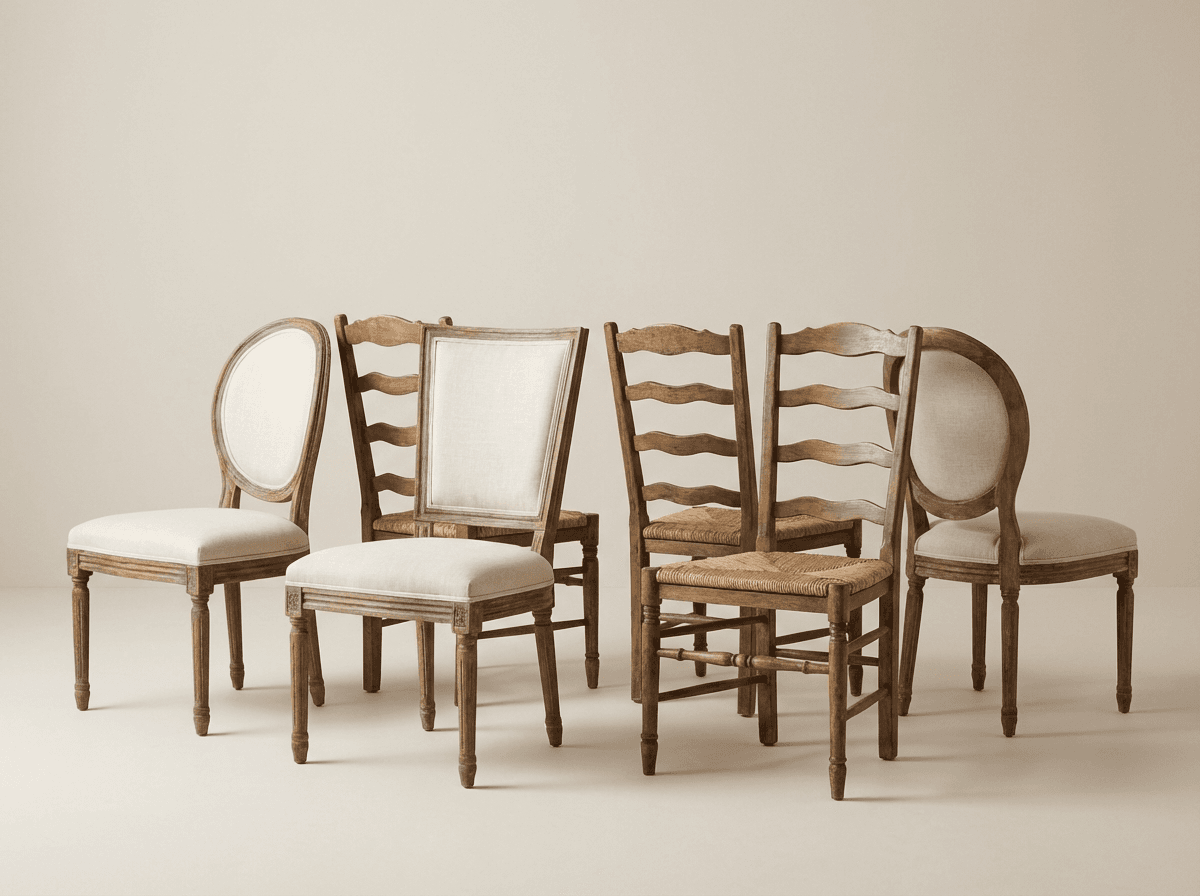
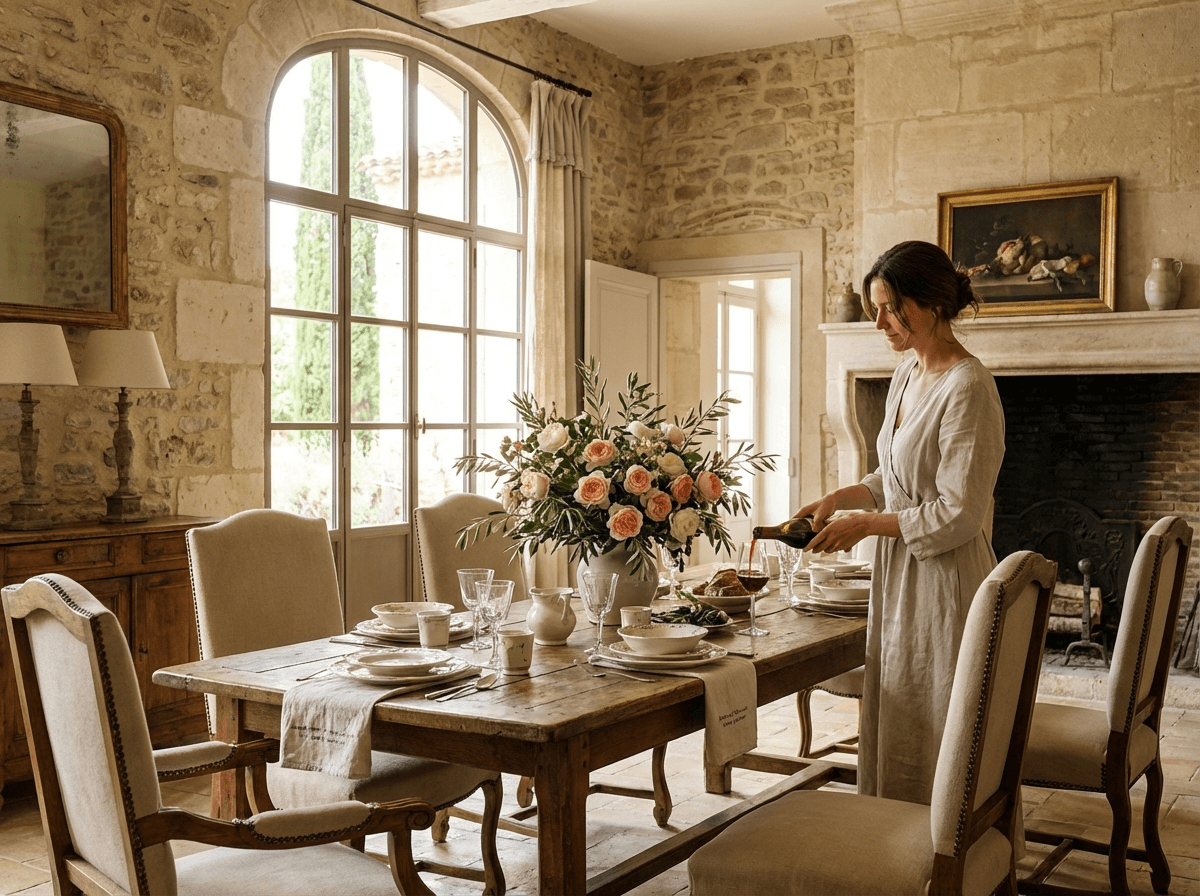
The French dining room is organized around a single principle: the meal is the event, and the room exists to honor it. The long oak table — scarred, waxed, and warm — is the stage. Around it, a deliberate mix of chairs invites guests to sit however they're most comfortable: armchairs at the heads for the hosts, lighter side chairs along the flanks, perhaps a bench for the children or for pulling in a last-minute guest. Nothing matches perfectly, and that is the point.
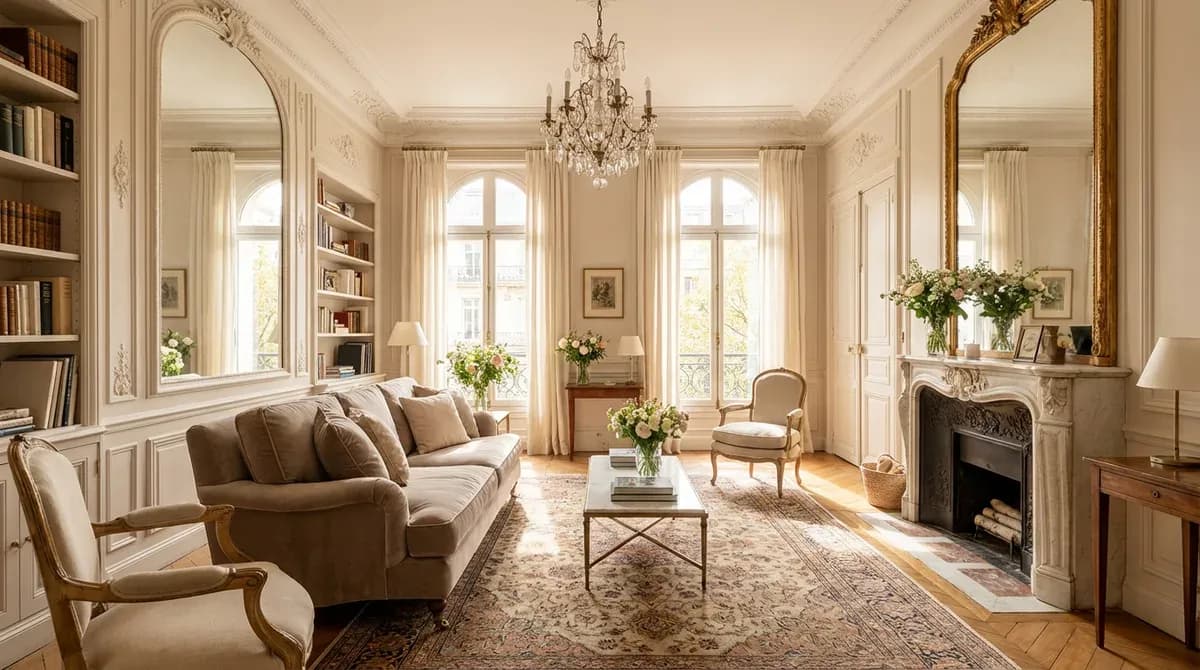
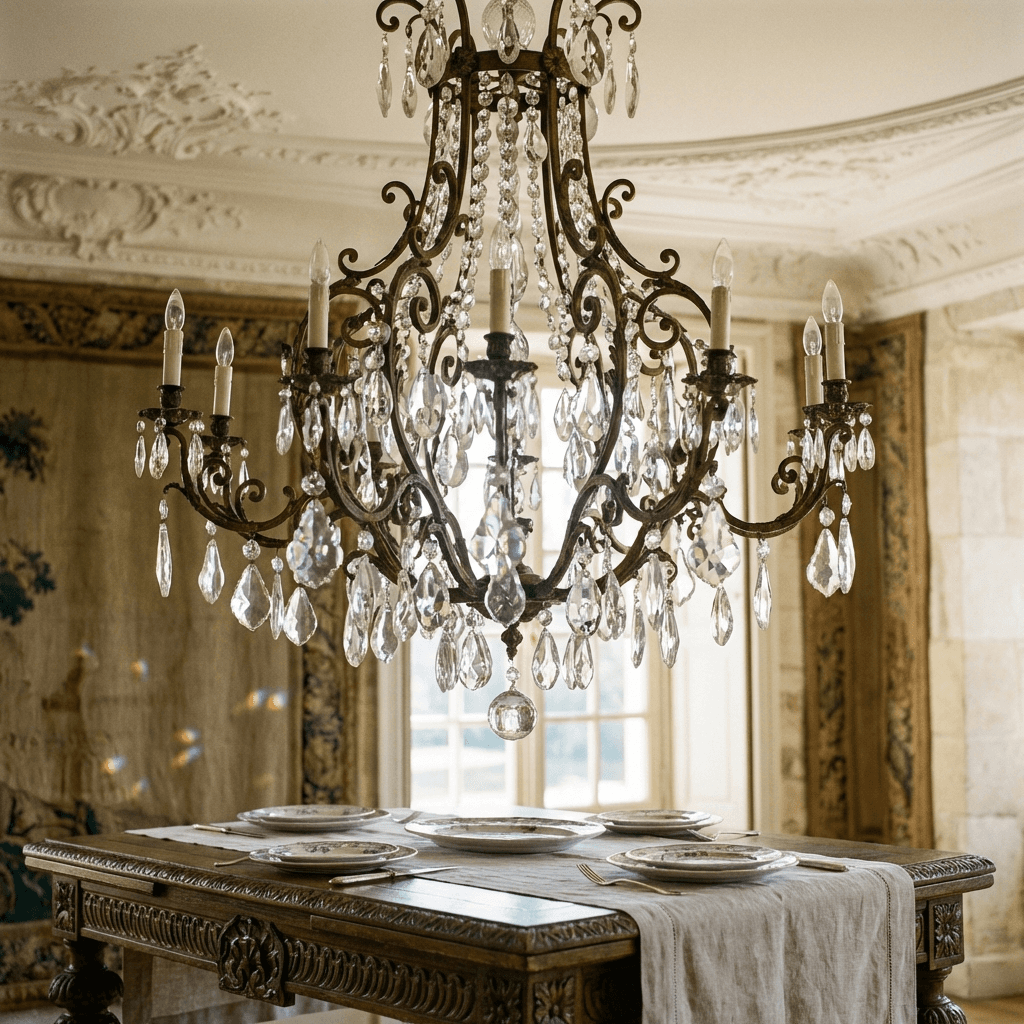
Above the table, a chandelier transforms the scene. Crystal drops scatter candlelight across the ceiling; an iron candelabra casts dramatic shadows on the walls. The chandelier on a dimmer takes the room from a bright family lunch — windows open, sunlight streaming — to an intimate dinner party where faces glow by lamplight and the conversation stretches past midnight.
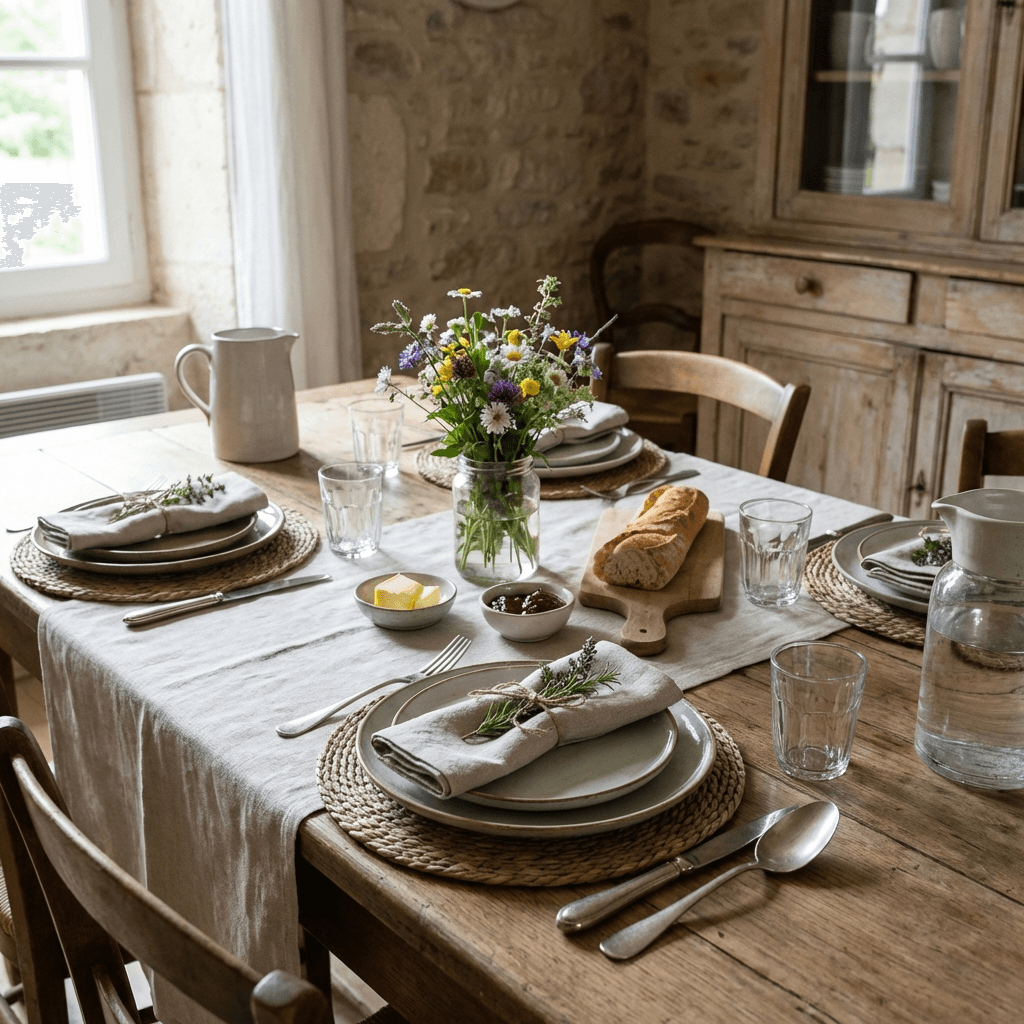
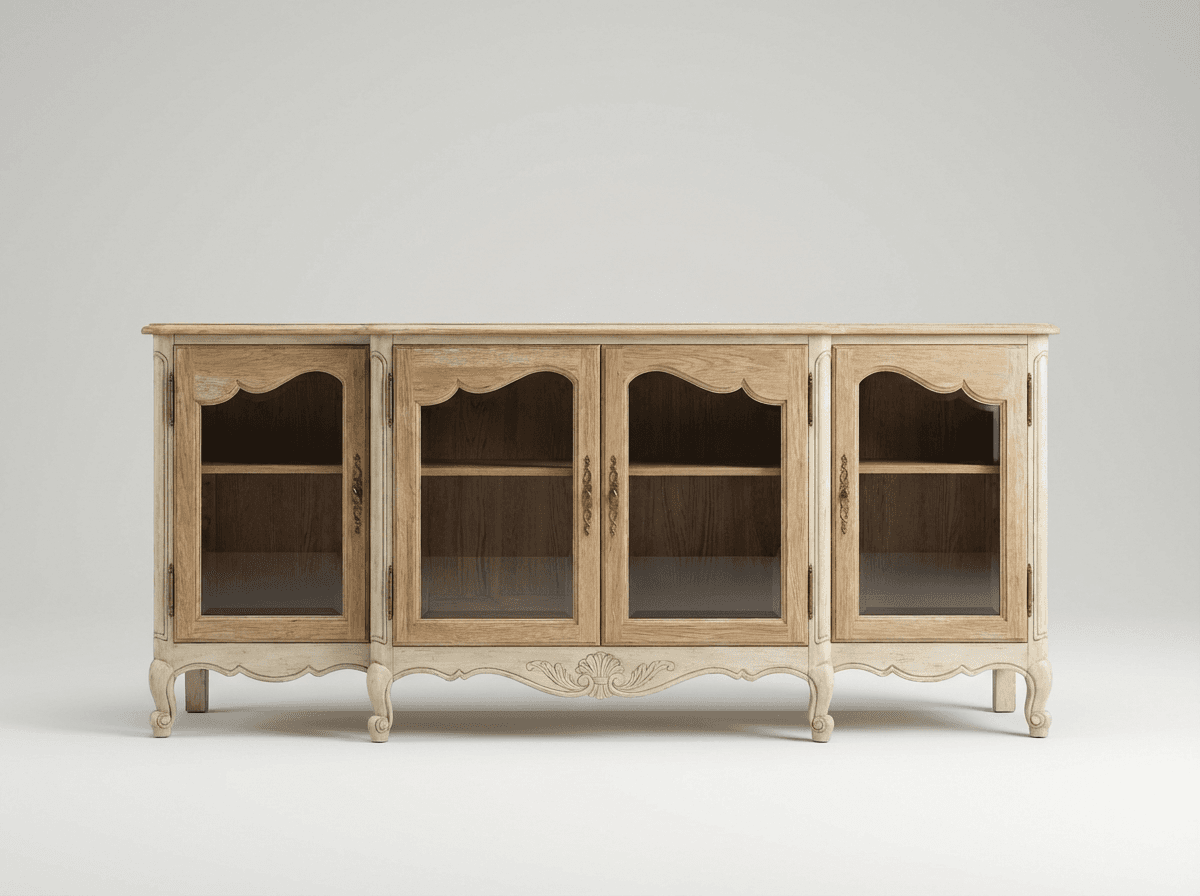
Along the wall, a glass-front buffet holds the household's curated collection of dishes: cream-colored faience, hand-blown wine glasses, a soup tureen inherited from a grandmother. The table is set with linen and seasonal flowers — nothing precious, nothing that would make a guest anxious about spilling. The French dining room says: come sit, eat well, stay long. The food will be simple and good. The company is what matters.