Cursos de fotografía inmobiliaria: los mejores de 2026
Aug 12, 2026 · 13 min de lectura
Comparamos los mejores cursos de fotografía inmobiliaria de 2026 por formato, precio y perfil ideal, más las habilidades de negocio que casi ninguno enseña.
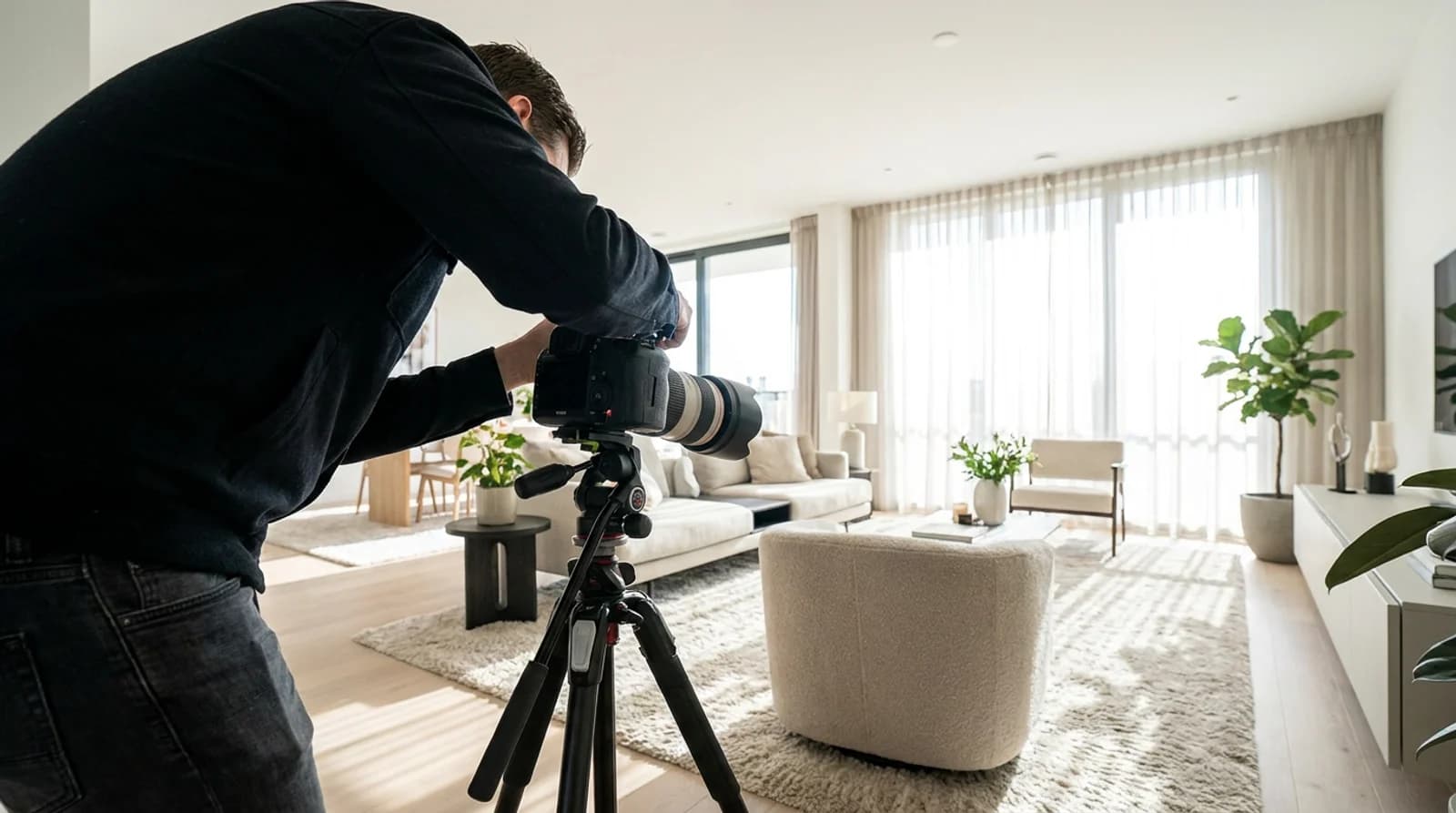
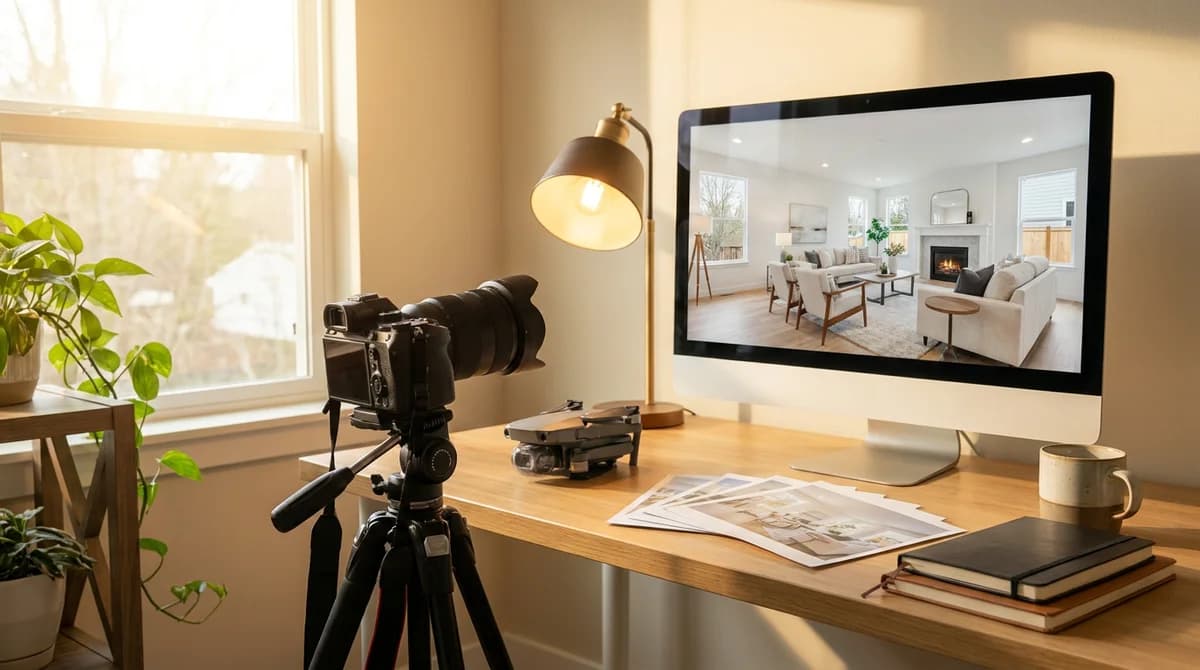
Los mejores cursos de fotografía inmobiliaria en 2026 se dividen en tres categorías: canales gratuitos de YouTube para los fundamentos de disparo, cursos de pago estructurados para el flujo de edición y la iluminación, y comunidades de pago para recibir feedback y aprender la parte de negocio. Ningún curso lo cubre todo, así que la mayoría de los fotógrafos en activo combinan al menos dos. Esta guía repasa opciones concretas, lo que cuesta cada una, a quién le conviene y esa única cosa que casi ninguna enseña: cómo poner precio y vender de verdad el trabajo.
Gratis vs. de pago: por dónde empezar
La fotografía inmobiliaria tiene un techo técnico más bajo que el retrato o la boda, lo cual es una buena noticia si estás empezando. Puedes aprender los fundamentos, bracketing de exposición, composición gran angular, evitar las verticales convergentes, con contenido gratuito. Lo que el contenido gratuito rara vez te da es una crítica estructurada o un flujo de edición repetible, que es donde los cursos de pago justifican su precio.
Un recorrido razonable sería así:
- Fase gratuita (semanas 1-4): Mira varios canales de YouTube de principio a fin, no solo vídeos sueltos. Haz sesiones de práctica, aunque sea en tu propia casa o la de un amigo, y compara tus resultados con lo que muestra el canal.
- Fase de pago (cuando ya reservas clientes reales): Invierte en un curso estructurado que encaje con tu carencia concreta: flujo de edición si tus fotos están técnicamente bien pero tardas en procesarlas, técnica de iluminación si los interiores te salen planos.
- Fase de comunidad (continua): Únete a un foro o grupo de Facebook donde fotógrafos en activo critiquen fotos reales de anuncios. Aquí es donde aprendes las decisiones de criterio que un curso en solitario no puede enseñar, como cuándo una foto al atardecer merece los 45 minutos extra en el lugar.
El error que hay que evitar es tratar un único curso de 30 € como una meta final. Los cursos enseñan técnica; el volumen y el feedback construyen criterio.
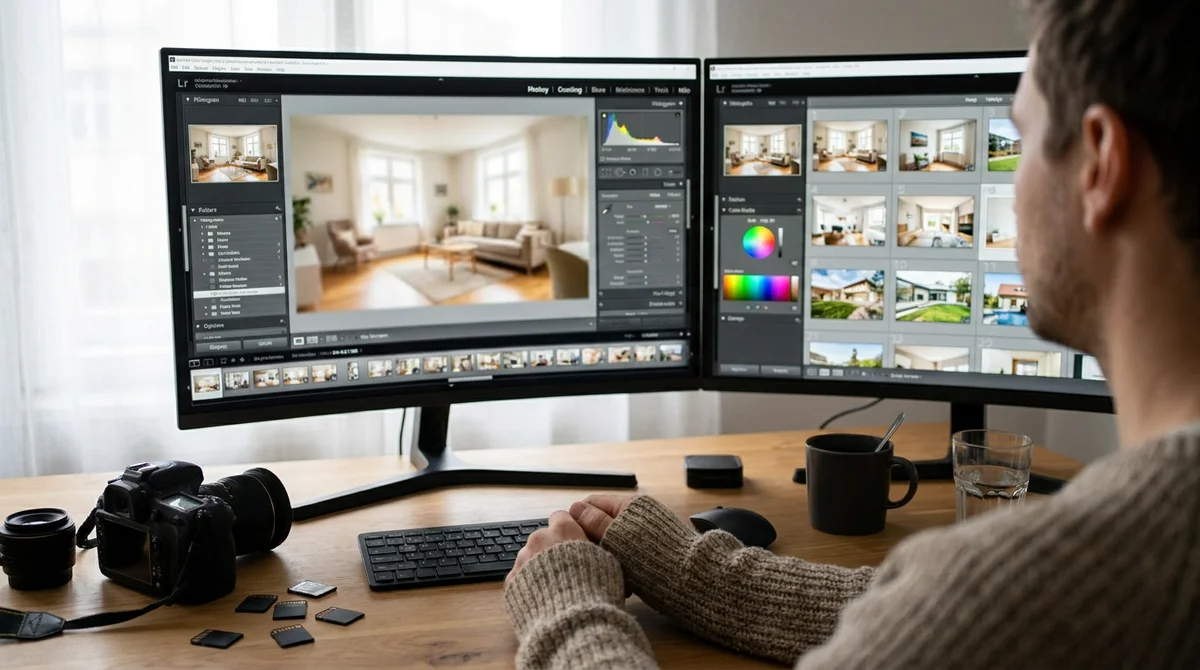
Cursos, canales y comunidades concretos
Aquí tienes un repaso honesto de opciones concretas que los fotógrafos usan de verdad, organizadas por formato. Los precios de estas plataformas cambian con frecuencia, así que trata las cifras siguientes como un rango orientativo y comprueba la página actual del proveedor antes de comprar.
| Curso / canal / comunidad | Formato | Precio | A quién le conviene |
|---|---|---|---|
| Kyle McDougall (YouTube) | Tutoriales en vídeo gratuitos sobre disparo, edición y dron/vídeo para anuncios | Gratis | Principiantes que quieren opiniones actuales sobre equipo y flujos de trabajo reales |
| Guide to Professional Real Estate Photography, de Scott Hargis | Ebook/curso a tu ritmo sobre disparo y posprocesado | Unos 30-50 € (comprueba el precio actual) | Fotógrafos que prefieren una única referencia escrita y respetada en vez de vídeos sueltos |
| SLR Lounge | Talleres en vídeo y cursos de iluminación, fotografía general con módulos relevantes para inmobiliaria | Precio por suscripción o por curso suelto, consulta el sitio actual | Fotógrafos que buscan específicamente iluminación estructurada y técnica de flash |
| Cursos de fotografía inmobiliaria en Udemy | Marketplace de cursos en vídeo individuales de varios instructores | Unos 15-50 € por curso, con ofertas frecuentes | Quien busca un curso de precio fijo y a su ritmo sobre una habilidad concreta, con presupuesto ajustado |
| Skillshare | Plataforma de vídeo por suscripción con varias clases de fotografía inmobiliaria/interiores | Unos 10-40 €/mes (comprueba el precio actual) | Fotógrafos que también quieren clases generales de edición, negocio y vídeo incluidas |
| CreativeLive | Talleres de pago puntuales, con instructores de fotografía inmobiliaria y de interiores en su catálogo histórico | Precio por clase, consulta el sitio actual | Quien prefiere un único taller a fondo en vez de una suscripción |
| Real Estate Photographers of America (REPA) | Comunidad, recursos de formación y un gran grupo de Facebook para fotógrafos inmobiliarios en activo | Nivel de comunidad gratis; niveles de formación/certificación de pago variables | Fotógrafos en activo que quieren feedback de otros profesionales y hablar de marketing/negocio, no solo técnica |
| r/RealEstatePhotography (Reddit) | Foro de comunidad gratuito | Gratis | Preguntas rápidas de equipo, resolución de problemas y ver qué cobran otros fotógrafos en su mercado |
Ninguna de estas opciones es una certificación necesaria para trabajar. Son aceleradores de aprendizaje, y la combinación adecuada depende de si tu carencia es técnica (disparo, edición) o profesional (precios, gestión de clientes, plazos de entrega).
Cuando tus fotos ya están hechas y editadas, Compose convierte esas mismas fotos del anuncio en un vídeo recorrido pulido en minutos, sin necesitar ningún curso de vídeo.
Stage your first room in 20 seconds. No design skills needed.
Ejercicios de práctica que sí desarrollan habilidad
Ver un curso no es lo mismo que hacer el trabajo. Estos son los ejercicios que asignan los instructores de fotografía inmobiliaria, o que los fotógrafos en activo usan para autoevaluarse, porque te obligan a resolver los problemas reales que plantea una sesión de anuncio:
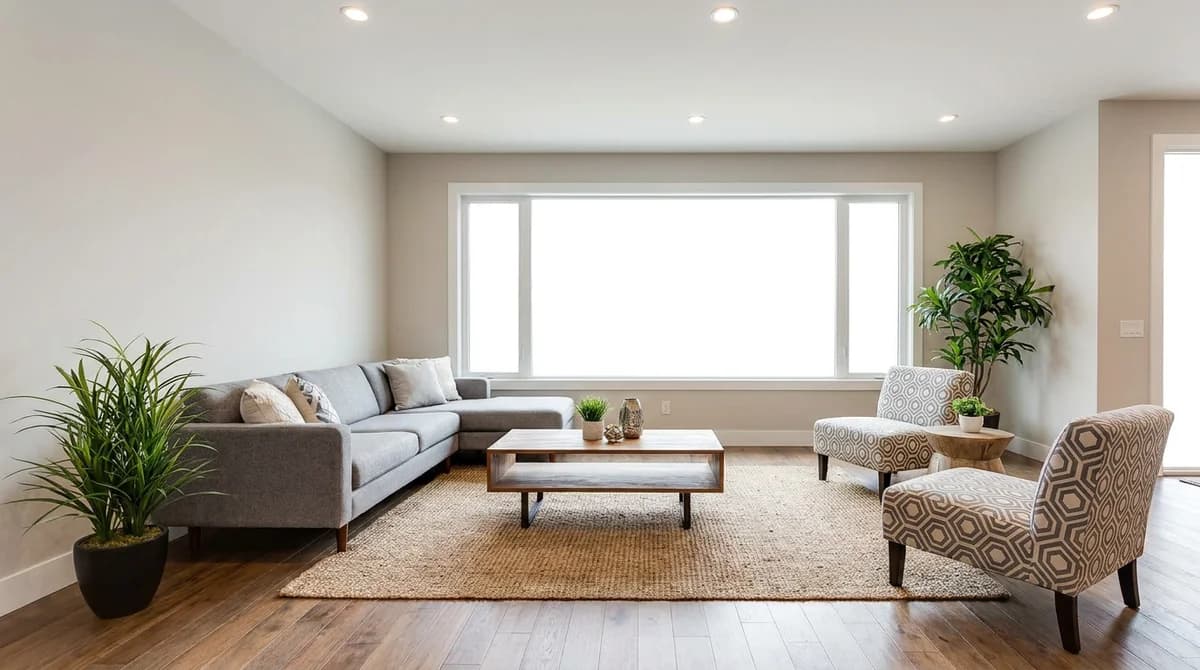
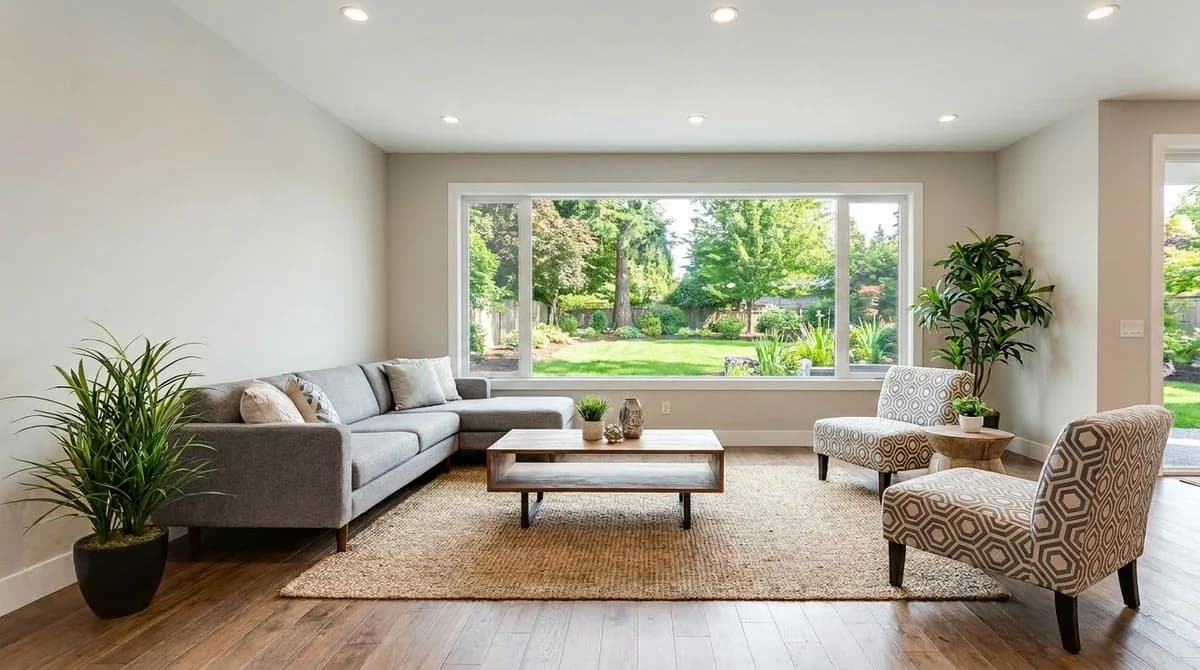
- La ventana quemada. Fotografía un interior con una ventana luminosa en el encuadre usando una única exposición plana, y luego haz un bracketing de la misma toma y combínalo para que la ventana muestre una vista real en vez de blanco puro. Este "tirón" de ventana en HDR es una de las habilidades técnicas más comunes que enseñan los cursos, y es la diferencia entre una foto de anuncio amateur y una profesional.
- La corrección de verticales convergentes. Fotografía una habitación de esquina a esquina con un gran angular y luego corrige la distorsión de perspectiva en la edición para que las paredes se vean rectas y verticales.
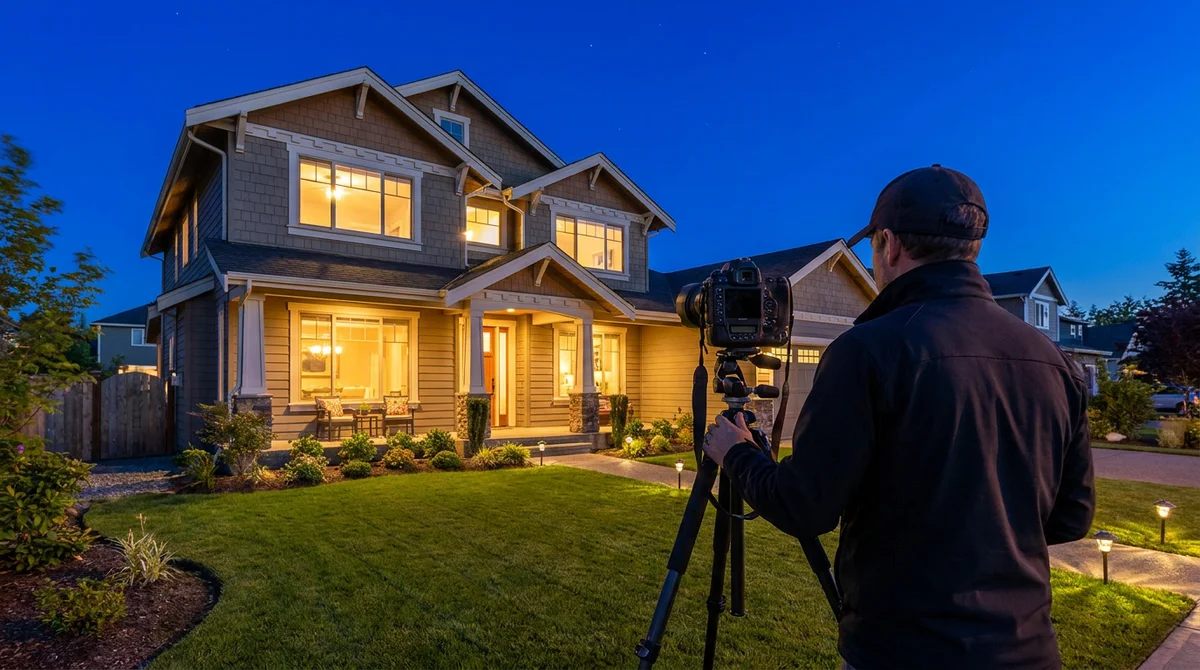
- El exterior al atardecer. Fotografía el mismo exterior de la casa en tres momentos: plena luz de día, hora azul y oscuridad total con las luces interiores encendidas. Compara qué versión usaría de verdad un agente inmobiliario como foto principal del anuncio.
- El sprint de edición de 25 fotos. Cronometra cuánto tardas en editar un set completo de 25 fotos con un estilo consistente. Muchos fotógrafos en activo buscan un plazo de entrega de un día a 48 horas, así que conocer tu velocidad real de edición por foto importa más que cualquier técnica concreta.
- La prueba de ambientación de habitación vacía. Fotografía una habitación vacía y luego investiga qué necesitaría una versión ambientada de esa misma habitación para vender el espacio. Esta es exactamente la carencia que más tarde se convierte en una venta de home staging virtual.
Arrastra el control siguiente para ver el tipo de corrección de ventana que un buen curso de edición debería dejarte hacer con soltura en tus propios anuncios:
Para una checklist más completa foto a foto con la que practicar, consulta nuestra guía de consejos de fotografía inmobiliaria.
Lo que todos los cursos se saltan: la parte de negocio
Este es el patrón que se repite en casi todos los cursos y canales anteriores: te enseñan a hacer y editar una gran foto. Casi ninguno te enseña cuánto cobrar por ella, cómo empaquetar los extras o cómo convertir una sesión en varios entregables facturables.
| Área de habilidad | La cubren la mayoría de los cursos | Rara vez cubierta |
|---|---|---|
| Ajustes de cámara y composición | Sí | |
| Flujo de edición (fusión HDR, corrección de verticales) | Sí | |
| Iluminación y técnica de flash | A menudo | |
| Precios y estructura de paquetes | Sí | |
| Venta de extras (ambientación, atardecer, vídeo) | Sí | |
| Contratos y gestión de plazos de entrega con el cliente | Sí |
Esa carencia le cuesta dinero de verdad a los fotógrafos. Un fotógrafo que domina la fusión HDR perfecta pero cobra siempre una tarifa plana de 200 € por sesión, sin importar los metros cuadrados ni los extras, deja sobre la mesa el margen que una estructura de paquetes por niveles sí capturaría. Desglosamos exactamente cómo construir esa estructura, con niveles de ejemplo y los extras de mayor margen, en nuestra guía de precios de fotografía inmobiliaria.
La única carencia de mayor margen que casi ningún curso menciona es el home staging virtual. Ya has fotografiado la habitación vacía; el home staging virtual con AI convierte esa misma foto en un segundo entregable facturable en menos de un minuto, con un coste de apenas unos euros, que muchos fotógrafos revenden con un buen margen por habitación. Si estás valorando si sumarlo a tus servicios, nuestro análisis sobre si los fotógrafos inmobiliarios deberían ofrecer home staging virtual repasa los números y cubre el conjunto más amplio de herramientas de AI que ahora gestionan ambientación, sustitución de cielo y conversión al atardecer dentro de este flujo de trabajo.
El vídeo es la siguiente carencia por cubrir
Los cursos de fotografía se quedan en las fotos fijas, pero cada vez más agentes esperan también un vídeo recorrido junto a las fotos del anuncio. Aprender vídeo desde cero, movimiento de cámara, audio, edición, es una curva mucho más larga que la edición fotográfica, y contratar a un videógrafo freelance puede costar fácilmente varios cientos de euros por anuncio, comiéndose de golpe el margen que construiste con los extras de foto.
Aquí es donde encaja una herramienta como Compose dentro del mismo flujo de trabajo, sin salir de casa. Es un creador de vídeos de propiedades desde el navegador que convierte las fotos del anuncio que ya hiciste en un vídeo recorrido pulido: eliges un preset como visita de propiedad o antes/después, y la herramienta se encarga de la línea de tiempo, el movimiento de cámara con AI que anima tus fotos fijas en tomas fluidas, la voz en off con AI y la música de fondo a juego con la propiedad. Exporta en los formatos que realmente necesitas, 16:9 para el MLS, 9:16 para Reels y TikTok, 1:1 y 4:5 para publicaciones de feed, así que una sola sesión se convierte en fotos, versiones ambientadas y un vídeo recorrido sin añadir una segunda disciplina a tu lista de cursos.
Elige tu propio camino
Si eres totalmente nuevo, empieza gratis. Pasa un mes con un canal como el de Kyle McDougall y un subreddit o comunidad de Facebook, haz sesiones de práctica y consigue feedback real antes de gastar nada. Una vez que ya reservas clientes de pago y puedes señalar una carencia concreta, velocidad de edición, confianza con la iluminación o estructura de negocio, gástate los 20-150 € en un curso enfocado justo en esa carencia, en vez de un paquete genérico de "aprende de todo".
Los fotógrafos que más ganan con esta habilidad no son necesariamente los que hacen las mejores fusiones HDR. Son los que combinan una buena formación técnica con una estructura de paquetes y una gama de extras que captura cada euro que una sesión de anuncio puede generar. Para profundizar en cómo dejar bien esa estructura de precios, consulta precios de fotografía inmobiliaria, y para los servicios de ambientación que combinan de forma natural con tus sesiones de fotos, descubre la edición de fotos inmobiliarias con AI de RoomLift.
Preguntas frecuentes
¿Cuál es el mejor curso de fotografía inmobiliaria para principiantes?
No hay un único curso mejor, pero una buena secuencia de inicio combina canales gratuitos de YouTube como el de Kyle McDougall para equipo y fundamentos de disparo, con un curso de pago estructurado como la Guide to Professional Real Estate Photography de Scott Hargis para el flujo de edición. La mayoría de los fotógrafos combinan dos o tres fuentes en lugar de depender de un solo curso.
¿Necesito hacer un curso para ser fotógrafo inmobiliario?
No. La fotografía inmobiliaria tiene un listón técnico más bajo que la mayoría de los nichos, y muchos fotógrafos en activo son autodidactas gracias a YouTube, foros y sesiones de práctica. Un curso acelera la curva de aprendizaje y te ayuda a evitar errores habituales de exposición y objetivo, pero no es un requisito de licencia en ningún estado de EE. UU.
¿Cuánto cuestan los cursos de fotografía inmobiliaria?
Existen opciones gratuitas en YouTube y en foros de la comunidad. Los cursos de pago estructurados suelen costar entre 20 y 50 € por un curso individual en Udemy, entre 10 y 40 € al mes en plataformas por suscripción como Skillshare, y entre 100 y 300 € o más por programas especializados en fotografía inmobiliaria o de arquitectura. Comprueba siempre la página de precios actual del proveedor, porque las tarifas y las ofertas cambian a menudo.
¿Bastan los tutoriales gratuitos de YouTube para aprender fotografía inmobiliaria?
Para la parte técnica, en general sí. Los ajustes de cámara, la composición gran angular, la técnica de flash y la edición básica están bien cubiertos en los canales gratuitos. Donde el contenido gratuito se queda corto es en la crítica estructurada y en la parte de negocio, precios, contratos y gestión de clientes, que es donde un curso de pago o una comunidad aportan más valor.
¿Qué no enseñan los cursos de fotografía inmobiliaria?
La mayoría de los cursos se centran casi por completo en el oficio técnico, ajustes de cámara, iluminación y edición, y se saltan la parte de negocio: cómo poner precio a una sesión, qué incluir en un paquete, cómo vender extras como el home staging virtual o las conversiones al atardecer, y cómo gestionar las expectativas de plazo de entrega del cliente. Esa carencia es, normalmente, donde los fotógrafos pierden más ingresos.
¿Es la fotografía inmobiliaria un buen ingreso extra en 2026?
Puede serlo. Muchos fotógrafos que empiezan cobran entre 150 y 250 € por anuncio, y sumar servicios de alto margen como el home staging virtual o los vídeos recorrido a la misma sesión puede aumentar los ingresos por anuncio sin tiempo extra en el lugar. El techo depende más de la estructura de paquetes y los extras que del volumen de sesiones en bruto.
¿Listo para transformar tus anuncios?
Ambienta tu primera habitación en 20 segundos. Sin conocimientos de diseño.