How Much Should an Interior Designer Charge? (2026)
Jun 17, 2026 · 9 min read
How much do interior designers charge? Most bill $50-500/hour, 10-30% on furnishings, or $5-15 per square foot. Here are 2026 benchmark ranges and how to price.
How much do interior designers charge? Most charge in one of four ways: $50-500 per hour, a flat fee of roughly $1,000-5,000 per room, a cost-plus markup of 10-30% on furnishings, or $5-15 per square foot. In 2026, the typical mid-market hourly rate in the United States sits around $100-200, but the right number depends on your experience, your market, and, crucially, how clearly you can show clients what they are paying for. This guide breaks down each pricing model with benchmark ranges and explains why premium visuals are the fastest way to justify premium rates.
How Much Do Interior Designers Charge? (Quick Answer)
The four standard pricing models and their 2026 benchmark ranges look like this:
| Pricing model | Typical range (US, 2026) | Best for |
|---|---|---|
| Hourly | $50-500 / hour | Consultations, small or open-ended projects |
| Flat / fixed fee | $1,000-5,000 per room | Defined-scope rooms and full projects |
| Cost-plus / percentage | 10-30% on furnishings | Full-service projects with heavy procurement |
| Per square foot | $5-15 / sq ft | New builds and large renovations |
No single model is "correct." Experienced designers often combine them, a flat design fee for the concept work plus a percentage on everything purchased, for example. The model you choose signals how you want to be valued, so it is worth getting right.

Hourly Pricing: $50-500 per Hour
Hourly billing is the most transparent model and the easiest one to quote on day one. The designer tracks time and bills it, usually in 15-minute or 30-minute increments.
In 2026, US hourly rates break down roughly like this:
- $50-100/hour, newer designers, e-design specialists, and decorators building a portfolio.
- $100-200/hour, the mid-market norm for established independent designers.
- $250-500+/hour, senior designers in major metros, luxury specialists, and recognized names.
The trade-off is that hourly billing caps your income at your available hours and can make clients anxious about a meter running. It works best for consultations and small, well-bounded jobs. The moment a project's scope expands, a flat fee or percentage usually serves both sides better.
Flat-Fee Pricing: $1,000-5,000 per Room
A flat fee (also called a fixed or project fee) quotes one price for a defined scope. Clients love the predictability, and skilled designers love that they get paid for results rather than hours.
Per-room flat fees commonly land between $1,000 and $5,000, depending on the room's complexity and your market. A powder room sits at the low end; a primary suite or open-plan living and kitchen area sits at the high end. For a whole house, flat fees are often bundled into a single project price.
The risk with flat fees is scope creep. Protect yourself by defining exactly what the fee includes, number of concepts, revision rounds, sourcing scope, in writing. This is also where strong upfront visualization pays for itself: when a client approves a photorealistic concept before you order anything, you make fewer expensive changes later.
Cost-Plus and Percentage Pricing: 10-30% on Furnishings
In a cost-plus or percentage model, you charge for the furniture and materials plus a markup, typically 10-30%. Many designers buy at trade discounts and bill the client closer to retail, capturing both the discount and a management fee.
This model rewards the real work of full-service design: sourcing, procurement, logistics, and project management. It scales with the project budget, so a designer running a $150,000 furnishing project earns far more than the same hours would generate hourly. The downside is that it ties your income to the client's spending and requires clear, itemized transparency so clients trust the numbers.
Many designers blend this with a flat design fee: a fixed price for the creative work, then a percentage on everything purchased. That combination protects your time and your margin at once.
Per-Square-Foot Pricing: $5-15 per Square Foot
Per-square-foot pricing is most common on new builds and large renovations where the scope correlates closely with floor area. Design fees in this model usually run $5-15 per square foot, so a 2,500-square-foot home might carry a $12,500-37,500 design fee.
It is a clean way to quote large, repetitive spaces, but it can undervalue small rooms that are actually design-intensive, a tiny kitchen can take more hours than a large bedroom. Most residential designers reserve this model for whole-home or commercial work and use flat or hourly fees for single rooms.
What It Costs to Hire a Designer (Client View)
If you are a client trying to budget, here is the practical picture for 2026:
| Scope | Typical design fee | Notes |
|---|---|---|
| One-hour consultation | $100-500 | Often credited toward a larger project |
| Single room (e-design) | $75-500 | You buy the items yourself |
| Single room (full-service) | $2,000-7,000 | Includes sourcing and management |
| Whole house (full-service) | $10,000-50,000+ | Design fees only, excludes furniture |
These figures cover design fees, not the furniture, materials, or contractor labor on top. If budget is the priority, online and e-design services deliver a professional plan at a fraction of full-service cost because you handle the purchasing. To understand that model in depth, see our guide on what e-design is.
Why Premium Visuals Justify Premium Rates
Here is the part most designers underprice. Two designers with identical taste can charge wildly different fees, and the gap usually comes down to one thing: how clearly the client can see what they are buying.
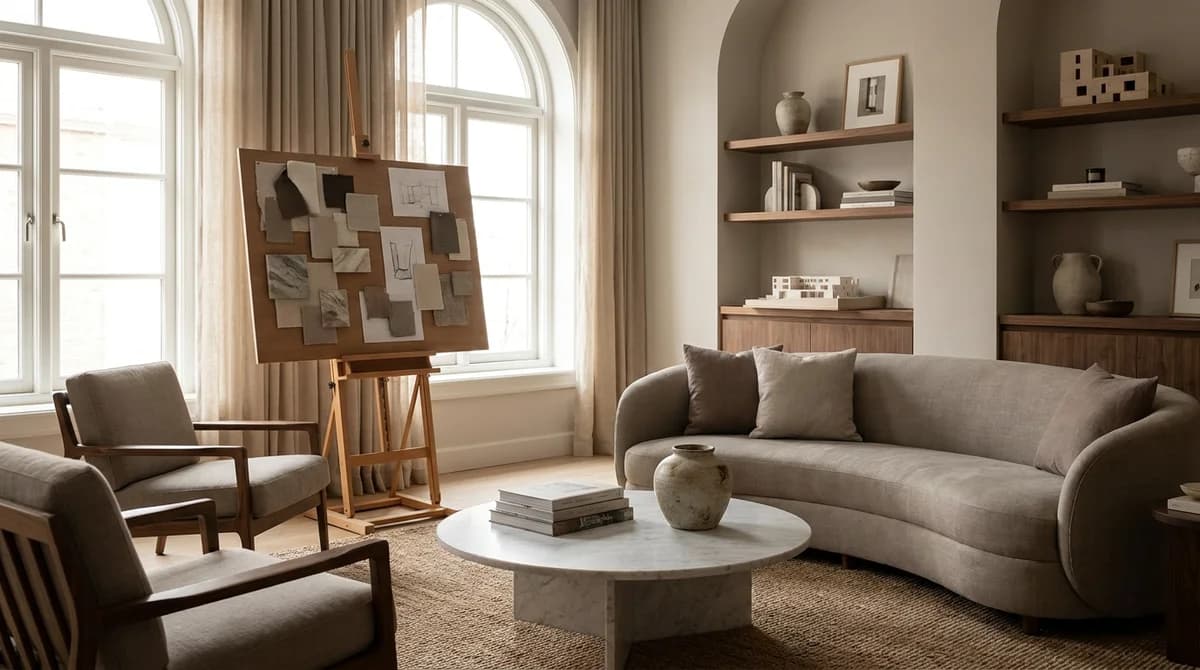
A generic mood board asks the client to imagine the result. A photorealistic render of the client's actual room removes the guesswork. When a client can see their own space transformed, same walls, same windows, finished in your concept, the value is no longer abstract. You are not selling hours or hope; you are selling a visible outcome.
Drag the slider to see the difference a finished concept makes versus an empty room a client would otherwise have to picture in their head:
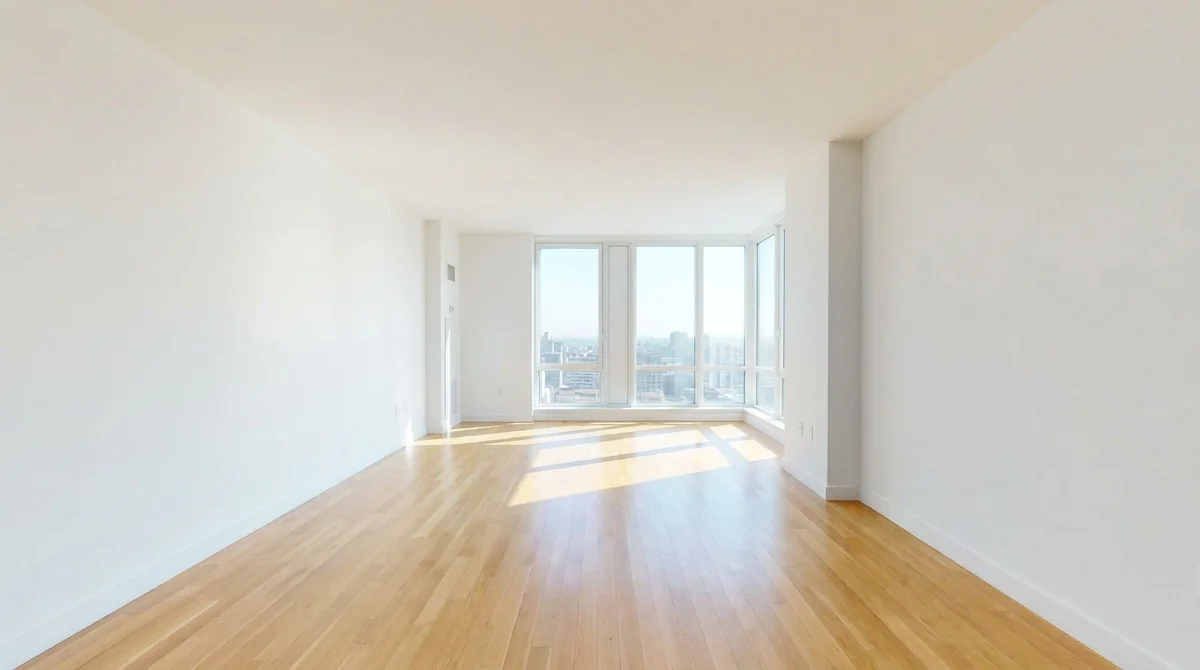
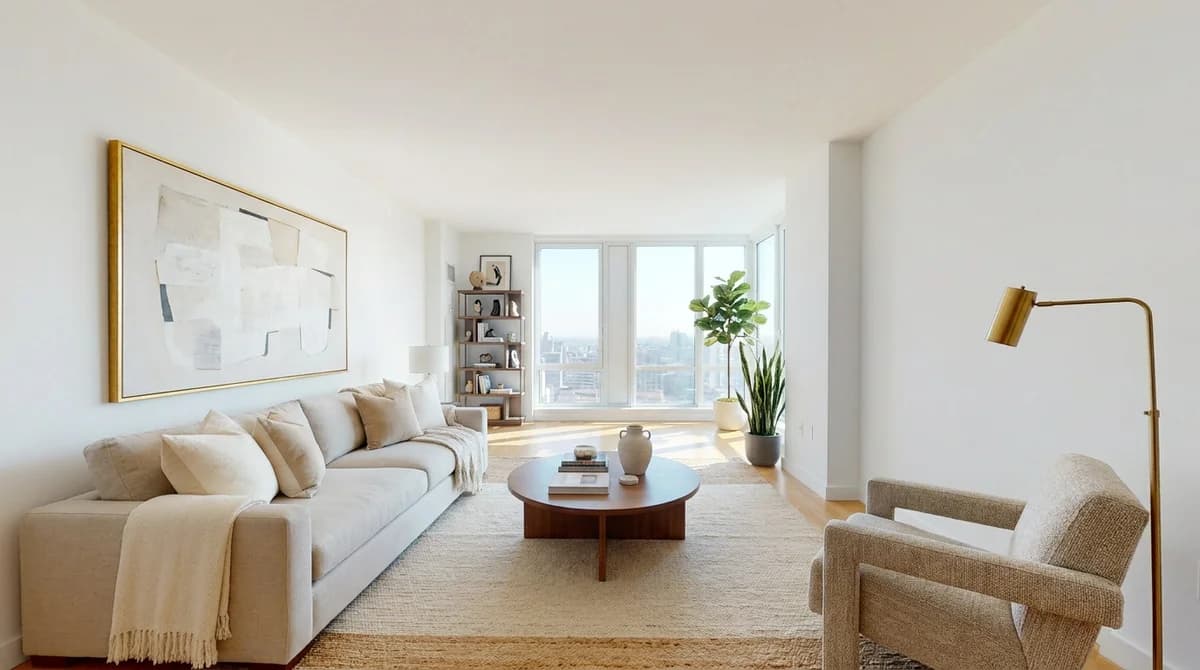
This is where AI visualization changes the economics of pricing. With RoomLift, you can generate 4K photorealistic concepts of a client's real room in under 60 seconds for roughly $1-5 per image, compared to the $25-100 a designer-led render traditionally costs, or far more for a full 3D rendering. You can present three style directions in a single meeting, let the client choose, and close the pitch on the spot.
The pricing math is straightforward. If photorealistic concepts help you win one more project or add a few hundred dollars of justified fee per job, a tool that costs a few dollars per image pays for itself many times over. The visuals are not the deliverable, they are the reason the client says yes to your rate.
Show clients their finished room before they spend a cent, and charge accordingly.
Stage your first room in 20 seconds. No design skills needed.
How to Choose Your Pricing Model
Match the model to the project, not the other way around:
- Small or undefined scope? Bill hourly.
- Clear, single-room scope? Quote a flat fee.
- Heavy procurement and a real budget? Use cost-plus or a flat fee plus percentage.
- Large new build or renovation? Consider per square foot.
Whatever you choose, anchor it in visible value. Clients resist rates they cannot connect to an outcome and accept rates they can see justified. If you want to start showing concepts immediately, our walkthrough on how to use AI for interior design covers the workflow end to end.
Frequently Asked Questions
How much do interior designers charge per hour?
Most interior designers charge $50-500 per hour, with $100-200 being the typical mid-market range in the US in 2026. Newer and e-design designers fall at the lower end, while established and luxury specialists command $250-500 or more. Hourly billing suits consultations and small, well-bounded projects.
What are the main interior designer pricing models?
There are four. Hourly runs $50-500 per hour. Flat fees are quoted per room or project, often $1,000-5,000 per room. Cost-plus or percentage models add 10-30% on furnishings. Per-square-foot pricing runs $5-15 per square foot. Many designers blend a flat design fee with a percentage on purchases.
How much does it cost to hire an interior designer for a whole house?
Whole-house design typically costs $10,000-50,000 or more in design fees alone, depending on rate, home size, and scope, usually excluding furniture and contractor work. E-design is a cheaper route at roughly $75-500 per room, where you handle the purchasing yourself.
What percentage do interior designers charge on furniture?
Designers using cost-plus or percentage pricing usually add 10-30% on top of the cost of furniture and materials. Many buy at trade discounts and bill closer to retail, capturing both the discount and a management fee, which rewards sourcing and procurement rather than just hours.
Why do some interior designers charge so much more than others?
Rates reflect experience, location, complexity, and brand, but presentation matters more than designers realize. A designer who shows photorealistic concepts of the client's actual room looks more premium than one handing over a generic mood board, because visible outcomes reduce the client's risk and make the value obvious before any money changes hands.
How can interior designers raise their rates?
Raise perceived value, and visualization is the fastest lever. Designers who present multiple photorealistic options of the client's own space win pitches faster with less price resistance. With an AI tool like RoomLift, you can generate 4K concepts in under 60 seconds for about $1-5, then charge a premium fee because the client can see exactly what they are buying.
Ready to transform your listings?
Stage your first room in 20 seconds. No design skills needed.