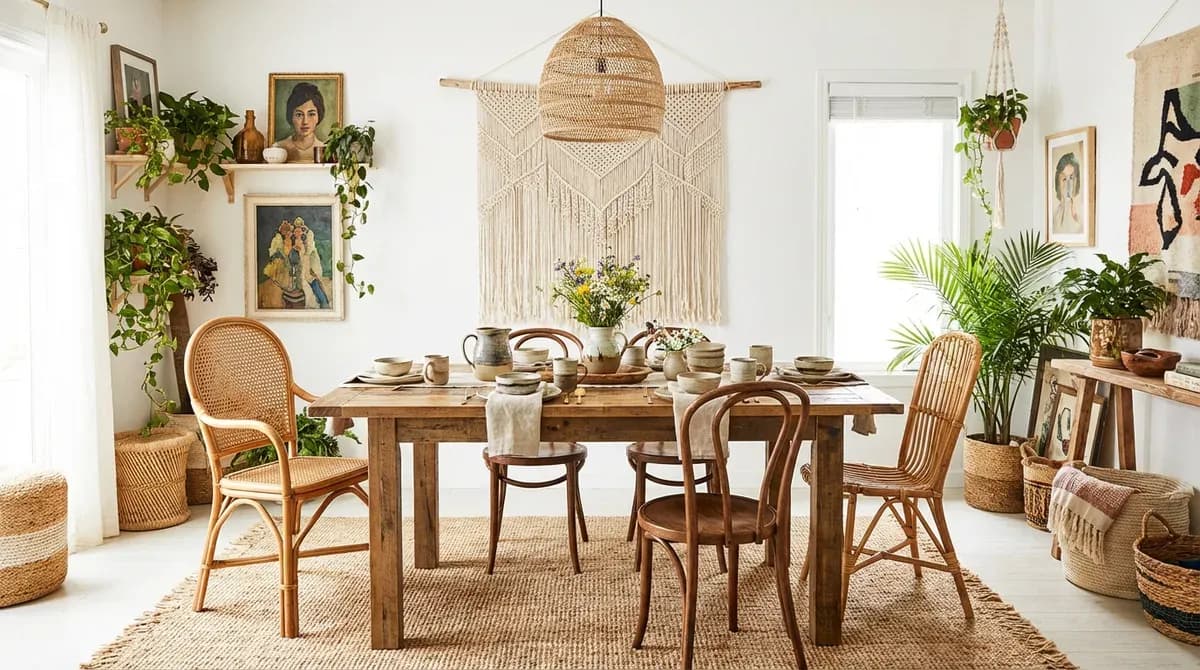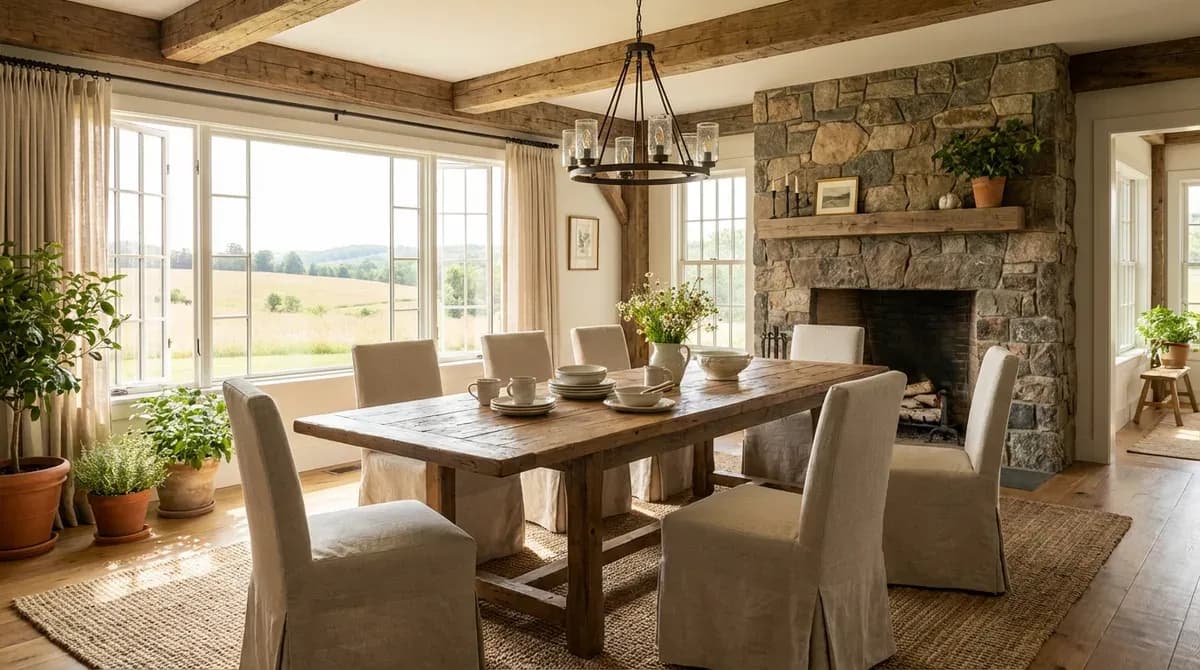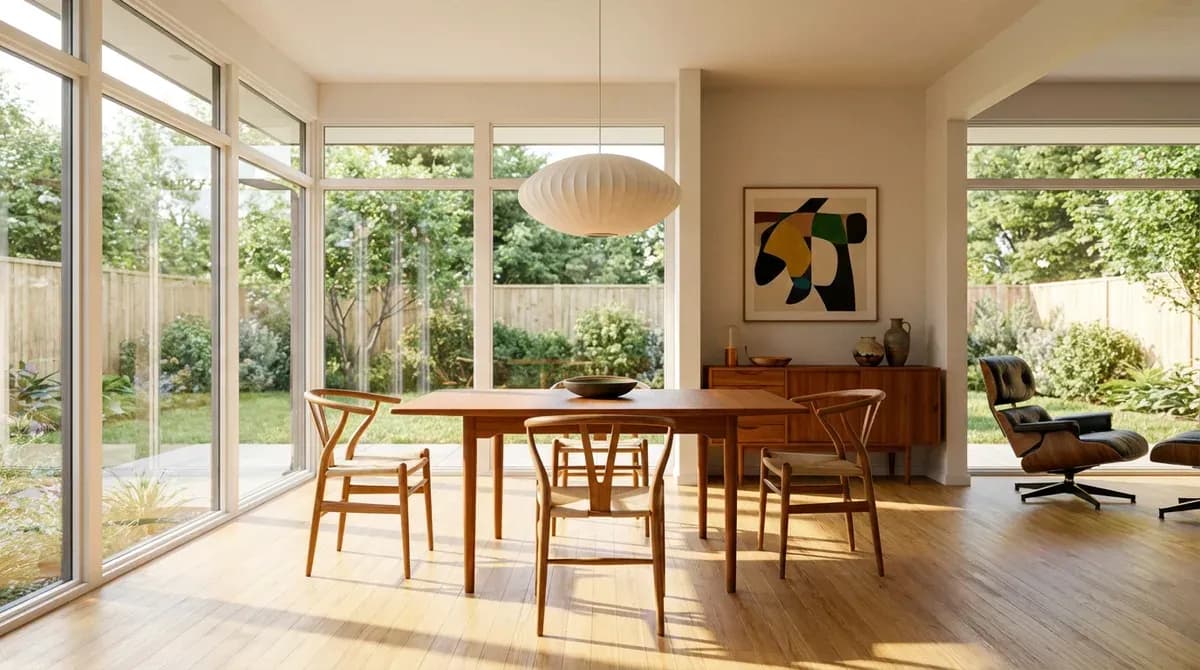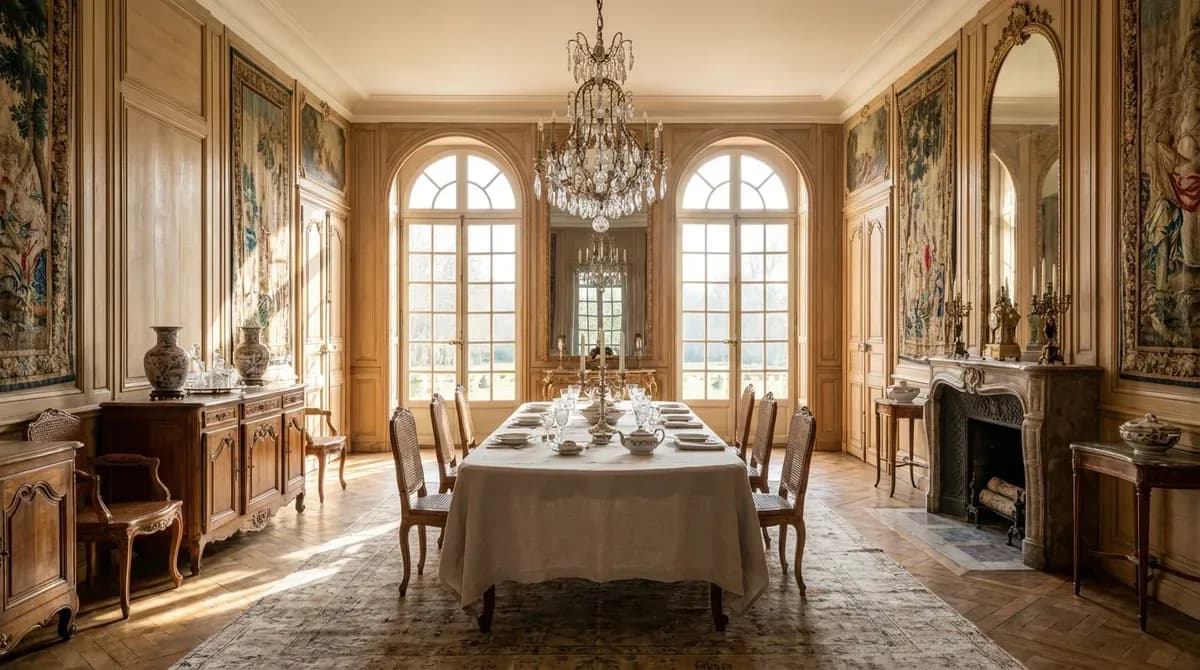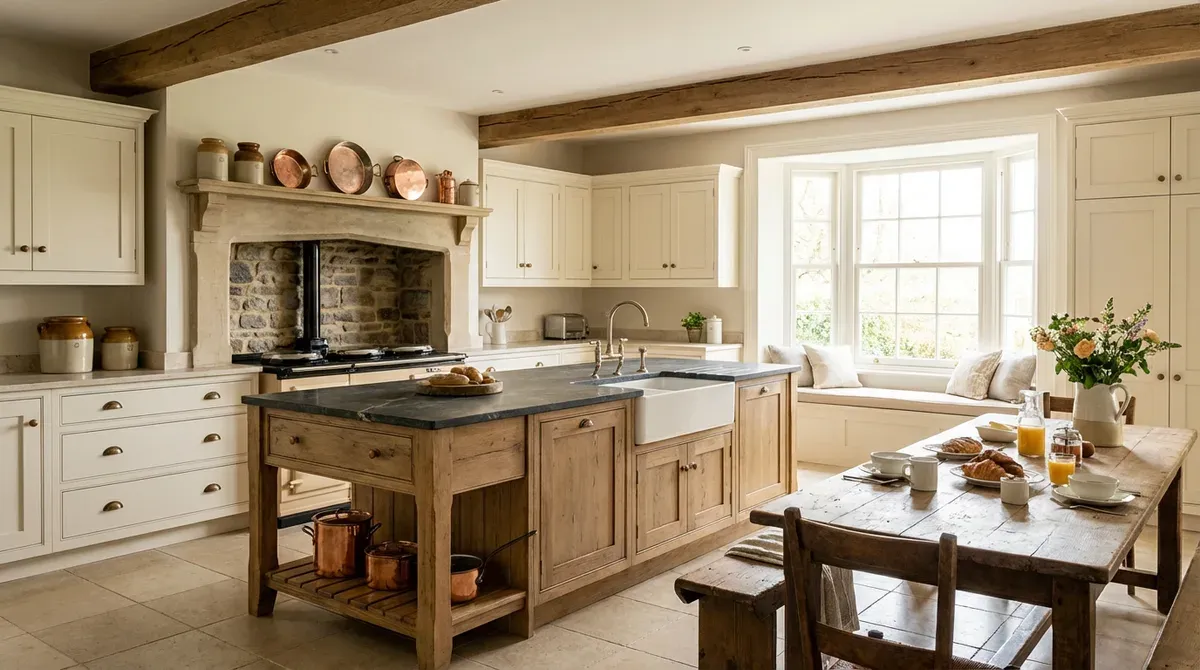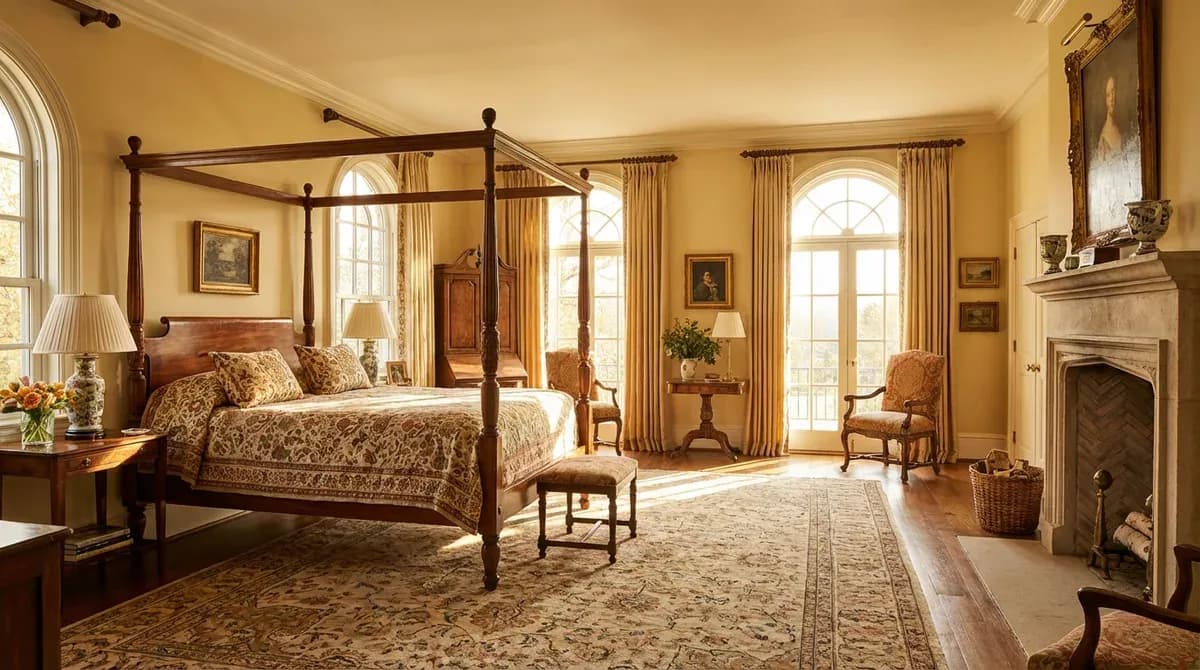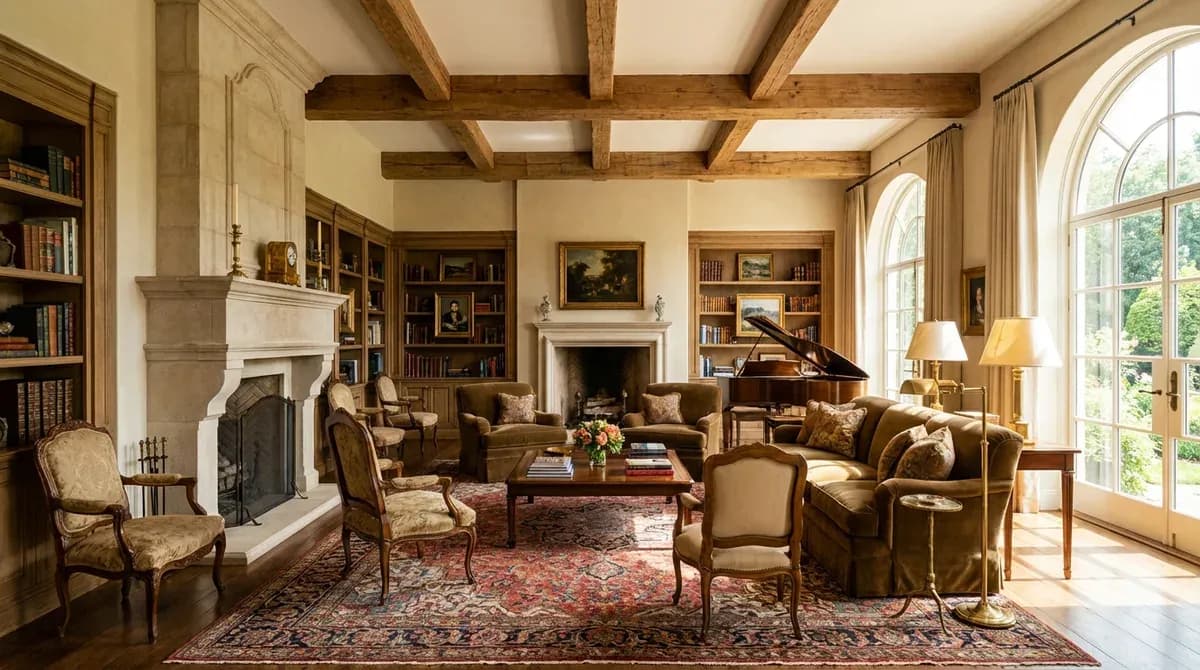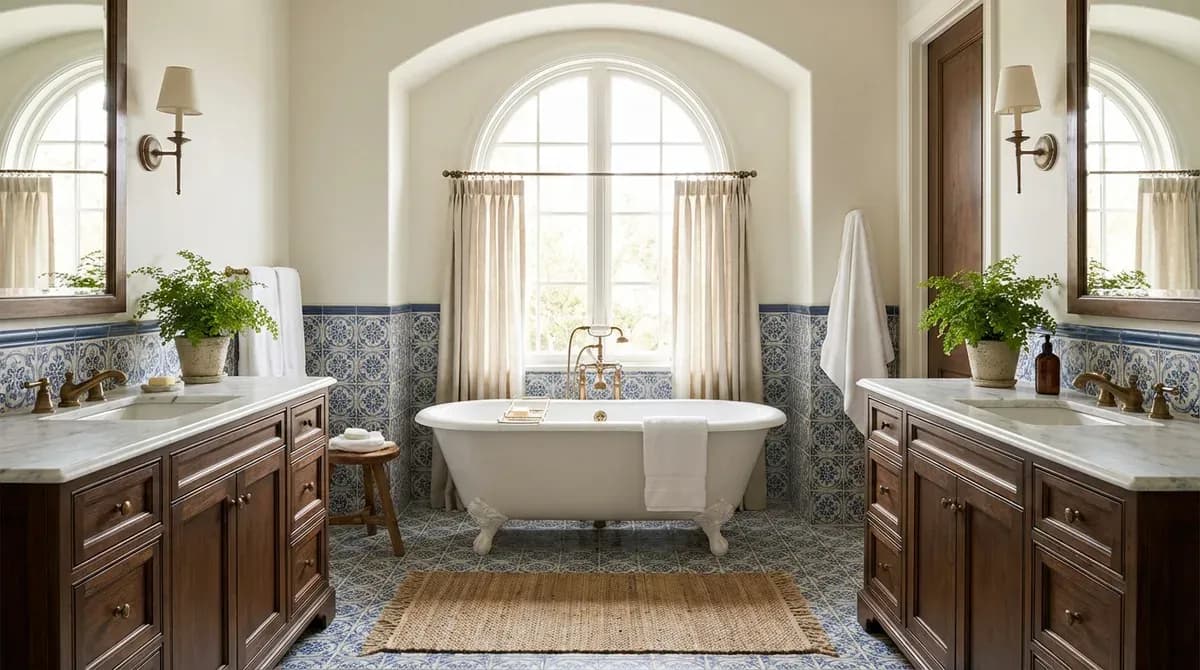
Traditional Dining Room Design
AI-Powered Design Visualization
Upload a photo of your dining room and transform it into stunning Traditional design in under 60 seconds.
No credit card required. 10 free renders.

Color Palette
The essential colors of Traditional dining room design
Design Tips
Expert recommendations for your Traditional dining room

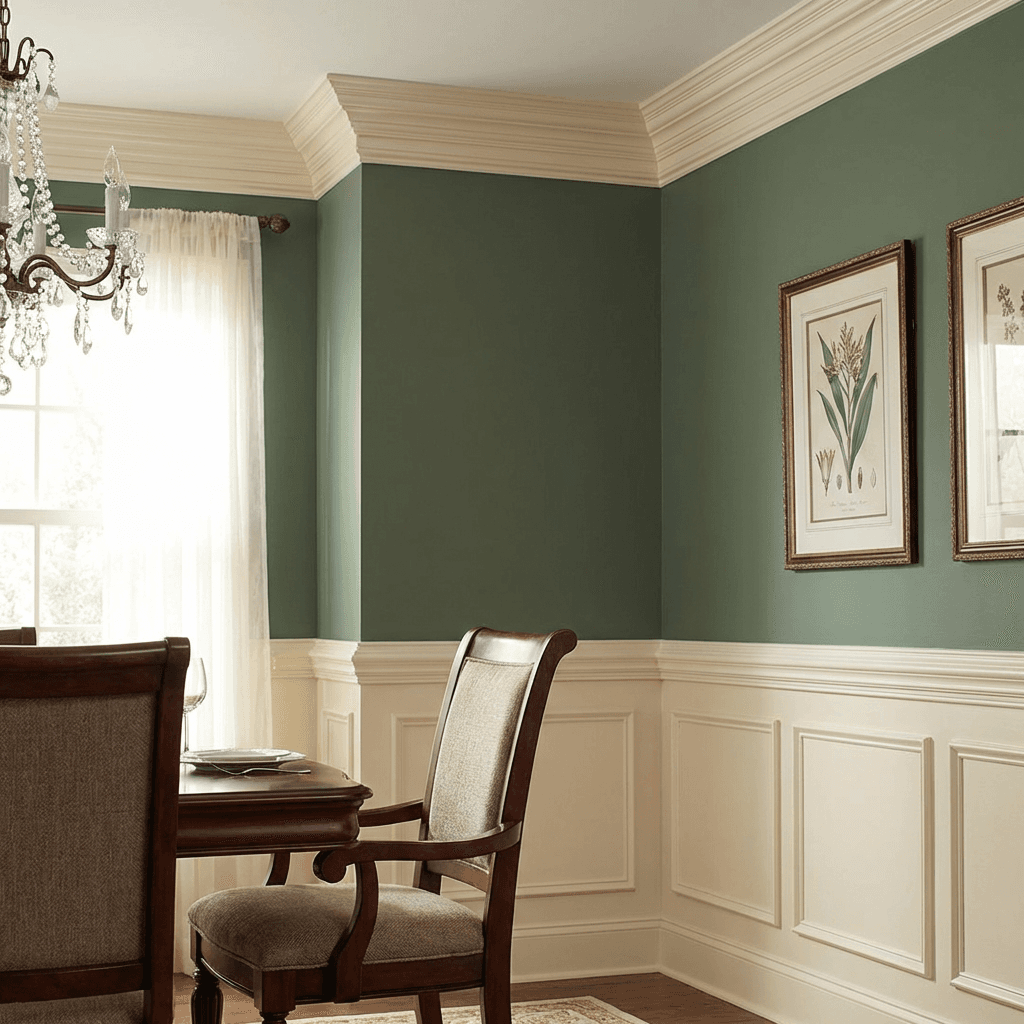
Add crown molding and wainscoting for architectural gravitas
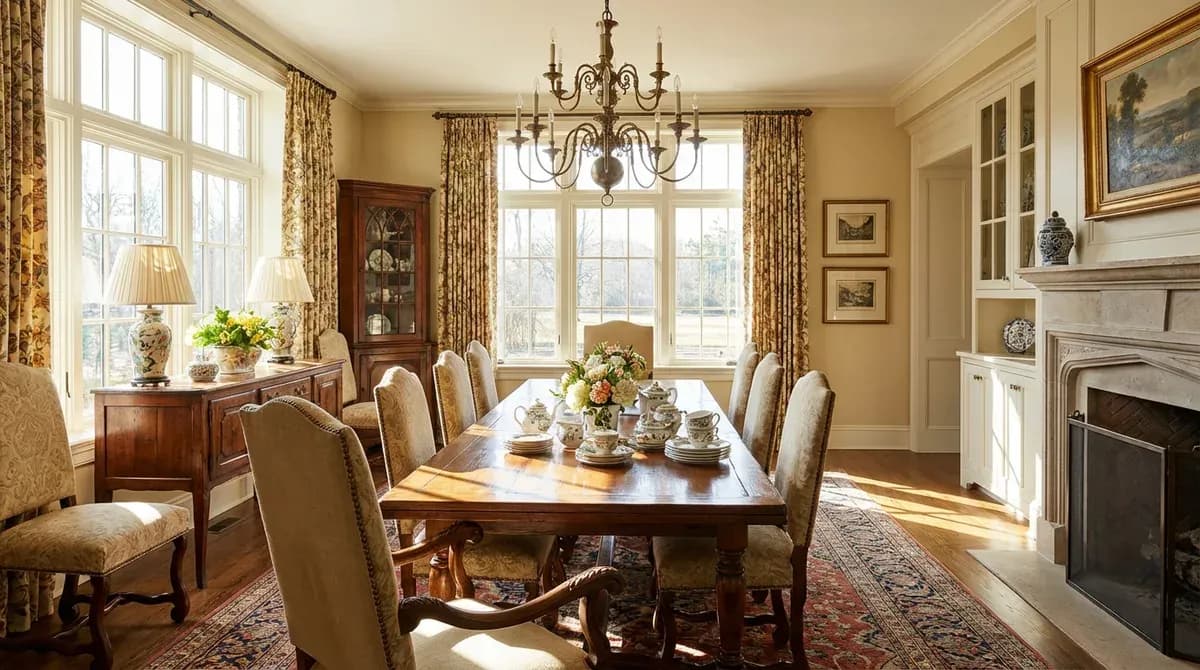
Traditional dining rooms gain their sense of occasion from architectural trim. Crown molding at the ceiling, chair-rail wainscoting on the lower third of the wall, and a picture-rail molding create layered horizontal planes that give the room depth and formality. Paint the wainscoting in ivory or a darker accent and the upper wall in a rich tone like navy or burgundy.

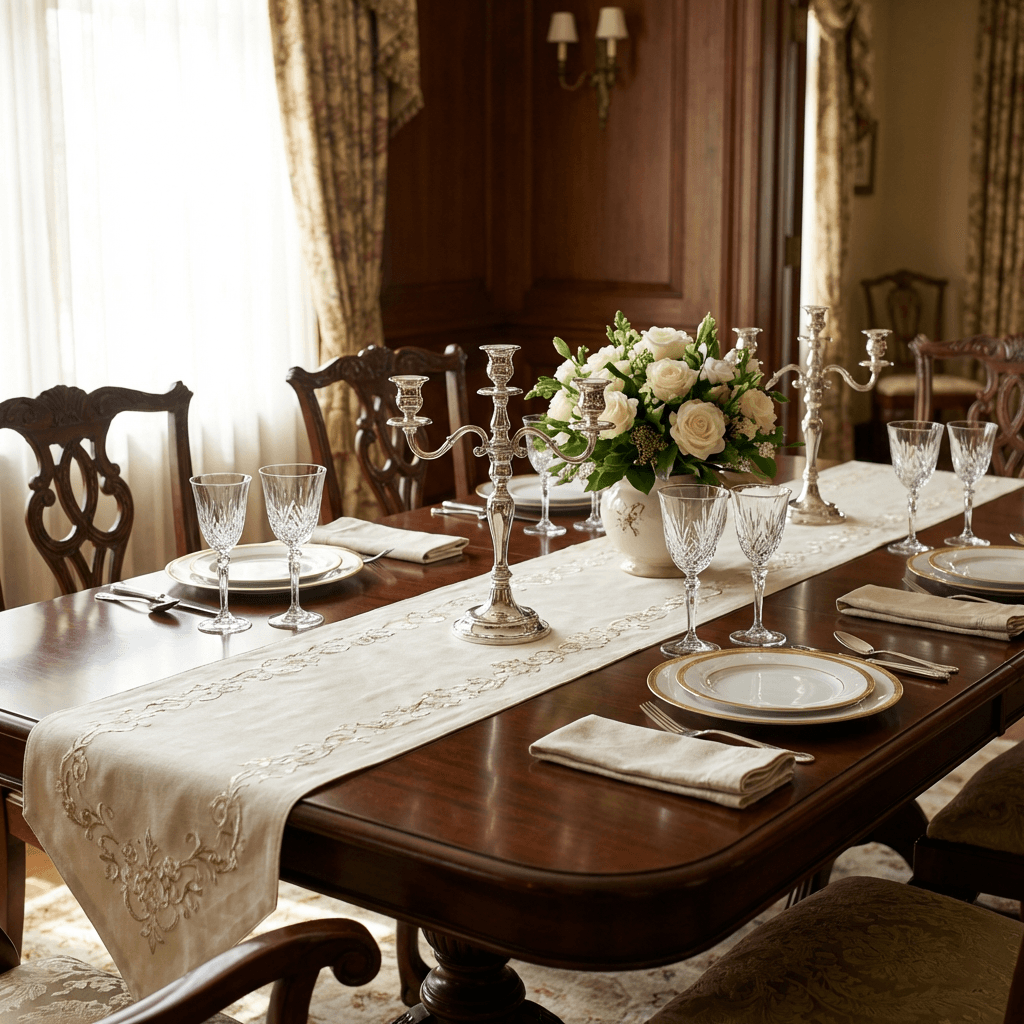
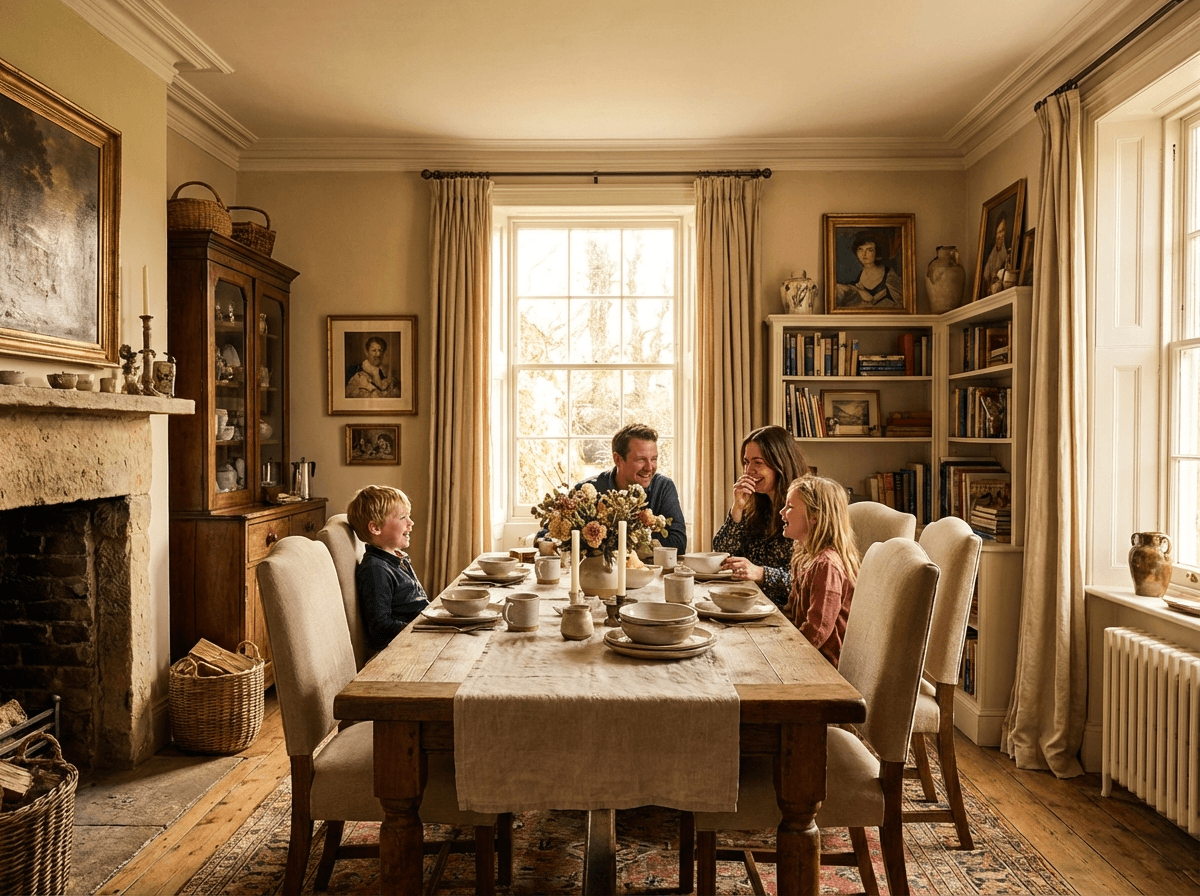
Center the room with a formal table setting
A traditional dining room is designed around the table. Set it with a linen runner, candlestick holders, and a low floral arrangement even when not entertaining — these elements signal that the room has a purpose beyond everyday meals. The table should be large enough to comfortably seat six to eight, with at least 90 cm between the table edge and the wall.

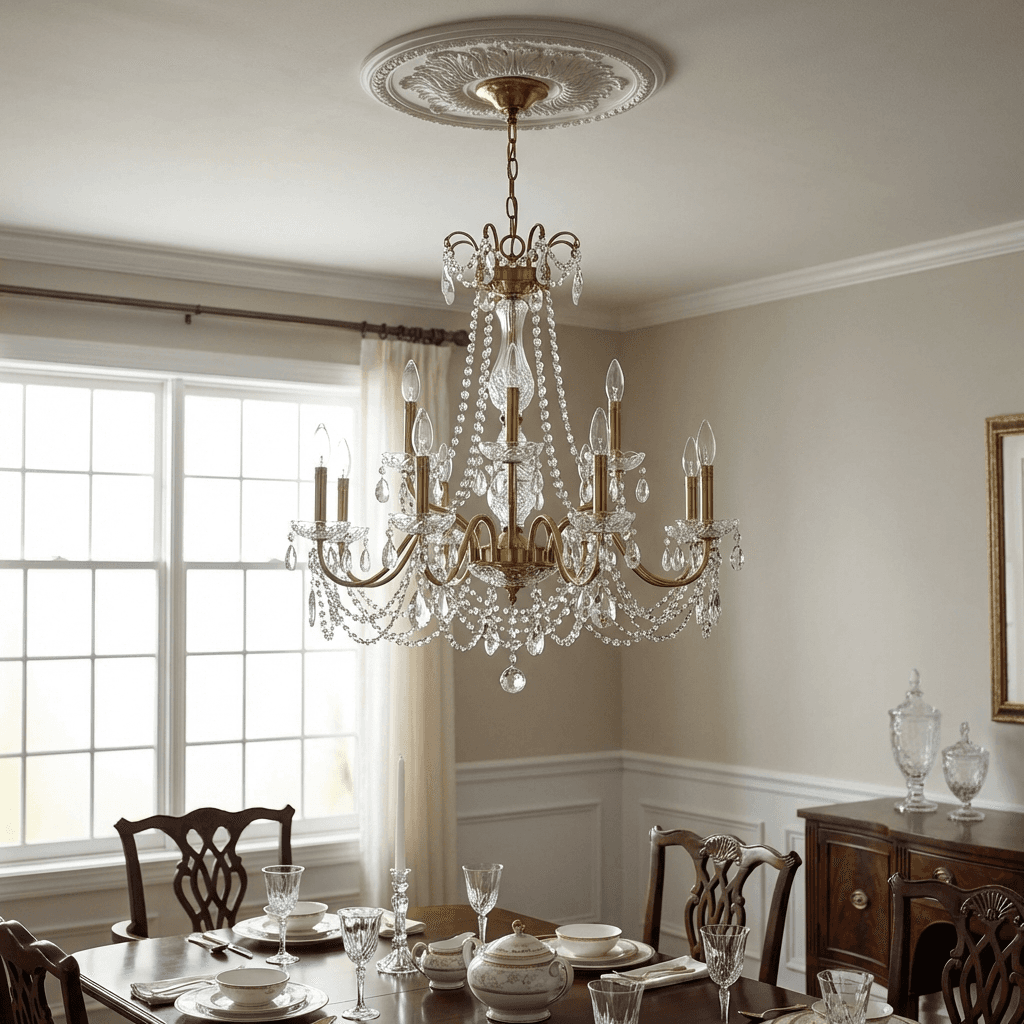
Hang a chandelier as the room's crown jewel
A crystal, brass, or iron chandelier centered over the table is the defining fixture of a traditional dining room. The bottom of the chandelier should hang 75-85 cm above the table surface. For a room with an 8-foot ceiling, choose a fixture 50-65 cm in diameter; scale up for higher ceilings and larger tables.

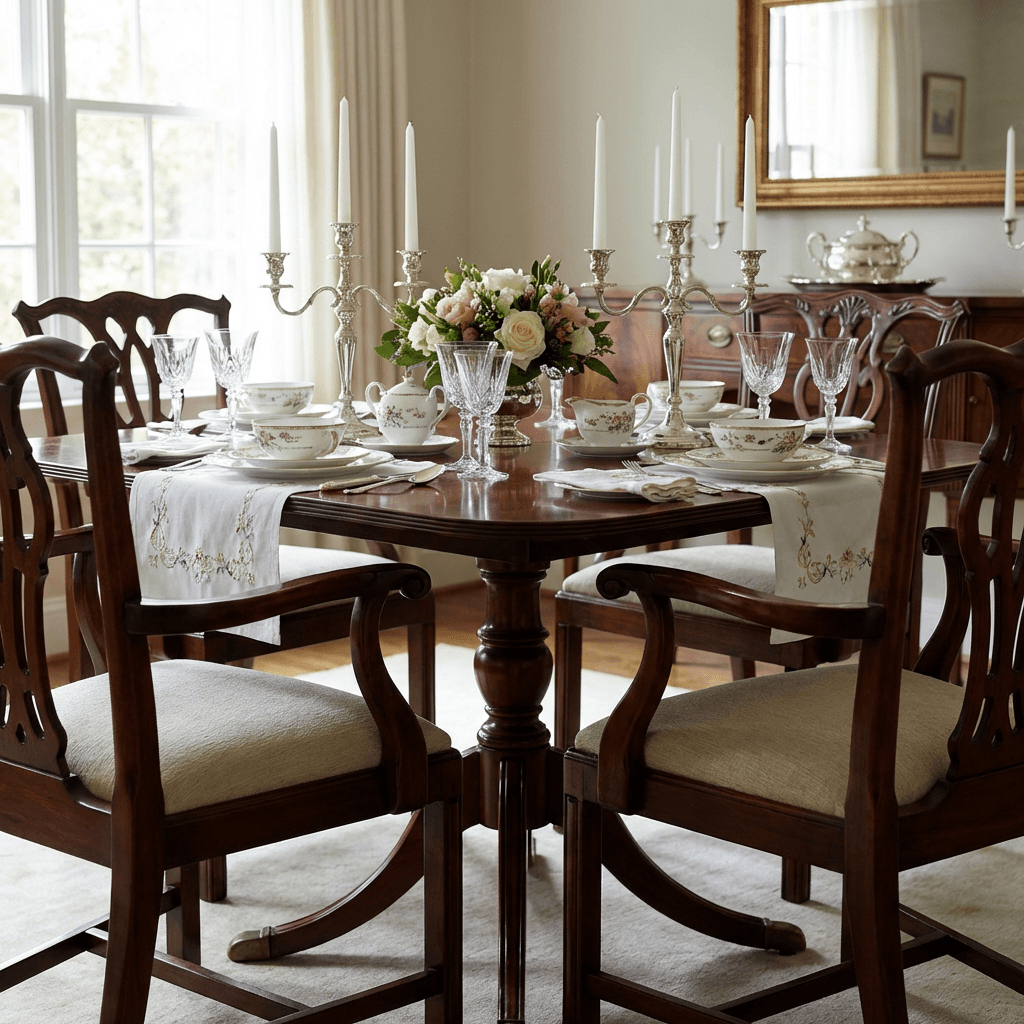
Arrange furniture with bilateral symmetry
Traditional design relies on balance: matching chairs on each side of the table, identical buffet lamps flanking a mirror on the sideboard, a pair of wall sconces on either side of a painting. Symmetry creates visual order and the sense of quiet formality that distinguishes traditional from casual dining spaces.
Furniture Recommendations
Key pieces for the perfect Traditional dining room

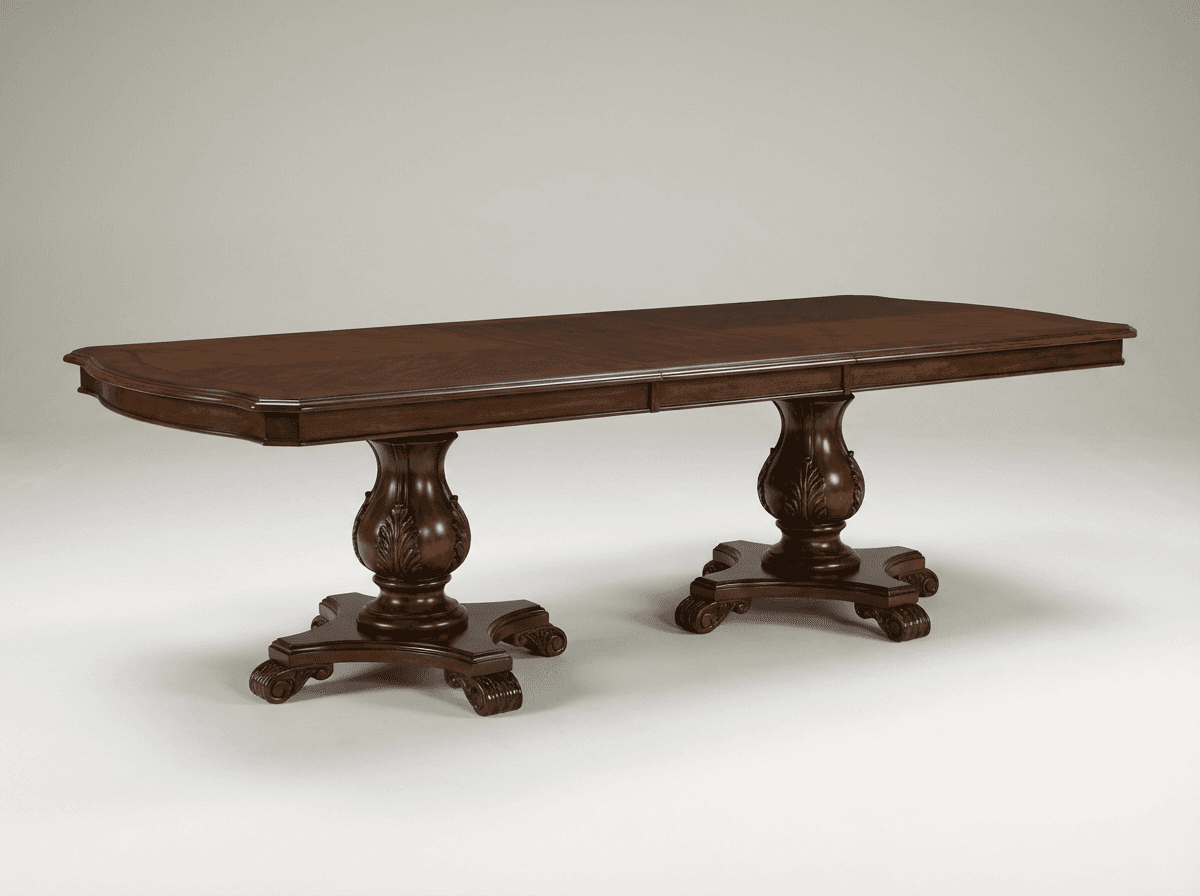
Pedestal or double-pedestal dining table
A solid wood table in dark cherry, mahogany, or walnut with a single turned pedestal or two carved pedestals. The absence of corner legs allows more flexible seating than a four-leg table. An oval or rectangular shape in the 200-240 cm range seats eight comfortably for a formal dinner.

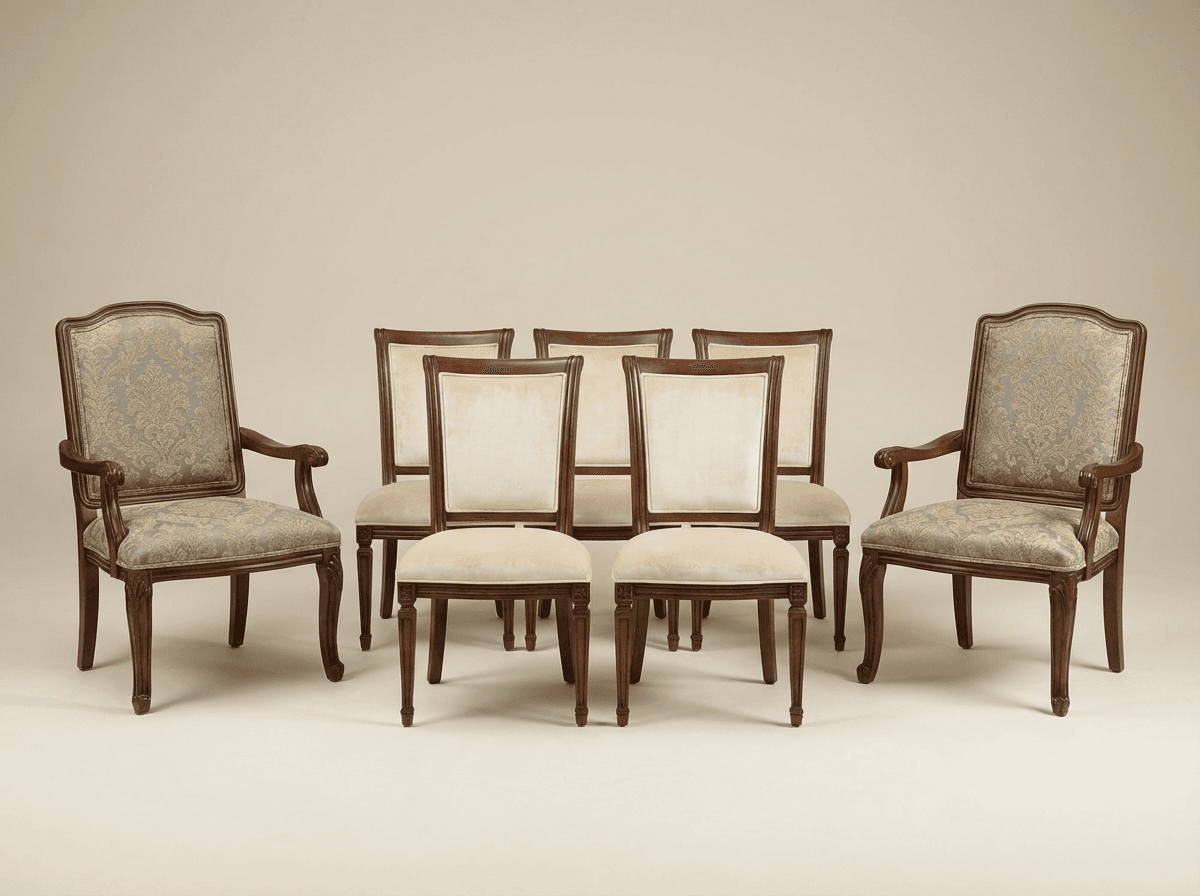
Upholstered side chairs with host chairs
A set of side chairs in a damask or linen fabric with dark-stained wood frames, plus two armchairs (host and hostess chairs) at the table ends. The upholstery should complement the wall color — ivory on burgundy walls, or a subtle pattern that echoes the drapes. Nailhead trim adds an authentic traditional detail.

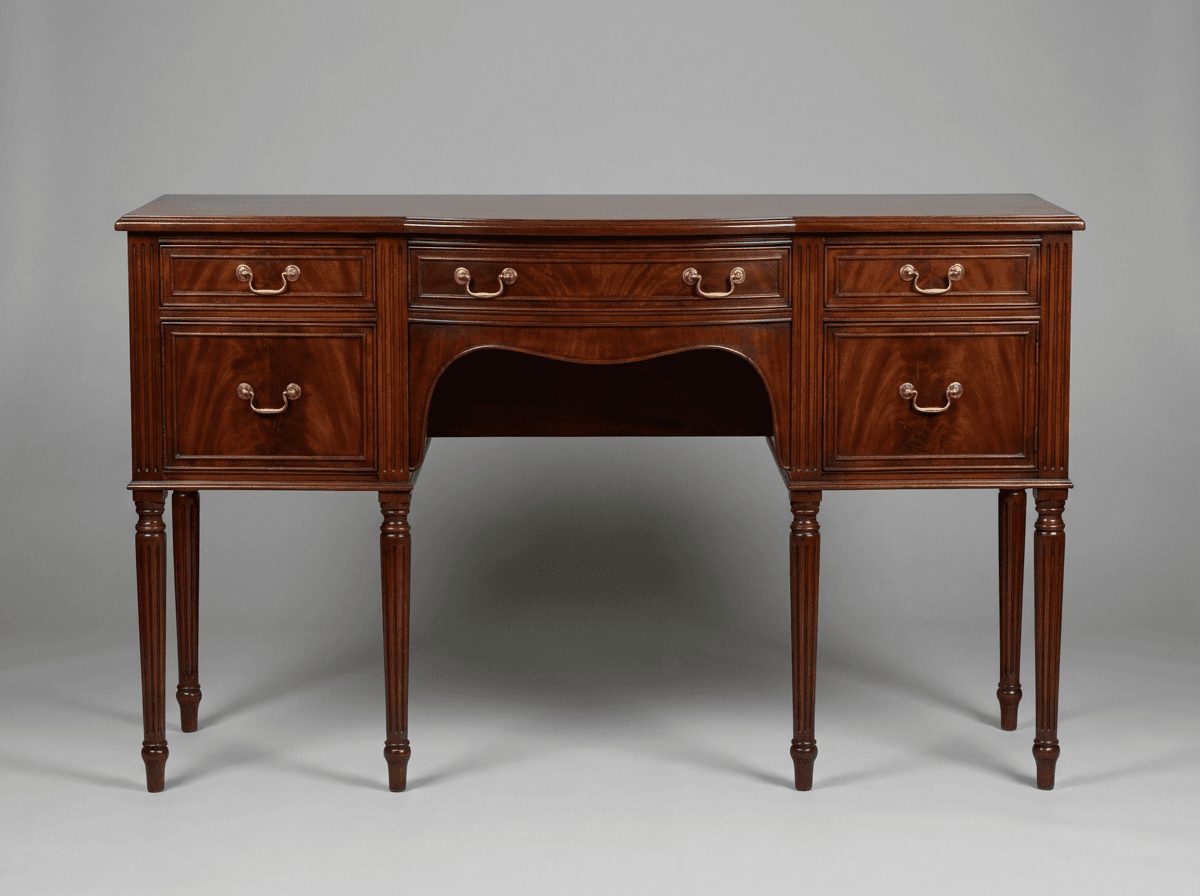
Mahogany sideboard or buffet
A long, low cabinet in the same wood species as the table, positioned against the wall opposite the window. It stores china, silver, and table linens while providing a surface for serving. Traditional sideboards feature paneled doors, brass drop handles, and often a serpentine or bow-front shape.

This Room in Every Style
Explore more design styles for your dining room
More Traditional Rooms
See Traditional design in other rooms
Frequently Asked Questions
Todo lo que necesitas saber sobre RoomLift — para diseñadores, agentes y cualquiera que transforme espacios con AI.
- How do I make a traditional dining room feel updated and not stuffy?
- Lighten the color palette — swap dark red walls for a deep blue-gray or a warm charcoal. Use contemporary art instead of formal oil paintings, and replace heavy velvet drapes with tailored linen panels. Keep the classic furniture forms (pedestal table, upholstered chairs, sideboard) but in slightly lighter wood tones or with fresh fabric.
- What is the right size chandelier for a dining room?
- A practical formula: add the room's length and width in feet and convert to inches for the chandelier diameter. A 12 × 14 foot room suits a 26-inch (66 cm) fixture. Hang it 30-34 inches (75-85 cm) above the table in a standard 8-foot ceiling room. For every additional foot of ceiling height, raise the fixture 3 inches.
- Can I use a traditional dining room for everyday meals?
- Absolutely. Remove the formal centerpiece, use washable slipcovers on chairs, and keep the table runner simple. Many families find that having a dedicated, well-lit dining room (versus a kitchen counter) actually encourages more family meals together. Add a dimmer switch so the chandelier can shift from task lighting to atmospheric glow.
- What wall color works best for a traditional dining room?
- Rich, saturated hues create the most dramatic results: deep navy, forest green, burgundy, or charcoal. These colors make white trim and crown molding pop, and they set an intimate tone for evening dining. If the room lacks natural light, a lighter alternative like sage or dusty blue can work while still feeling formal.
- How do I mix traditional and modern in a dining room?
- Keep the room's architecture traditional (moldings, paneling, chandelier) but introduce one or two modern elements: acrylic ghost chairs around a mahogany table, a bold abstract painting above the sideboard, or sculptural contemporary pendant lights replacing a classic chandelier. The tension between old bones and new accents creates a fresh, layered look.
No credit card required. 10 free renders.