RoomLift Logo

Mid-Century Modern Kitchen Design

AI-Powered Design Visualization

Upload a photo of your kitchen and transform it into stunning Mid-Century Modern design in under 60 seconds.

Start designing now

No credit card required. 10 free renders.

Mid-Century Modern Kitchen design visualization

Color Palette

The essential colors of Mid-Century Modern kitchen design

Mustard Gold
Warm White
Walnut
Teal
Tangerine
Charcoal

Design Tips

Expert recommendations for your Mid-Century Modern kitchen

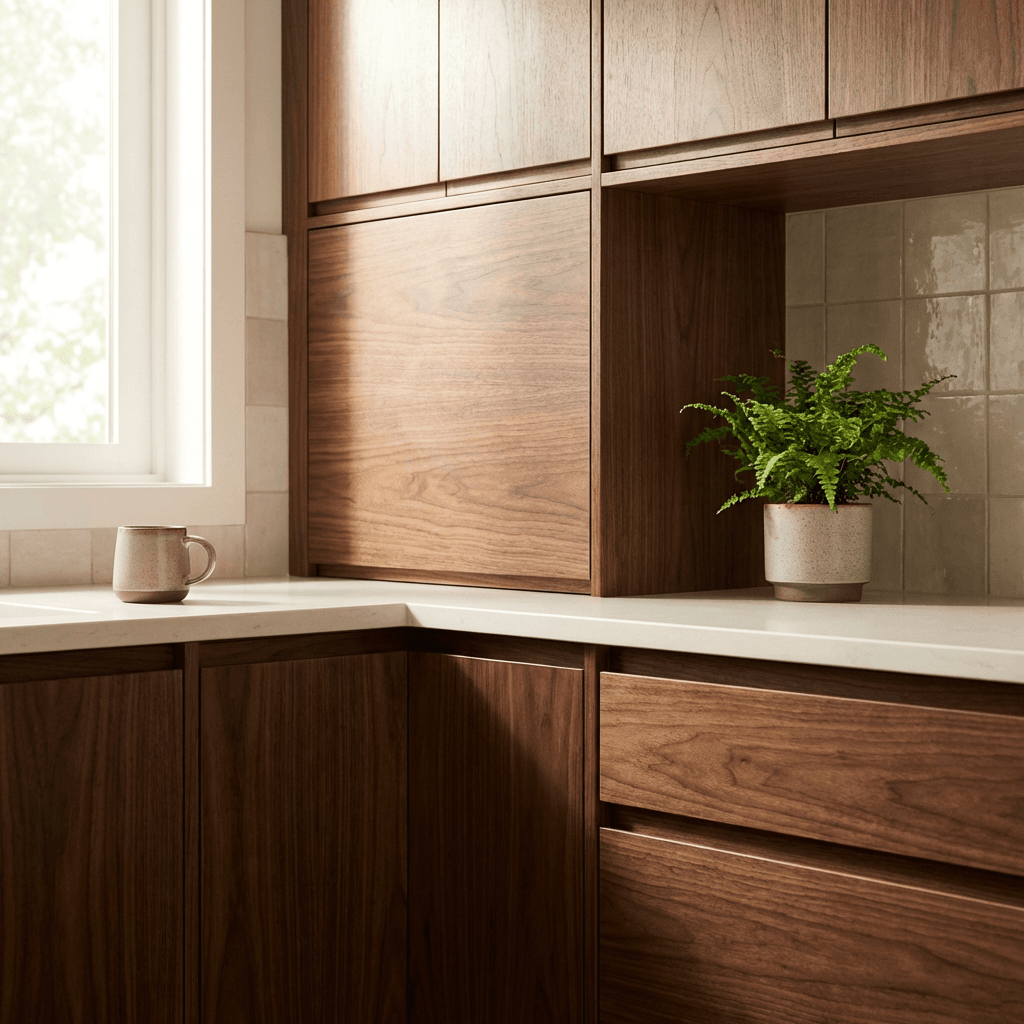
Install flat-panel walnut or teak cabinetry

Install flat-panel walnut or teak cabinetry

Mid-century kitchens favor slab-front cabinet doors in warm, figured wood — oiled walnut or teak with visible grain. Skip ornate paneling or shaker profiles. The clean, uninterrupted surface of a flat-panel door lets the wood's natural beauty take center stage, and integrated pulls or simple brass bar handles keep the facade minimal.

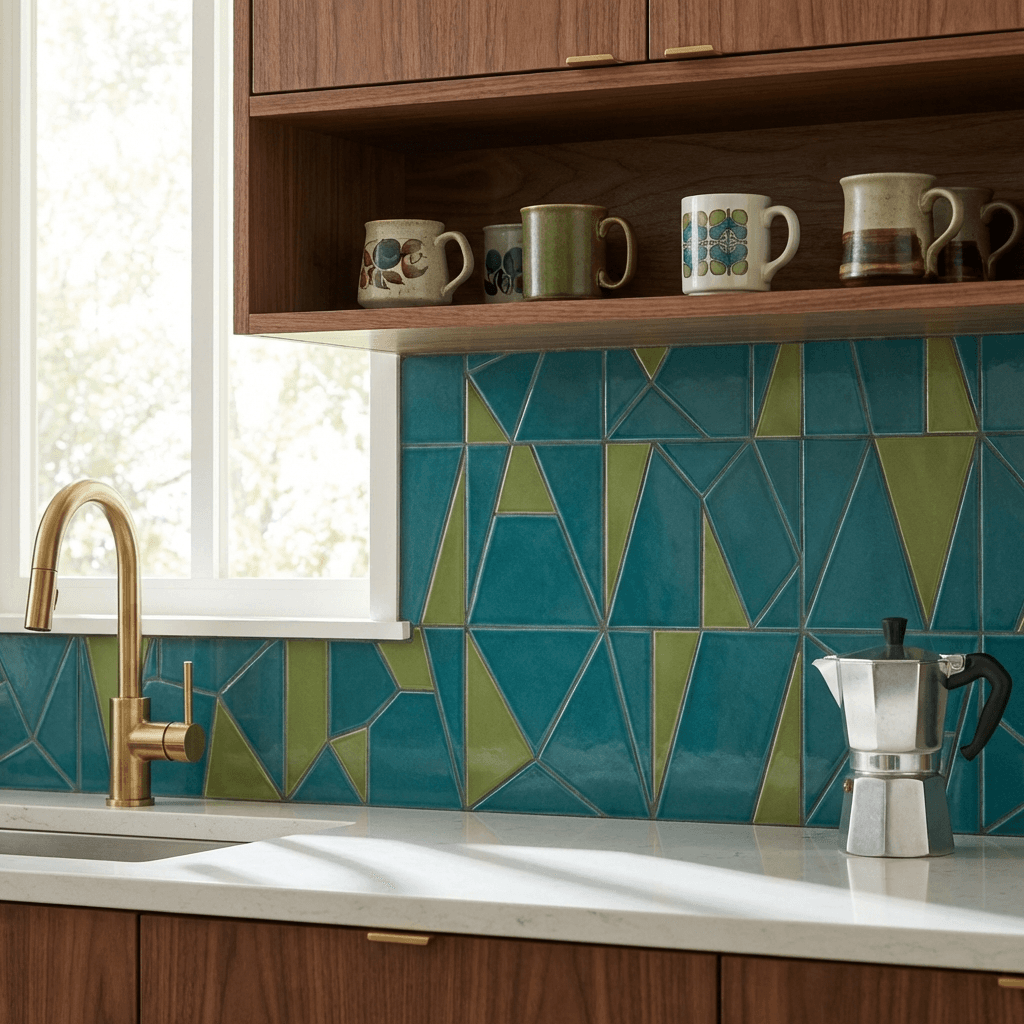
Use a geometric tile backsplash in an accent color

Use a geometric tile backsplash in an accent color

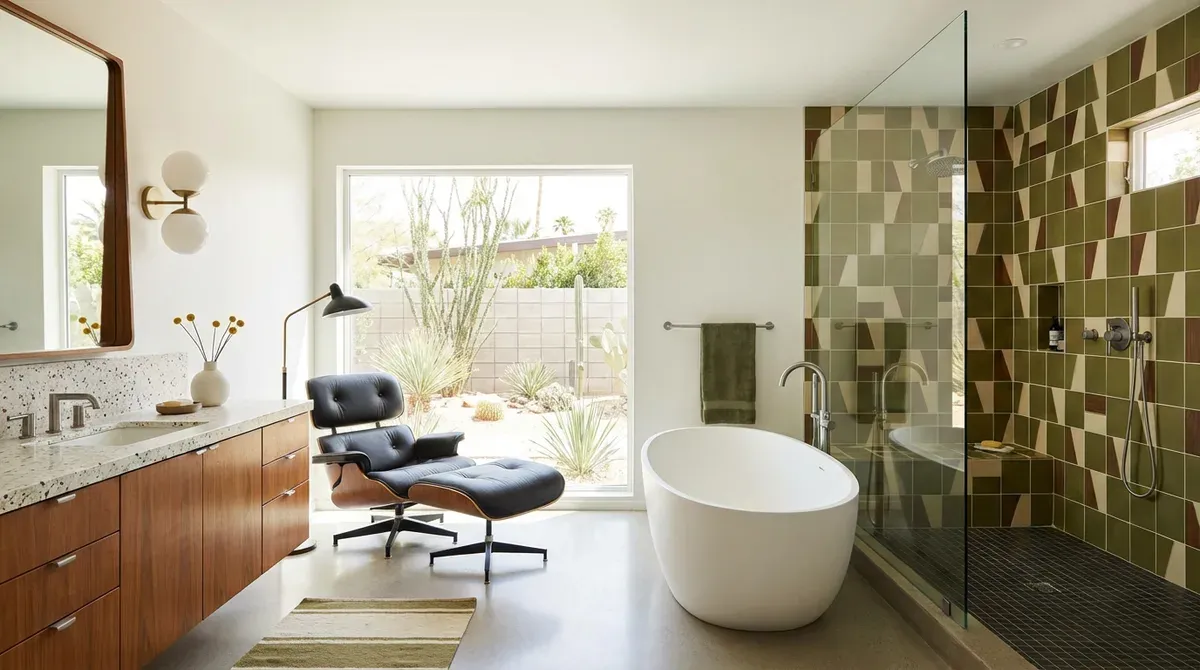
A backsplash in hexagonal, starburst, or elongated subway tile in teal, mustard, or tangerine injects period-appropriate color without overwhelming the room. Keep the tiles to the backsplash area only — the surrounding walls should stay white or cream to let the tile pop as a contained accent.

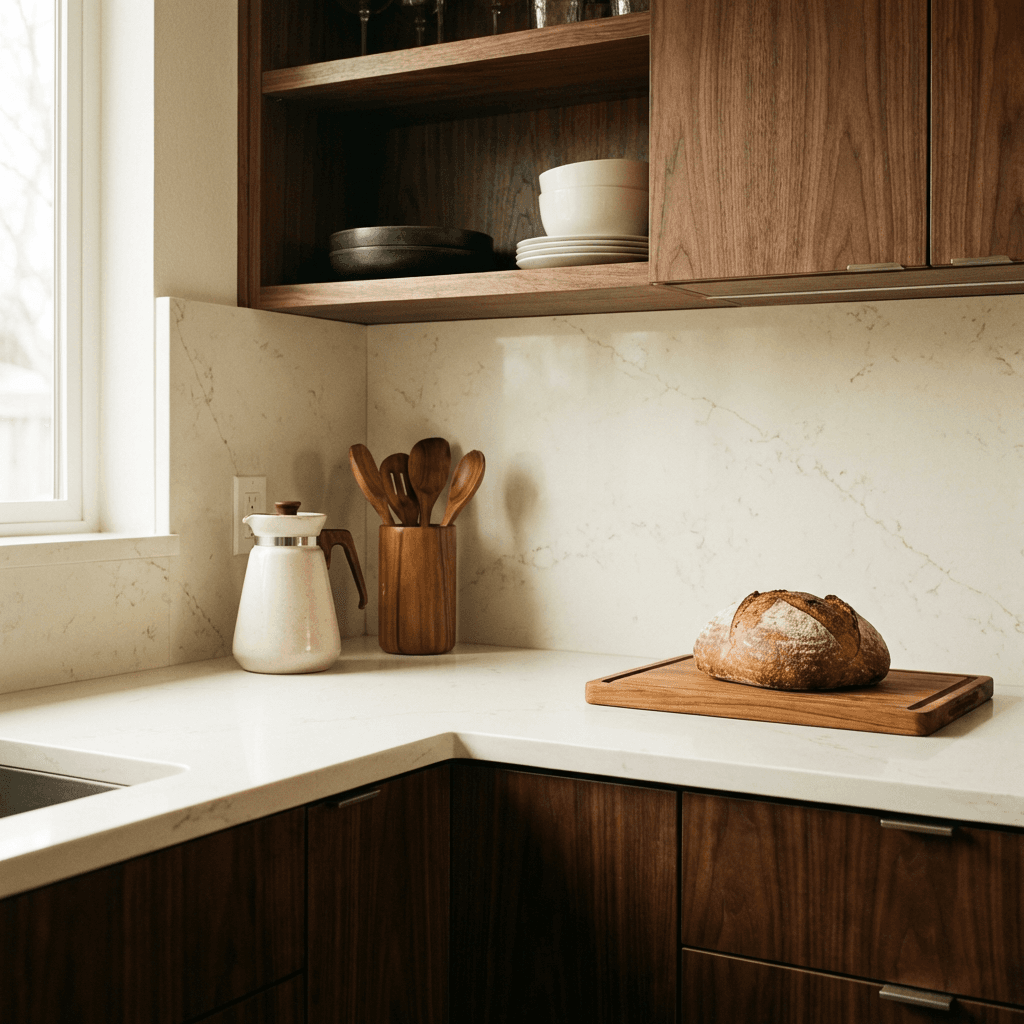
Choose white or light countertops to contrast dark wood

Choose white or light countertops to contrast dark wood

Quartz or solid-surface countertops in white or warm cream create a clean working surface that contrasts beautifully with walnut cabinetry. Avoid busy granite patterns — mid-century modern prizes clean, uncluttered surfaces. A subtle terrazzo-look composite can add texture while remaining true to the era.

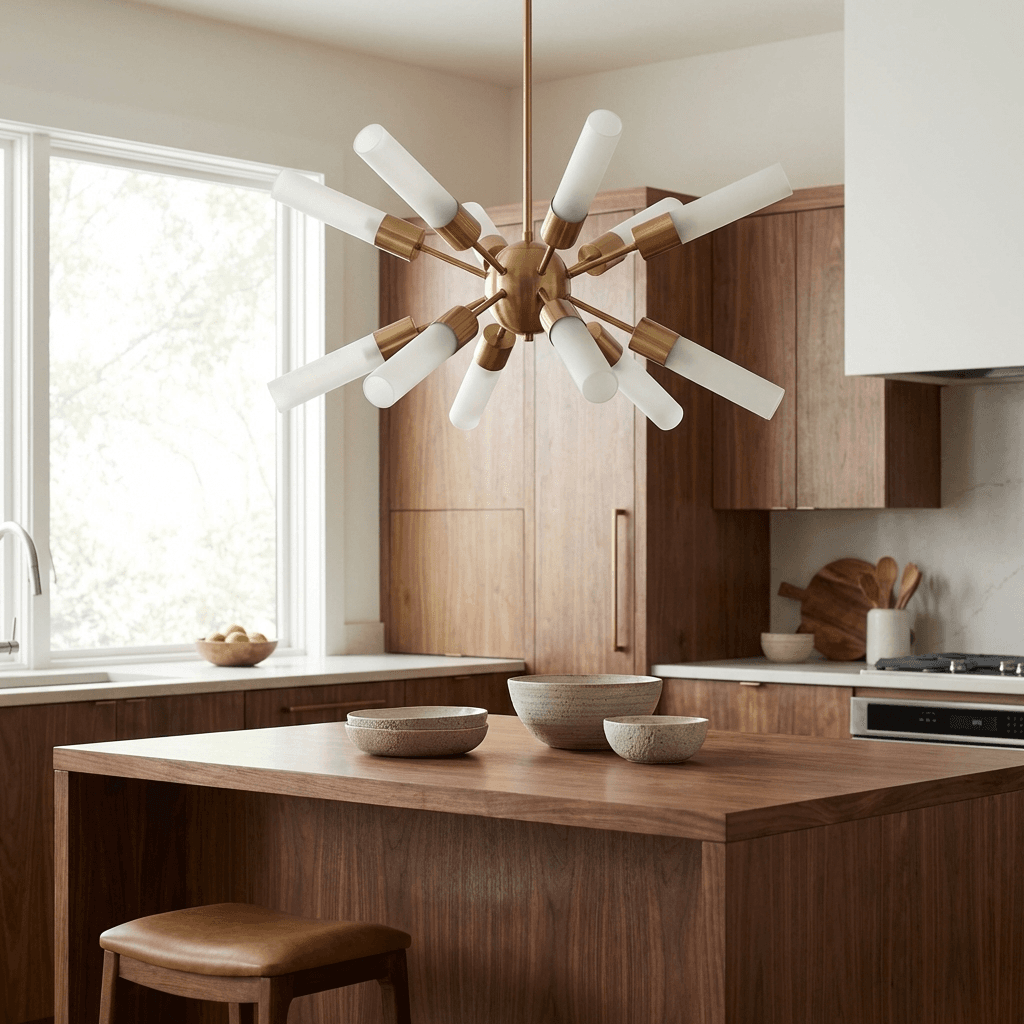
Add a statement pendant over the island or dining nook

Add a statement pendant over the island or dining nook

A trio of cone-shaped pendants, a large drum shade, or a Nelson-inspired bubble lamp over the kitchen island anchors the space in mid-century style. Brass or matte black finishes work best. Position pendants 70-80 cm above the counter surface for proper task lighting without visual obstruction.

Furniture Recommendations

Key pieces for the perfect Mid-Century Modern kitchen

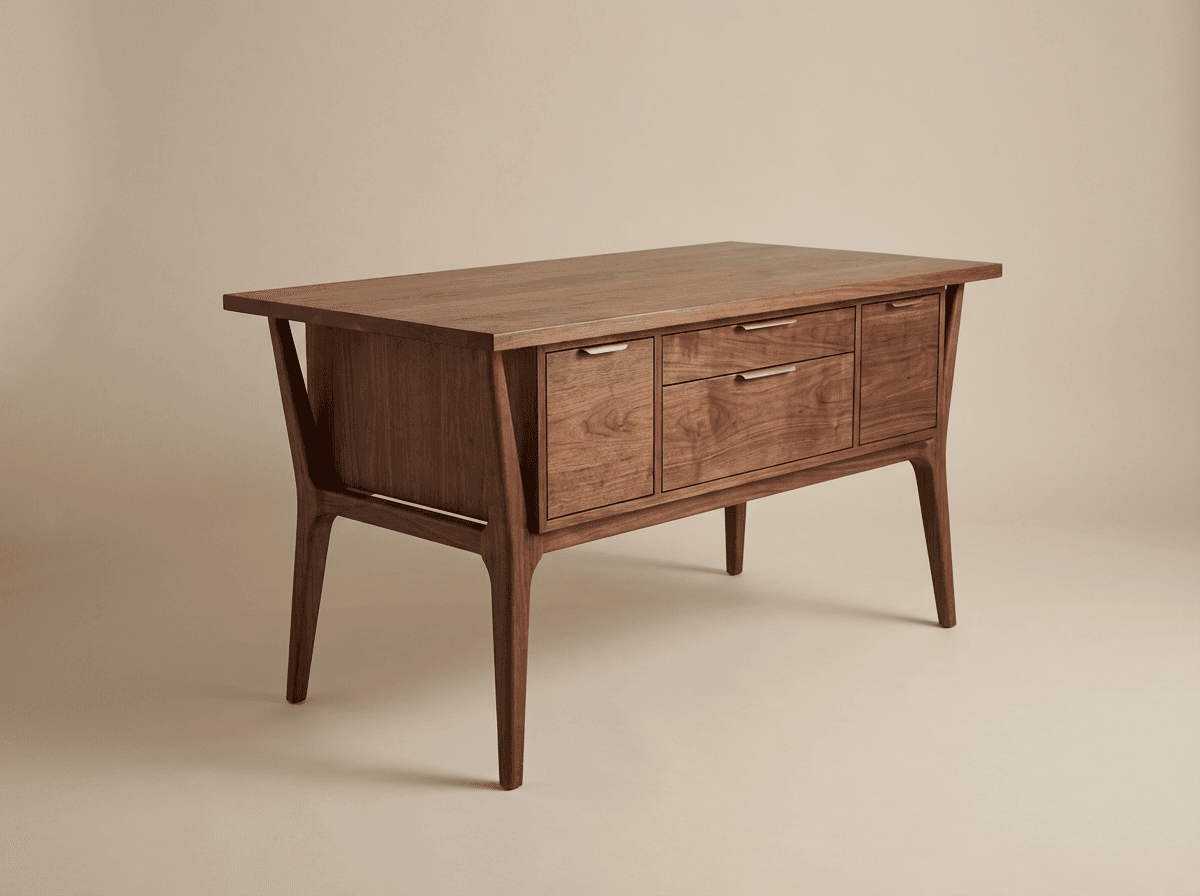
Walnut kitchen island with tapered legs

Walnut kitchen island with tapered legs

A freestanding island with a butcher-block or white-composite top on slim tapered legs, rather than a bulky built-in unit. The open space beneath the island keeps the room feeling airy. A 120-150 cm island provides ample prep space and room for two bar stools on one side.

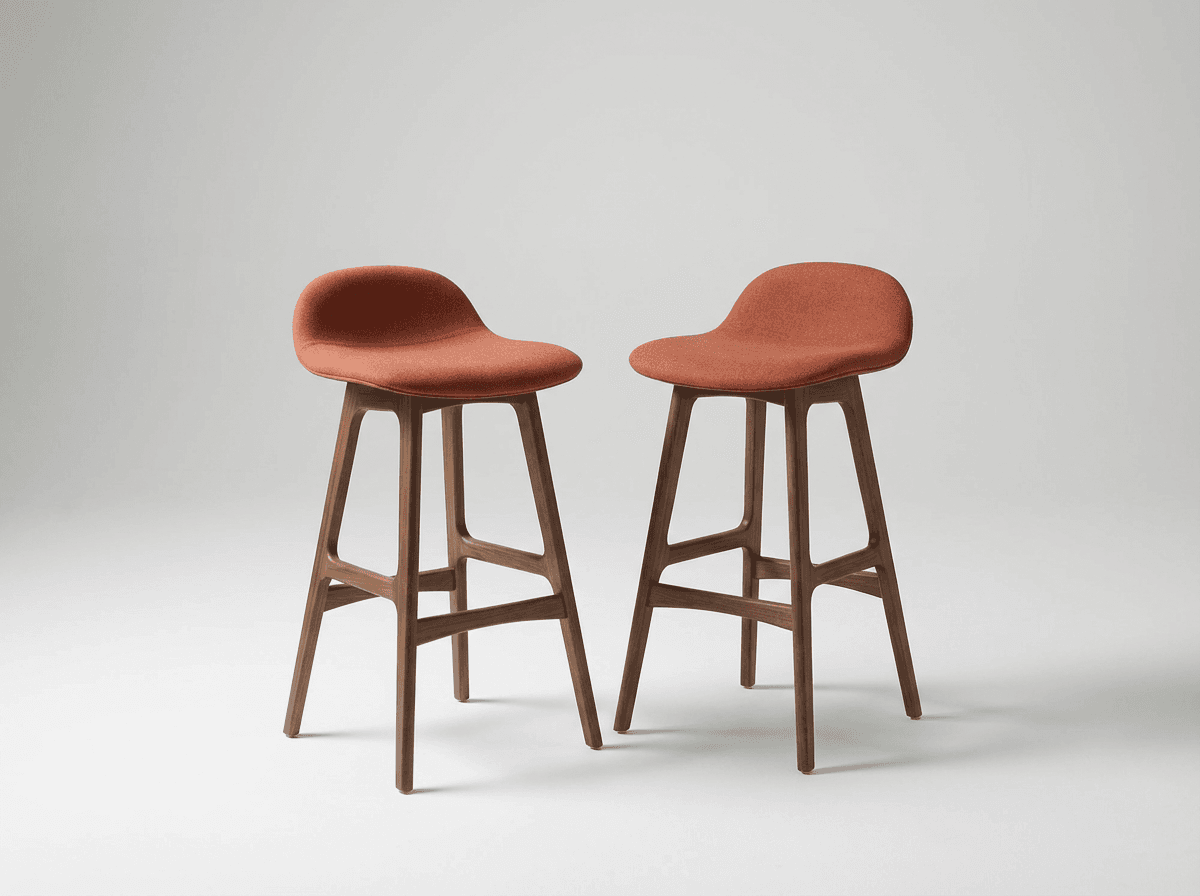
Molded-seat bar stools

Molded-seat bar stools

Molded plywood or fiberglass bar stools inspired by Eames or Cherner designs, mounted on slender metal or wooden legs. The sculptural seat shells echo the organic shapes found throughout mid-century interiors and are more comfortable than flat-seat alternatives. Upholstered seat pads in mustard or teal add color.

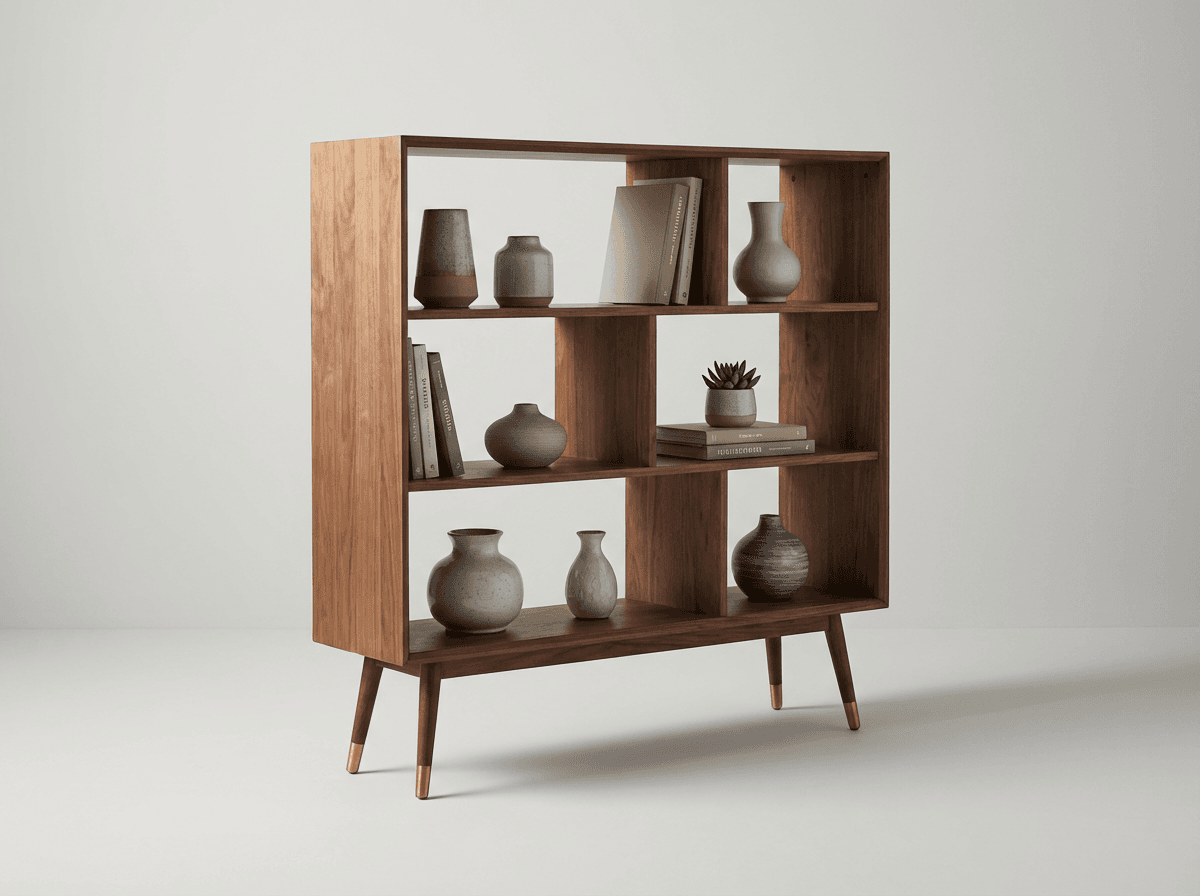
Open-shelf display unit

Open-shelf display unit

A wall-mounted or freestanding shelving unit in walnut or teak with thin metal supports, used to display ceramics, cookbooks, and plants. The open design prevents the visual weight of closed upper cabinets and gives the kitchen a gallery-like quality that's characteristic of the era's design philosophy.

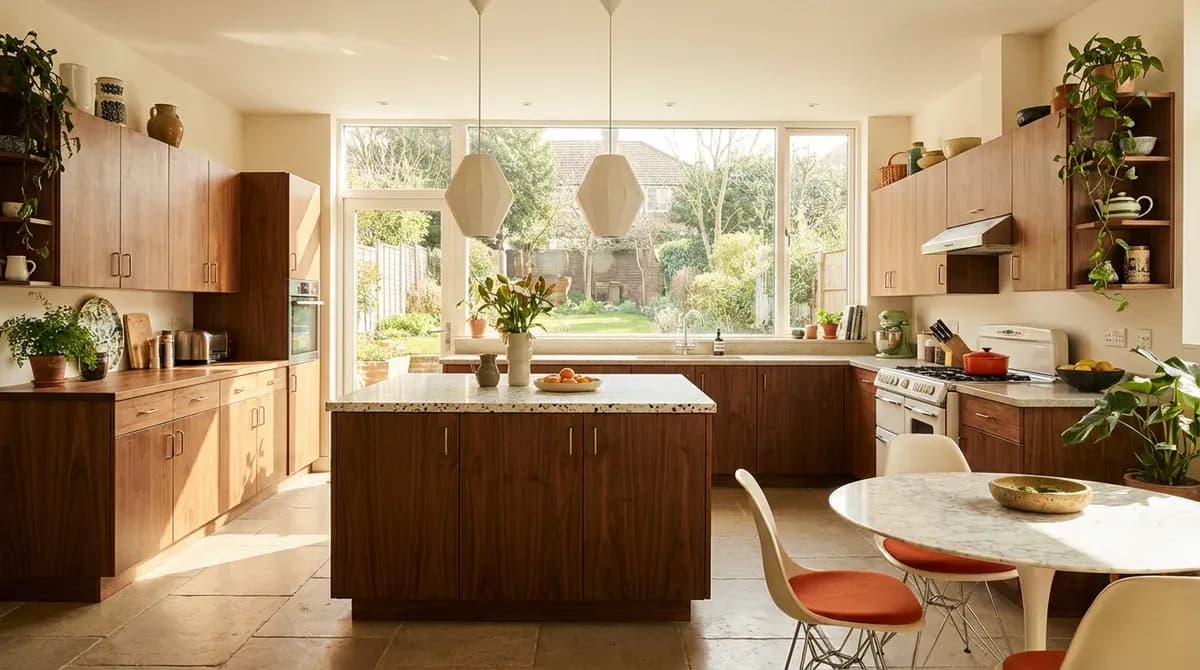
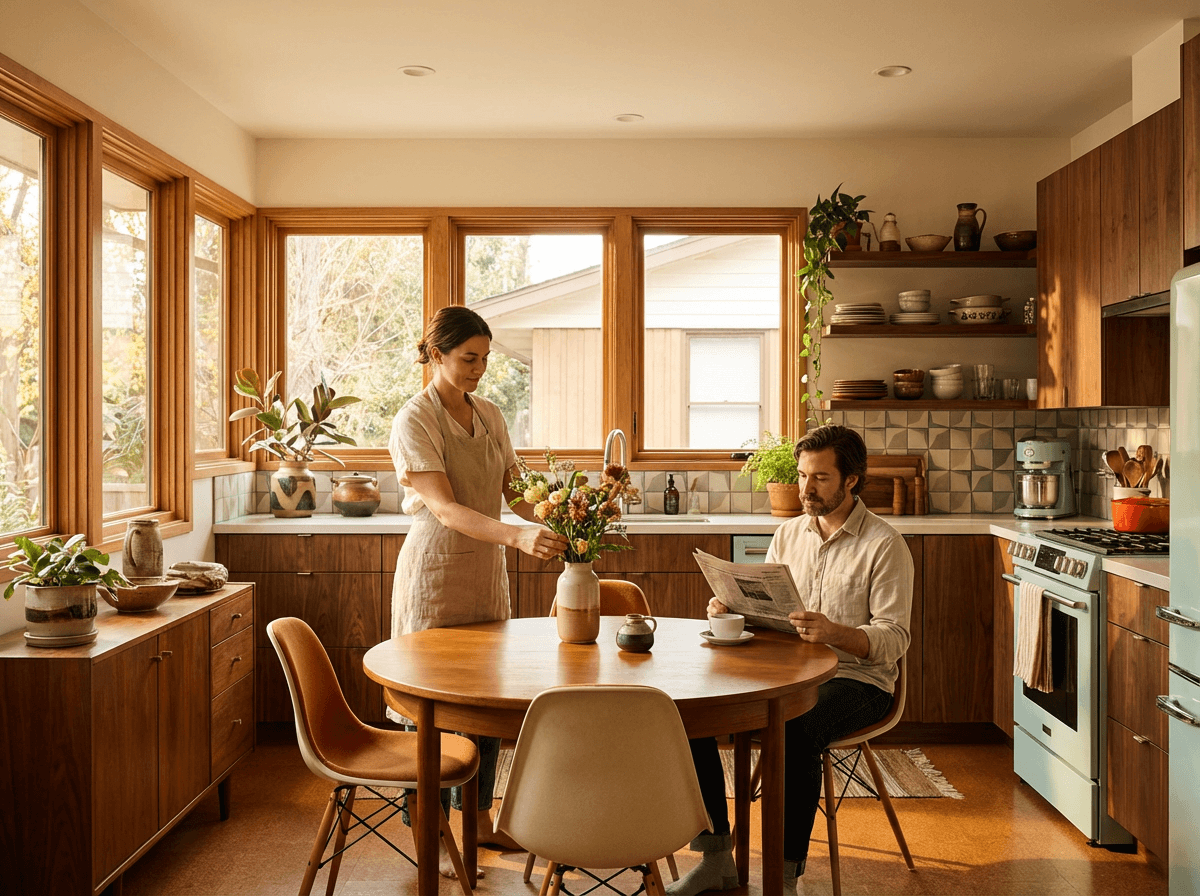
Mid-Century Modern Kitchen interior inspiration
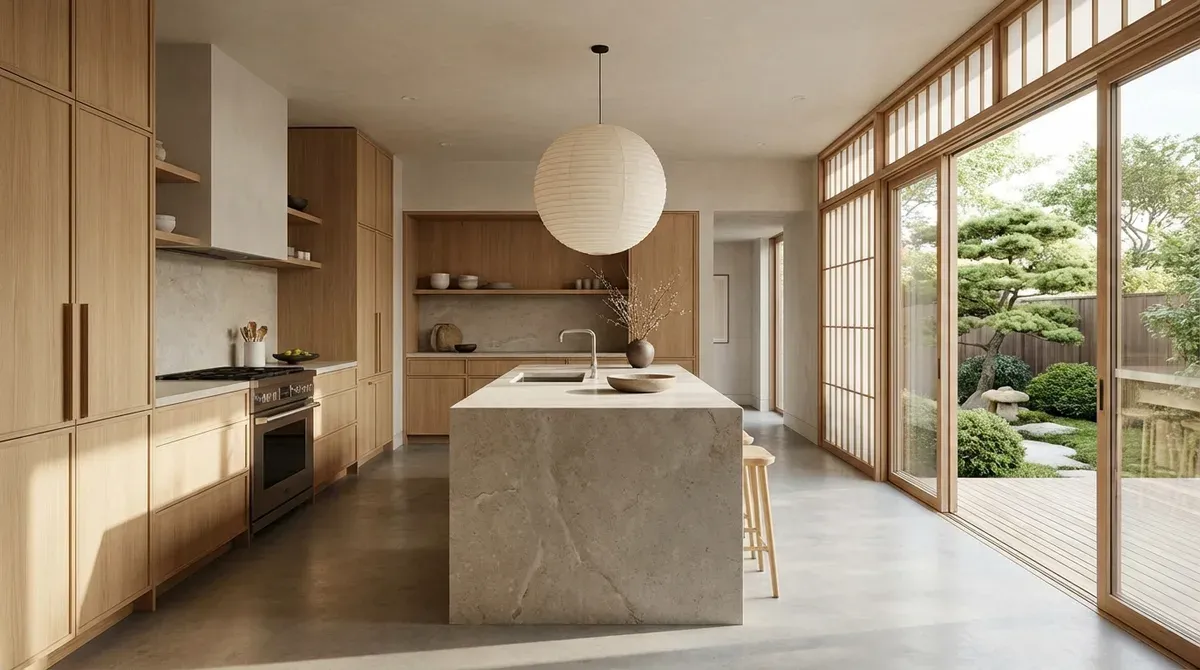
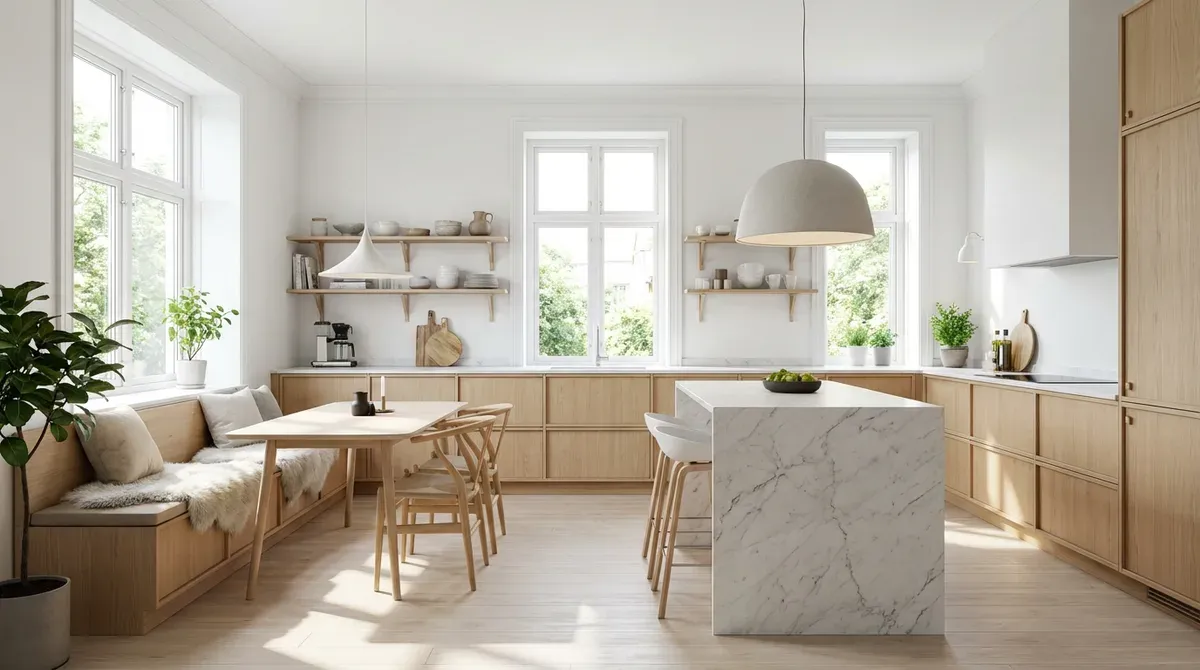
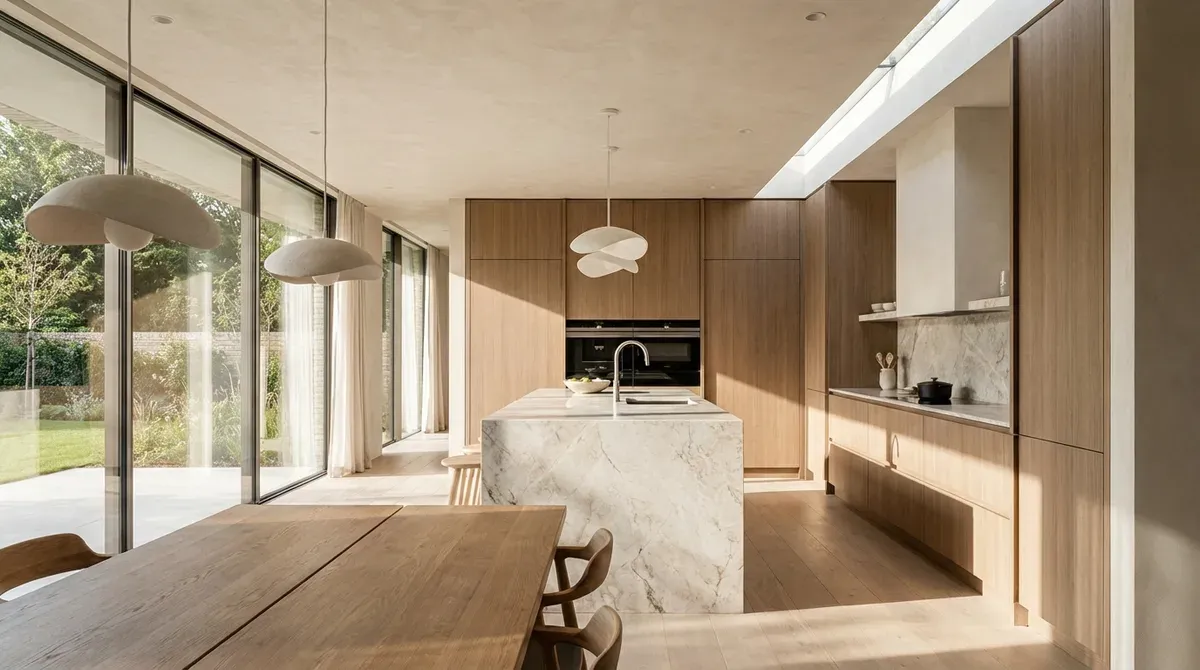
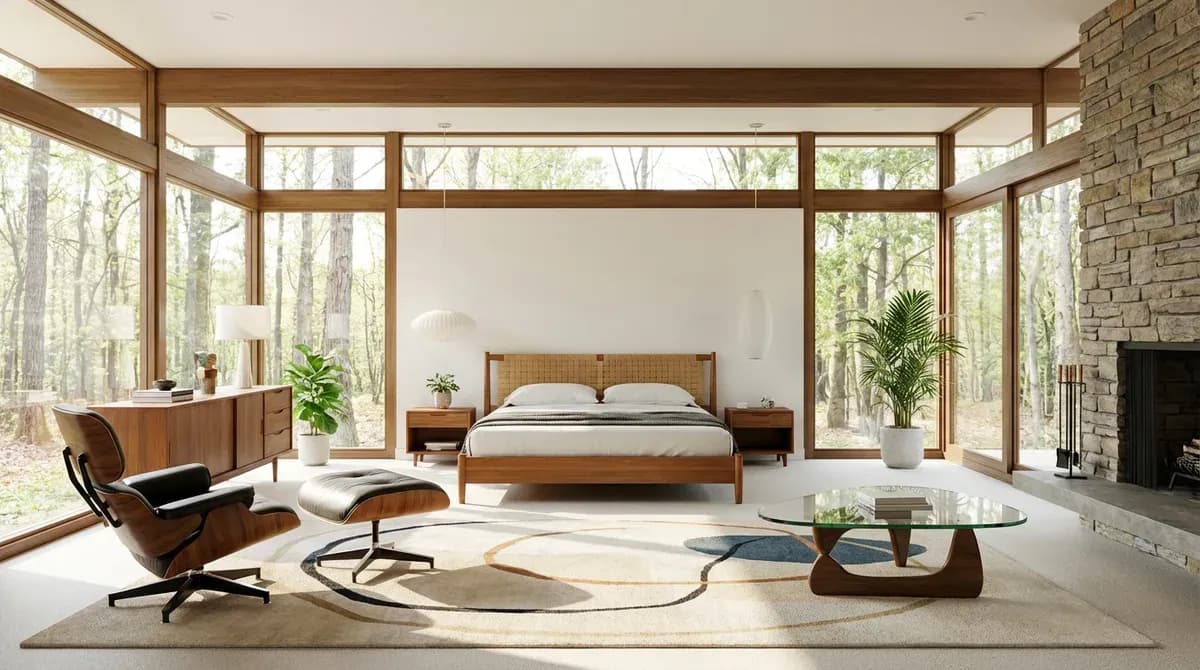
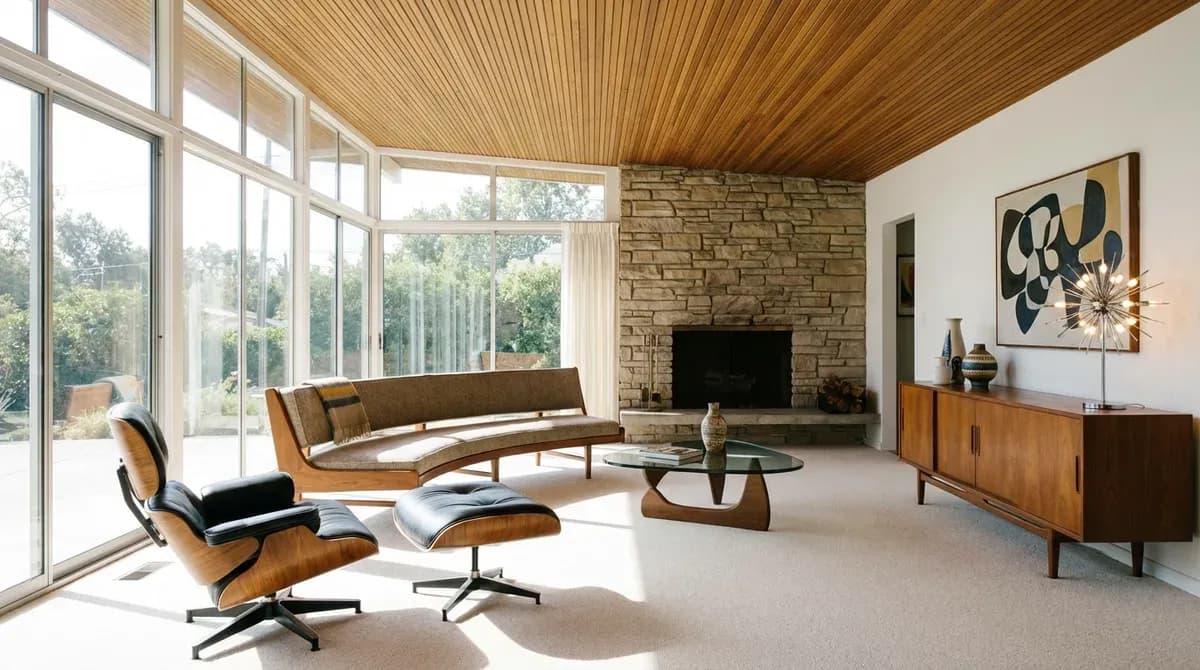
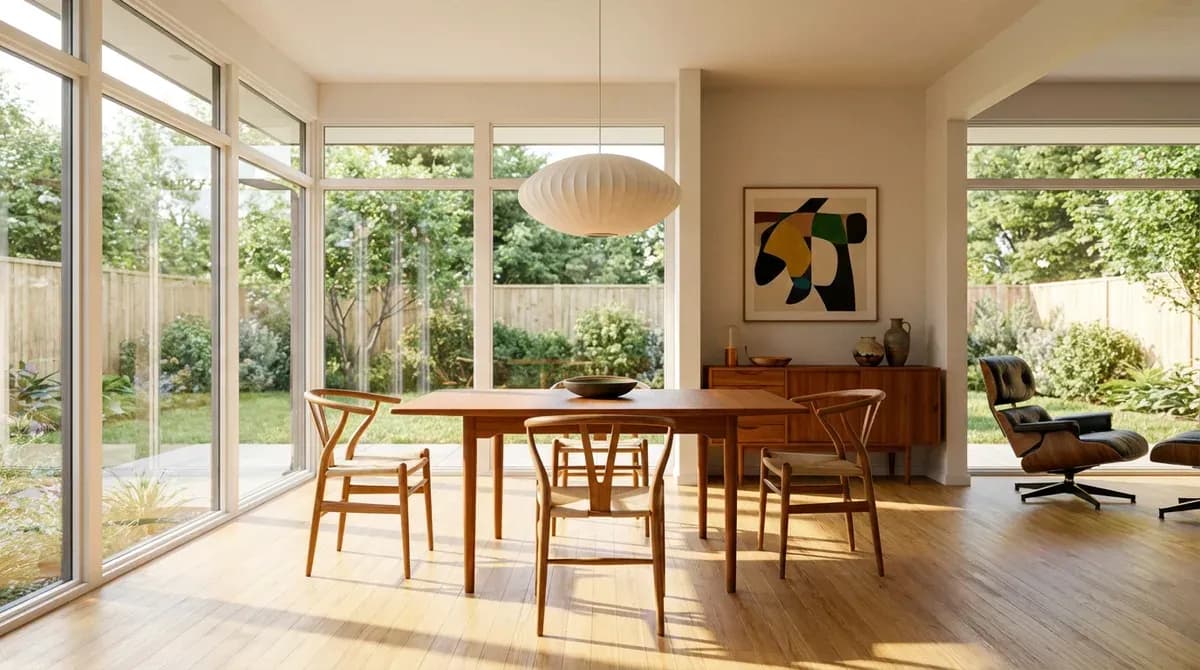
The mid-century modern kitchen bridges the gap between the utilitarian postwar galley and the open, social kitchen we know today. Designers of the 1950s and 60s began treating the kitchen as a space worth designing — not just equipping — and the result was rooms that balanced warm natural materials with bold splashes of color and clever, space-efficient layouts. Walnut or teak cabinetry with flat-panel doors is the foundation. The grain of the wood provides all the visual interest the surfaces need; hardware stays minimal — a slim brass bar or an integrated finger pull. Countertops in white quartz or butcher block create a clean working plane, while the backsplash is where personality enters: geometric tiles in teal, mustard, or tangerine make the wall between counter and cabinet feel like a curated art installation. Lighting is the finishing move. A trio of cone pendants or a sculptural globe fixture over the island provides both task illumination and a visual anchor. Paired with molded-seat bar stools and an open display shelf of ceramics and cookbooks, the mid-century modern kitchen becomes a room where cooking and conversation feel equally at home.

This Room in Every Style

Explore more design styles for your kitchen

More Mid-Century Modern Rooms

See Mid-Century Modern design in other rooms

Frequently Asked Questions

Alles, was Sie über RoomLift wissen müssen — für Designer, Makler und alle, die Räume mit AI transformieren.

How do I get a mid-century modern look in my kitchen?
Start with flat-panel wood cabinetry in walnut or teak tones, add a geometric backsplash tile in a bold accent color, and install sculptural pendant lighting. Keep countertops clean and light-colored. Replace ornate hardware with simple brass or matte-black bar pulls, and add a few era-appropriate accessories like a vintage clock or ceramic canister set.
What backsplash works for a mid-century modern kitchen?
Geometric tiles are the most authentic choice: hexagonal, elongated diamond, or starburst patterns in teal, mustard, white, or tangerine. Hand-glazed ceramic tiles with slight color variation add warmth. Avoid overly polished or glass tiles, which read as contemporary rather than mid-century.
Are mid-century modern kitchens practical for families?
Yes — the style emphasizes function alongside form. Flat-panel cabinets are easy to clean, open shelving keeps everyday items accessible, and durable surfaces like quartz and butcher block withstand daily use. The clean lines also make small kitchens feel more spacious.
What flooring should I use in a mid-century modern kitchen?
Warm hardwood in walnut or white oak is the most authentic option. For a more budget-friendly choice, luxury vinyl plank in a warm-toned wood look works well. Linoleum in a solid color (gray, cream, or olive) is also period-appropriate — it was widely used in mid-century homes and is experiencing a design comeback.
Can I mix mid-century modern with a modern kitchen layout?
Absolutely. Mid-century style adapts well to open-plan layouts and modern appliance packages. Keep cabinetry and hardware mid-century in spirit (flat panels, warm wood, minimal hardware) while using contemporary amenities like induction cooktops and integrated refrigerators. The style's emphasis on clean lines already aligns with modern kitchen engineering.
Jetzt kostenlos designen

No credit card required. 10 free renders.