We Tried 8 of the Best AI Virtual Staging Apps
We Tried 7 of the Best AI Virtual Staging Apps
Research was conducted throughout September 2025.
Finding the right virtual staging software for your real estate listings shouldn't feel like a gamble. But here's the reality: you're working with tight deadlines, every listing needs to stand out, and traditional staging costs €1,000–€5,000 per property.
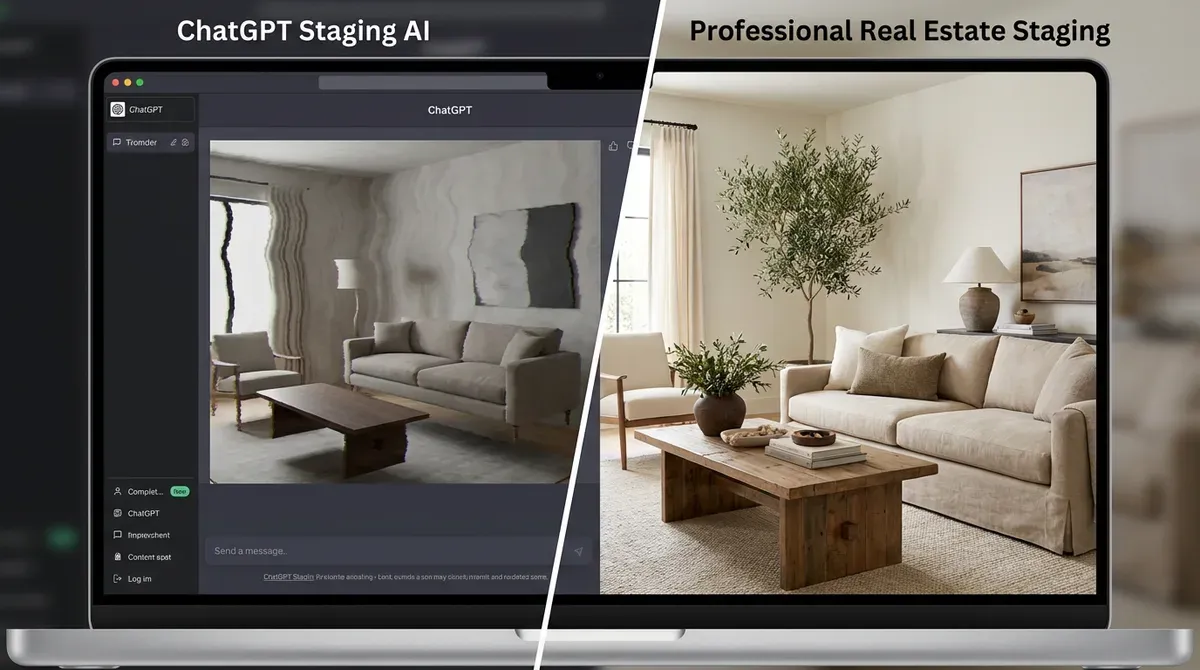
Professional staging companies take weeks to schedule. Your existing photos of empty rooms aren't selling the property's potential. And even when you find decent virtual staging AI tools, the results often look fake or overly digital.
Hire a staging company. Edit photos yourself. Hope buyers can visualize furnished rooms. These were your only options until AI-powered virtual staging transformed the real estate photography market over the past two years.
What Is Virtual Staging Software?
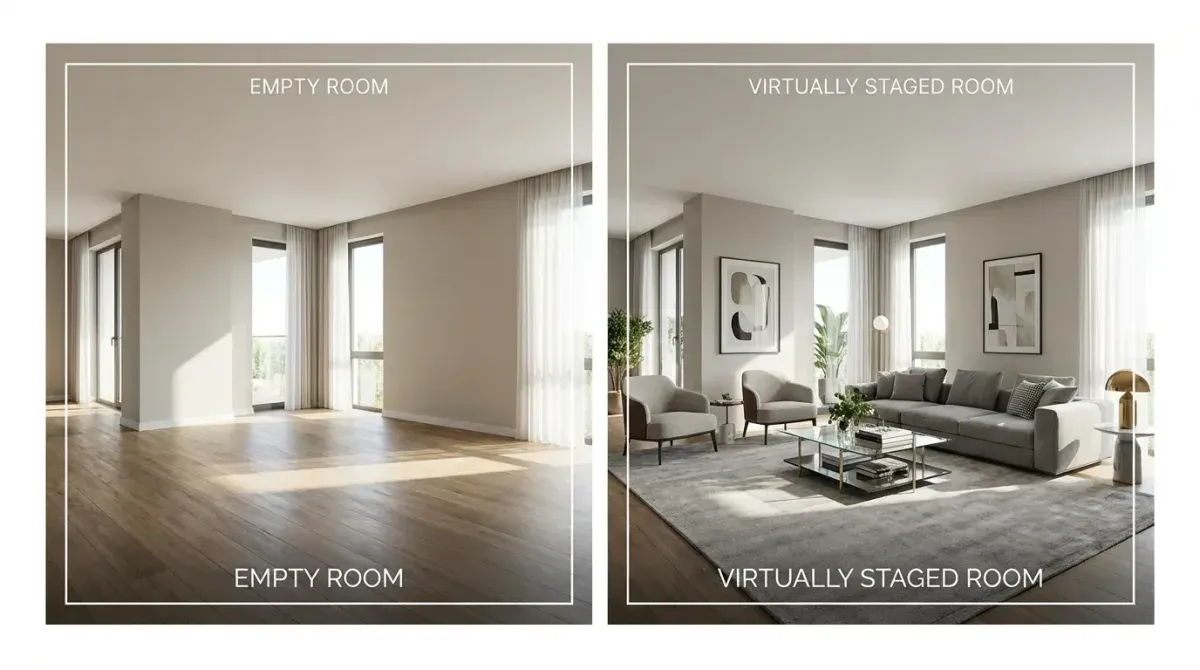
Virtual staging software uses artificial intelligence to transform empty rooms into beautifully furnished spaces. Upload a photo of an empty living room, bedroom, or office, and within minutes you'll have professionally styled images ready for your property listings.
Modern virtual staging AI has evolved dramatically. When we talk about training these AI models, we're teaching them to understand room dimensions, lighting conditions, architectural features, and design principles. The software analyzes your empty room photo and generates furniture, decor, and styling that matches the space's proportions and lighting naturally.
The quality of your input photos matters significantly. If your room photo has poor lighting, extreme angles, or cluttered backgrounds, the virtual staging results will reflect those issues. Professional real estate photographers understand this, but the beauty of today's virtual home staging tools is that even smartphone photos can produce impressive results when taken correctly.
According to the National Association of Realtors, staged homes sell 73% faster than non-staged homes, and virtual staging delivers these benefits at a fraction of traditional staging costs—typically €25–€75 per room versus €1,000+ for physical staging.
The time savings are equally compelling. Upload your photos on a Monday morning and have staged images ready for your afternoon listing. No furniture rental. No scheduling logistics. No waiting weeks for staging companies to become available.
So, which virtual staging software is right for your real estate business?
How We Tested Virtual Home Staging Tools
We tested each virtual staging AI platform using identical empty room photos to ensure fair comparison. Our test images included challenging scenarios real estate agents face daily: odd-shaped rooms, varying light conditions, and different architectural styles.
For each platform, we:
Created accounts and uploaded the same 6 test photos
Selected comparable style options (Modern, Scandinavian, Traditional when available)
Measured time from upload to completed renders
Evaluated photorealism, furniture accuracy, and overall usability
Tested customer support responsiveness
Analyzed final costs per room
Our pick

A recent quality update makes RoomLift the fastest and most versatile virtual staging real estate solution. The combination of style variety, video exports, and photorealistic results makes it the complete package for agents who want to stand out.
Runner-Up

Strong photorealism and reliable furniture placement make this a solid alternative. The results are consistently good, though the style options feel more limited than RoomLift's extensive preset library.
Why You Should Trust Us
We are RoomLift, a virtual staging platform founded in late 2024. We specialize in AI-powered room visualization for real estate professionals.
Our team works directly with real estate agents, brokers, and property managers across Europe who rely on virtual staging to sell properties faster. We understand the market because we're in it daily.
Let's be direct—there's inherent bias here.
Nothing we say changes that reality. But here's our commitment to you:
If competitors excel at something, we'll acknowledge it openly. Good work deserves recognition.
We'll provide real examples of results from every virtual staging software we tested
We paid for every service listed. No free passes, no special treatment.
We used identical test photos across all platforms to ensure fair comparison
We used the following empty room photos across all tests, representing typical real estate photography conditions:
Our top pick

€29–€59 per project
RoomLift produced the most versatile and photorealistic virtual staging results in our testing. The style variety—from Scandinavian to Japandi to Industrial—gives real estate agents genuine options to match property types and target buyers.
What we loved about RoomLift:
Multiple renders per room: Generate 3-5 design variations instantly, giving you options to choose the best look for each listing
Style transfer - Positioned as a unique differentiator that lets agents upload reference images (Pinterest boards, successful listings, etc.) to replicate specific aesthetics
Advanced output control - Highlighted the practical furniture sizing presets (king/queen/twin beds, sofa scales) that prevent the common AI staging problem of furniture that doesn't fit the room properly
Style customization: Mix moodboards, textures, and color palettes for unique looks that match specific buyer demographics
Video exports included: Transform staged rooms into short walkthrough clips for Instagram, TikTok, and property websites. This feature alone sets RoomLift apart—no competitor offered video at this price point
Processing speed: Most rooms completed in 10-20 seconds, the fastest in our testing
No design skills required: Interface is built for busy agents, not designers
RoomLift Results
The photorealism impressed us immediately. Furniture proportions matched room dimensions accurately, shadows fell naturally, and lighting integrated seamlessly with the original photography. We tested a challenging narrow bedroom with unusual wall angles—RoomLift handled it better than any competitor.
The Scandinavian style renders were particularly strong, with clean lines and natural materials that photographed beautifully. Japandi presets offered the minimalist aesthetic increasingly popular with younger buyers. Industrial options worked perfectly for loft conversions and urban properties.
Video exports functioned flawlessly. We created 15-second walkthrough clips that looked professional enough for premium listings. For agents building social media presence, this feature is invaluable.
RoomLift demonstrates clear commitment to pushing virtual staging quality forward. The recent updates show continuous improvement rather than resting on existing technology.
RoomLift Onboarding
Dead simple. Upload photos, select style presets, and click generate. We completed our first project in under 5 minutes without reading instructions.
The style selection offers genuinely distinct aesthetics rather than minor variations on the same theme. When you choose "Minimalist" versus "Luxury," you get dramatically different results that serve different listing strategies.
Flaws but not dealbreakers:
Occasionally generates a dud render (though multiple variations compensate for this)
Premium styles cost slightly more than basic options
Our runner-up

€19–€39 per project
Solid photorealism and reliable furniture placement make this a dependable virtual home staging option. The results consistently cleared our quality bar, though style variety felt limited compared to RoomLift's extensive library.
What we liked:
Furniture scale accuracy is excellent
Clean, professional aesthetics work well for traditional residential properties
Simple interface requires minimal learning curve
Results
Virtual Staging AI excels at traditional staging styles—think neutral tones, classic furniture, and broad market appeal. If you primarily list suburban family homes, this tool delivers exactly what you need.
We noticed the staged rooms leaned heavily toward safe, conventional design choices. Nothing wrong with that for certain markets, but agents seeking distinctive or trend-forward aesthetics might feel constrained.
Processing took 8-12 minutes per room, acceptable but noticeably slower than RoomLift. For agents staging multiple properties weekly, those minutes accumulate.
Flaws but not dealbreakers:
Limited style diversity compared to competitors
No video export functionality
No free version
Longer processing times
Why Choosing Virtual Staging Software Is So Difficult
Here's the uncomfortable truth: you're being actively misled.
Search "best virtual staging software" and you'll find results dominated by three types of unreliable information:
Affiliate Marketers
Many "comparison" articles are written by people who earn commissions on sales. This financial incentive corrupts honest evaluation.
The worst offenders never actually test the products they recommend—they copy marketing language from each company's website and slap together ranking lists based purely on affiliate commission rates.
We know this happens extensively in the virtual staging niche because we've watched it happen. According to research from Search Engine Journal, over 60% of comparison content online includes affiliate relationships that aren't properly disclosed.
When researching virtual home staging tools, verify at minimum that the reviewer posts their own staging results and operates an established website.
Review Platforms
Sites like Trustpilot and G2 aggregate user reviews but suffer from a critical flaw: zero customer verification.
Companies incentivize positive reviews. Competitors post negative reviews on rival pages. Unhappy customers create multiple accounts to amplify complaints. The entire system is compromised.
Real estate technology reviews particularly struggle with this because agents understandably don't want to publicly criticize tools they've invested in.
The Staging Companies Themselves
Hi. I'm the problem, it's me.
AI-powered virtual staging is so new that comprehensive reviews barely exist outside of affiliate content and company-generated comparisons.
You'll occasionally see PR-orchestrated articles where one decent product is "tested" against two obviously terrible alternatives to make the good one look superior. Marketing disguised as journalism.
The reality? We're all somewhat compromised when reviewing our own industry. The best we can offer is transparency about that fact, genuine competitor testing, and real examples you can evaluate yourself.
Final Rankings: Best Virtual Staging Real Estate Tools of 2025
The best virtual staging software tools are RoomLift, Virtual Staging AI, and Stager Pro. Cheaper options exist, but these three platforms consistently produced the most photorealistic and usable results for real estate listings during our extensive October 2025 testing.
The Best Choices
RoomLift – Fastest processing, best style variety, includes video exports
Virtual Staging AI – Solid traditional staging, reliable furniture placement
Stager Pro – Excellent residential staging, intuitive interface
Acceptable Choices
DesignAI – Budget option with some proportion issues
QuickStage – Overpriced for quality delivered
HomeVision AI – Functional but obviously AI-generated appearance
Not Recommended
StageMaster – Unfinished product with broken features
VirtualRoom Pro – Aggressive upselling, hidden costs
InstantStage – Poor quality, unusable for professional listings