RoomLift Logo

Japandi Kitchen Design

AI-Powered Design Visualization

Upload a photo of your kitchen and transform it into stunning Japandi design in under 60 seconds.

Start designing now

No credit card required. 10 free renders.

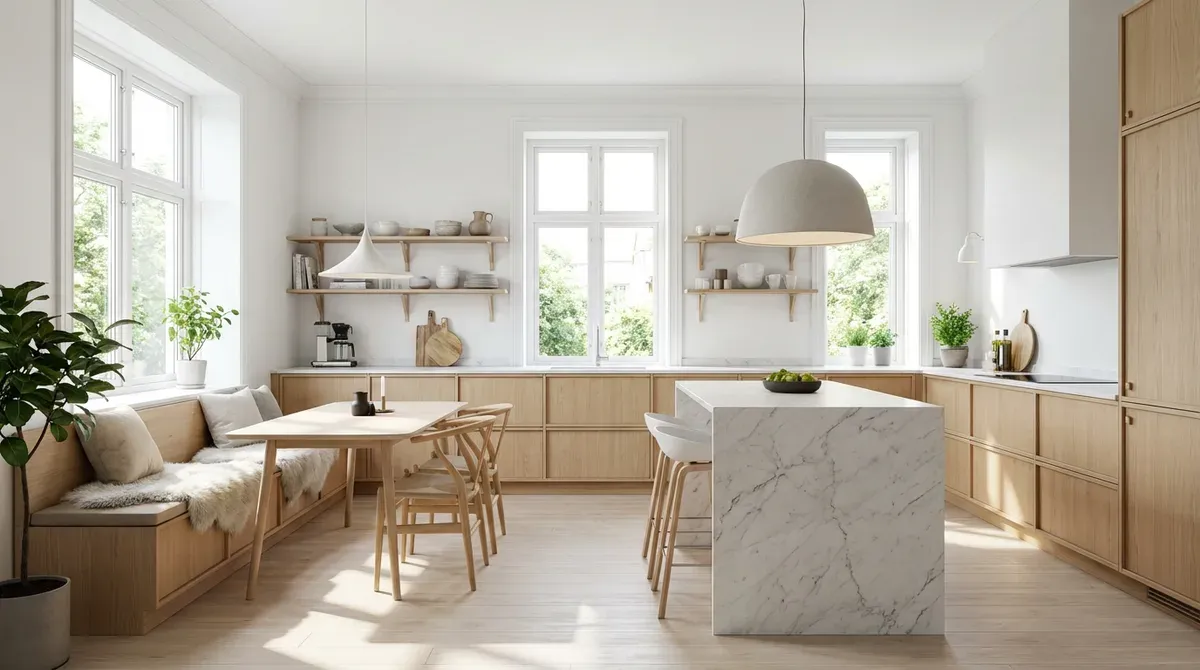
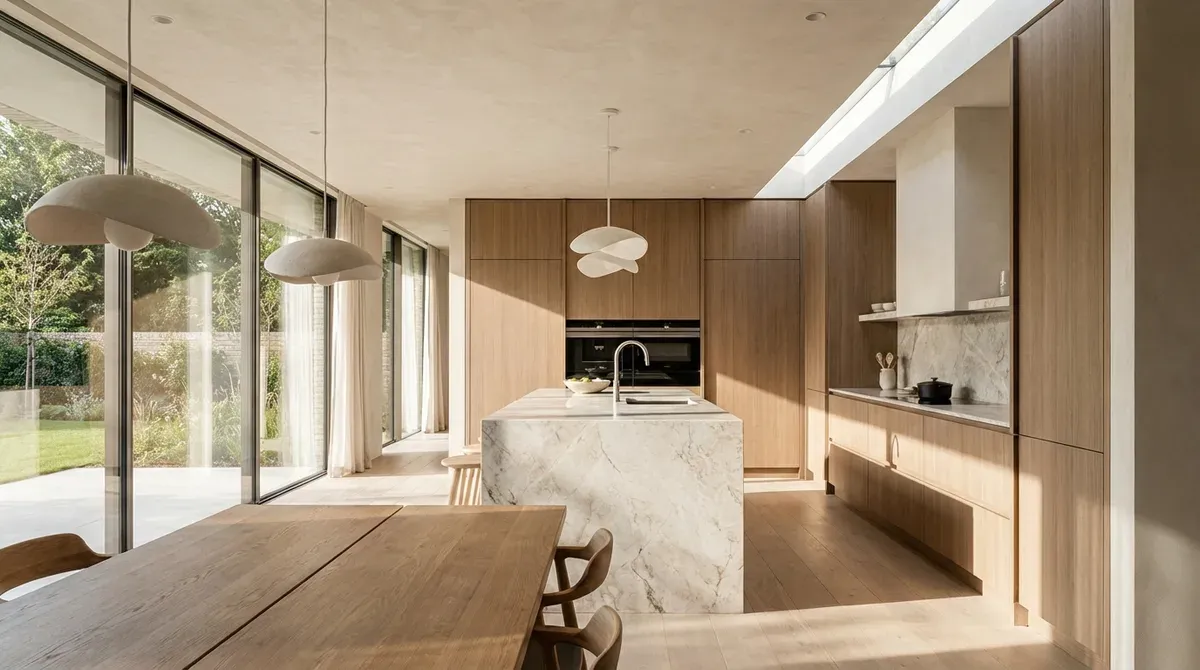
Japandi Kitchen design visualization

Color Palette

The essential colors of Japandi kitchen design

Miso Beige
Ink Black
Hinoki Wood
Shoji Cream
Clay Earth

Design Tips

Expert recommendations for your Japandi kitchen

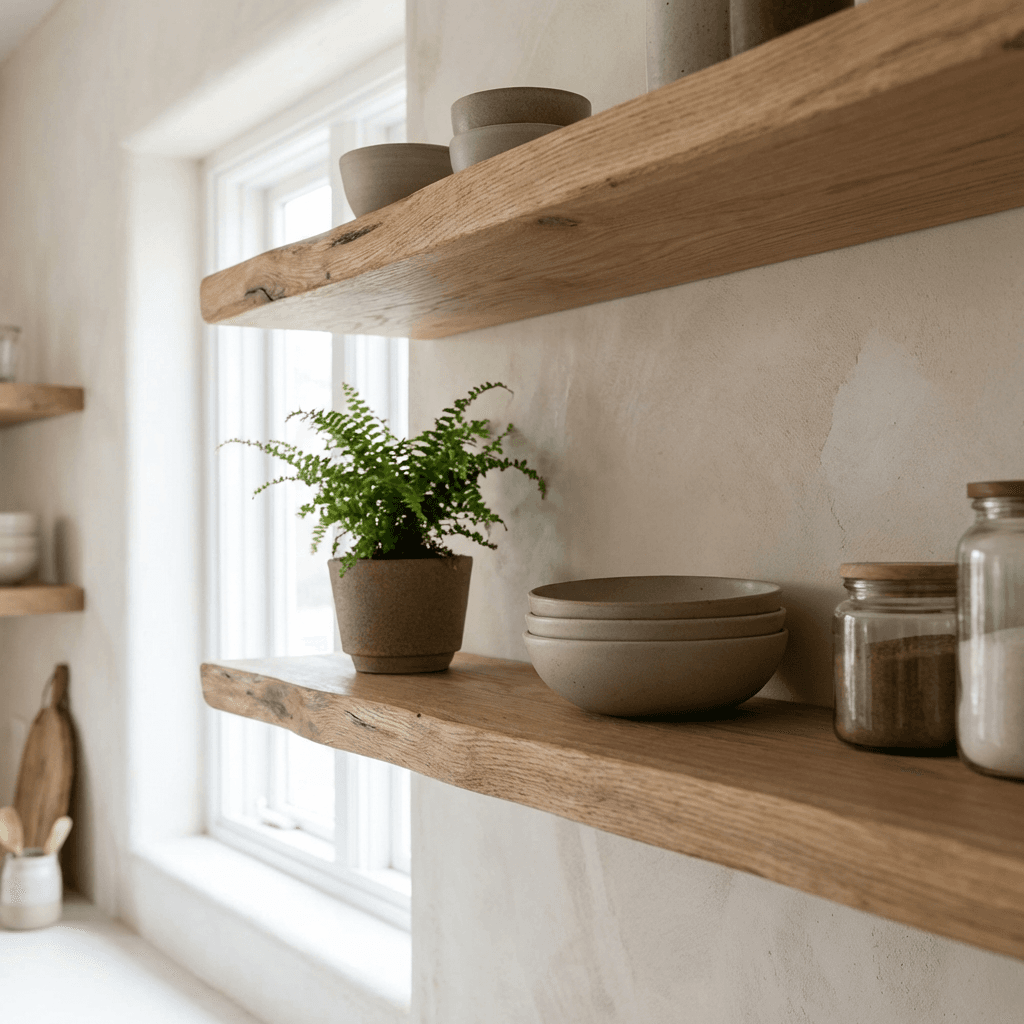
Opt for open shelving in natural wood

Opt for open shelving in natural wood

Replace upper cabinets on at least one wall with floating shelves in light oak or ash. Open shelving invites you to curate what is on display — a stack of ceramic bowls, a wooden cutting board, a single plant — turning storage into a wabi-sabi composition.

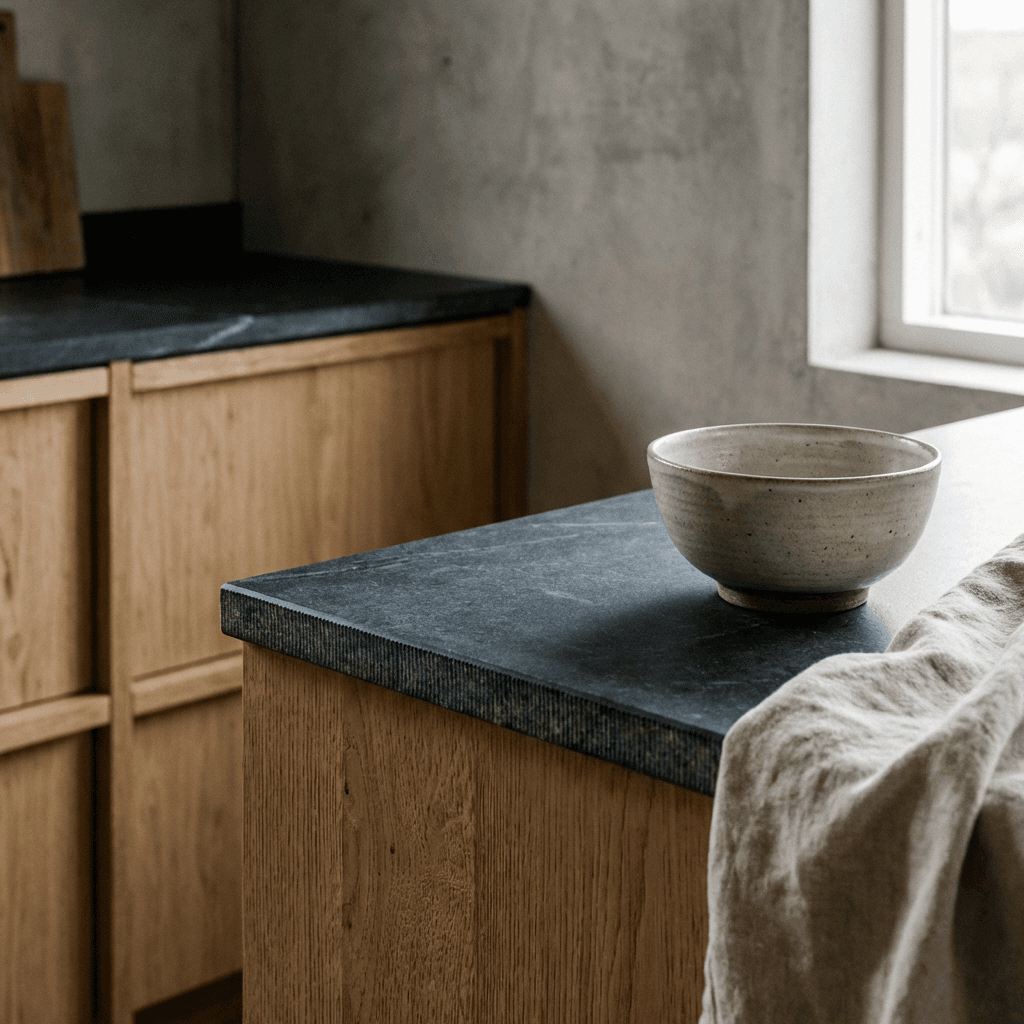
Choose matte, tactile finishes for countertops

Choose matte, tactile finishes for countertops

Honed concrete, natural stone with a leathered finish, or solid wood countertops align with Japandi's emphasis on touch. Avoid high-gloss surfaces; the kitchen should feel handmade and grounded, not polished and showroom-like.

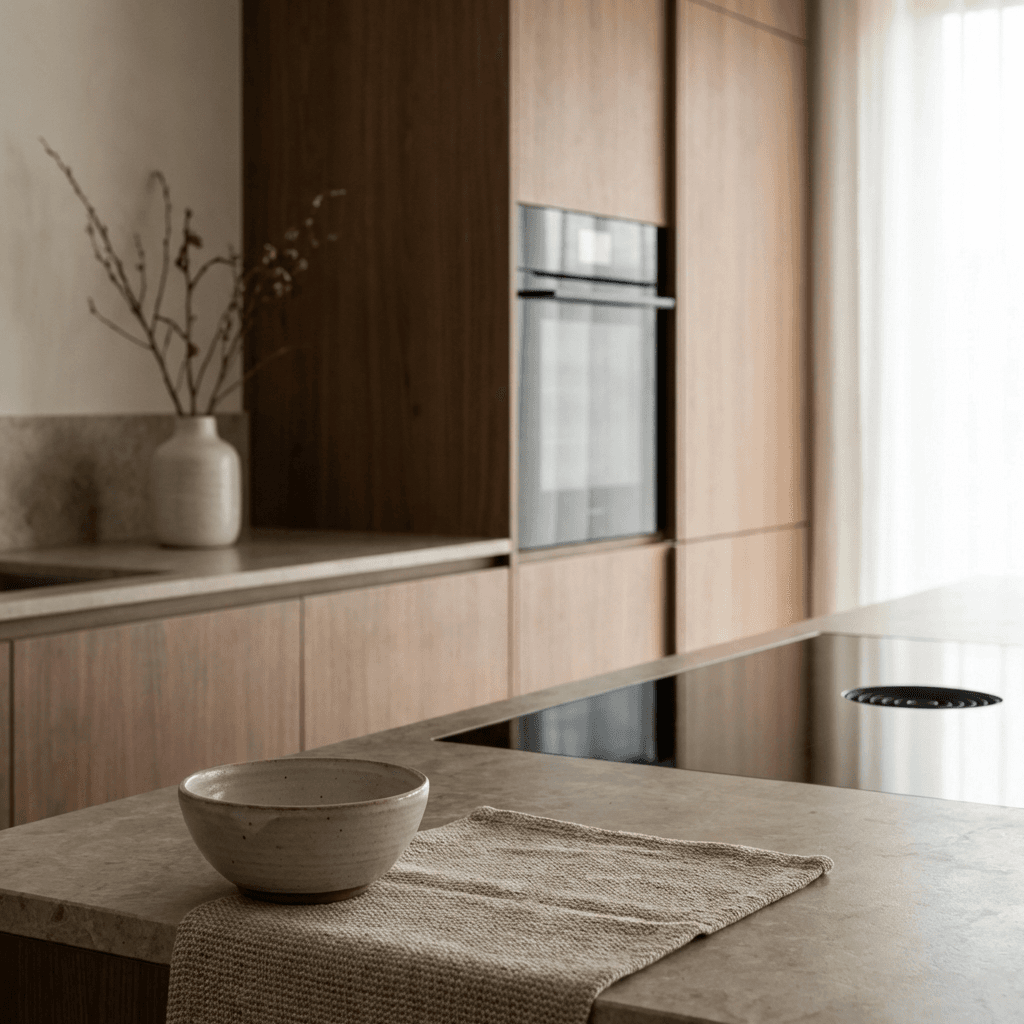
Minimize visible hardware

Minimize visible hardware

Use integrated finger-pull channels or push-to-open mechanisms on cabinets. If you do use handles, select slim blackened iron or brushed brass pulls — the Japanese tradition of understated metalwork keeps attention on the wood and stone.

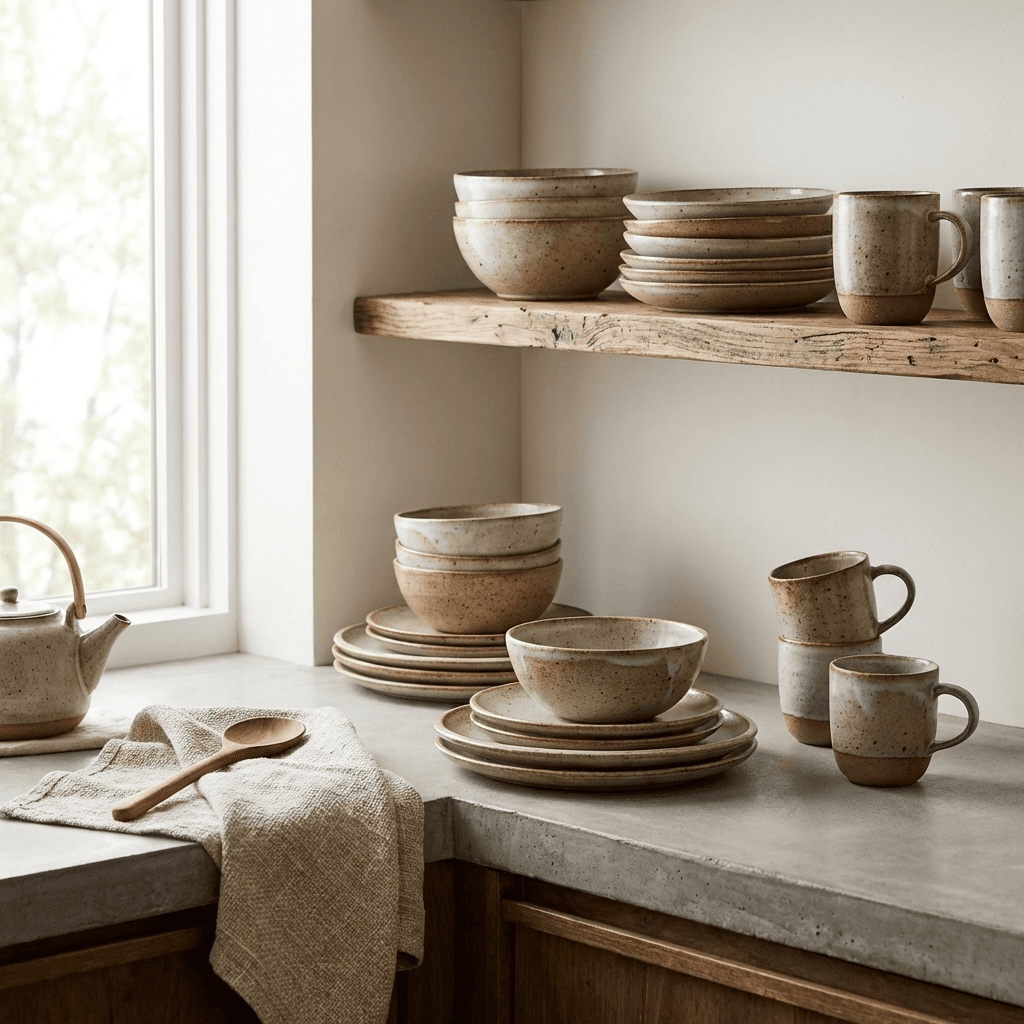
Display handmade ceramics as functional art

Display handmade ceramics as functional art

Swap matching dinnerware sets for a mix of hand-thrown mugs, irregular bowls, and earthenware plates in muted glazes. Each piece's slight imperfection embodies wabi-sabi and turns everyday cooking into an aesthetic ritual.

Furniture Recommendations

Key pieces for the perfect Japandi kitchen

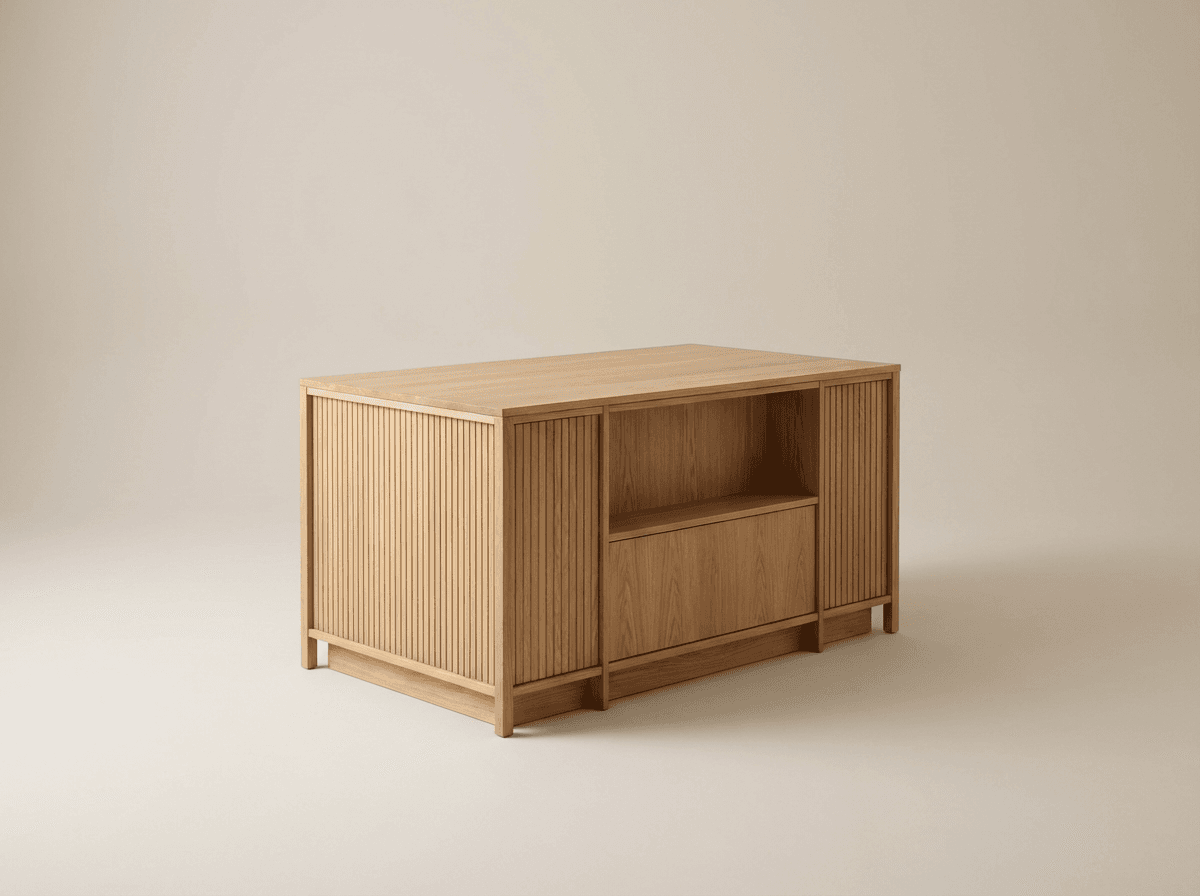
Solid wood kitchen island

Solid wood kitchen island

A freestanding island in light oak with clean joinery and open shelving beneath, serving as the kitchen's gathering point. A butcher-block top adds warmth and patina over time, aging beautifully in the Japandi spirit.

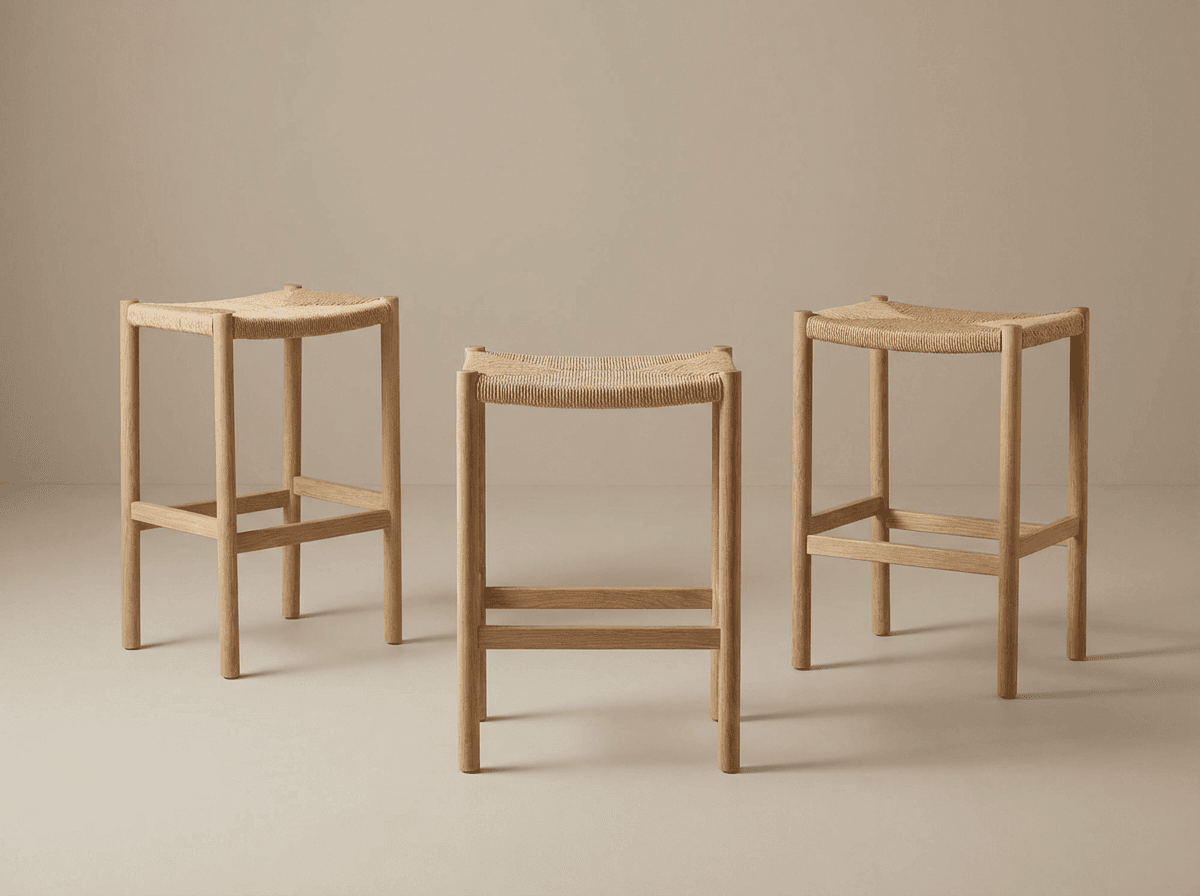
Woven-seat counter stools

Woven-seat counter stools

Low-back stools with a paper cord or rattan woven seat on a slender ash frame. The handwoven texture introduces the Japanese craft element while keeping sightlines open across the kitchen.

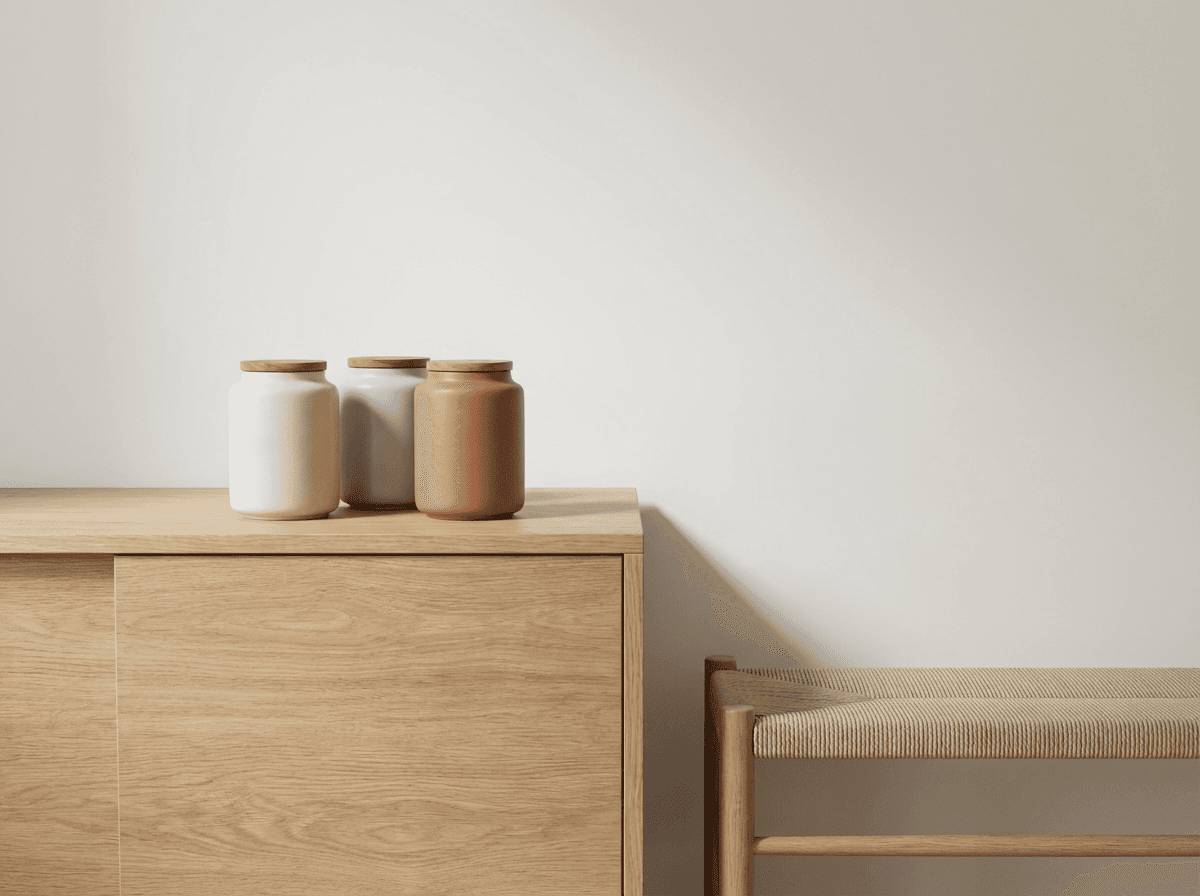
Ceramic storage canisters

Ceramic storage canisters

A set of stoneware canisters in matte earth tones for tea, rice, and spices. Functional and beautiful on the countertop, they replace plastic containers with objects that embody the Japandi commitment to honest materials.

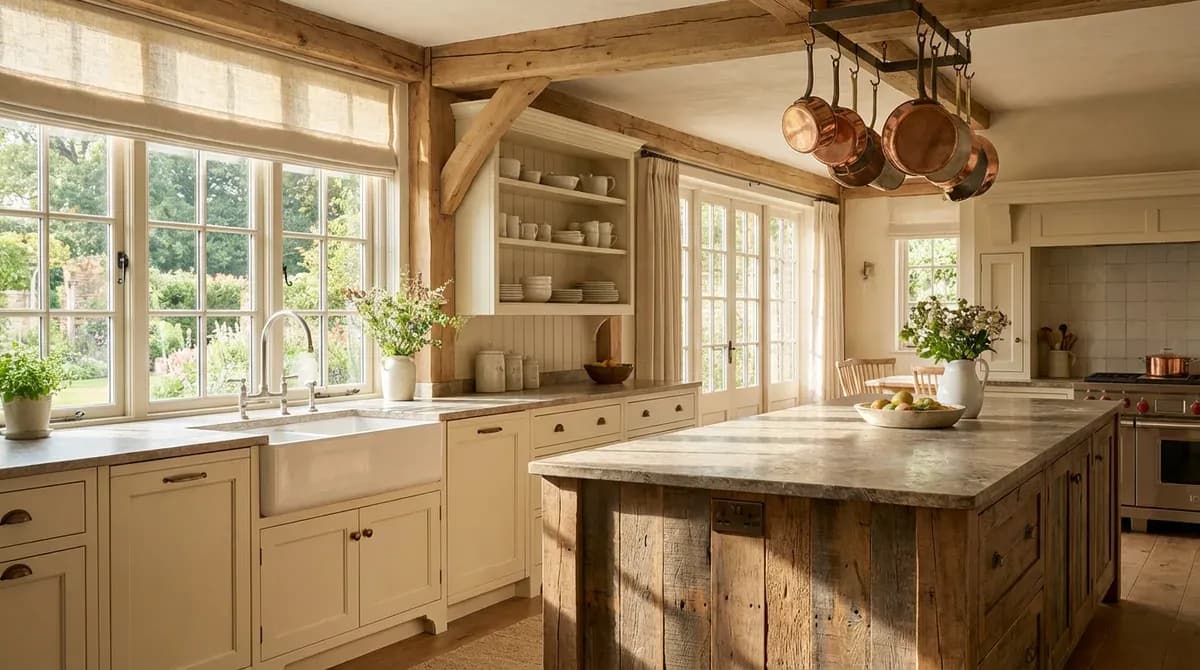
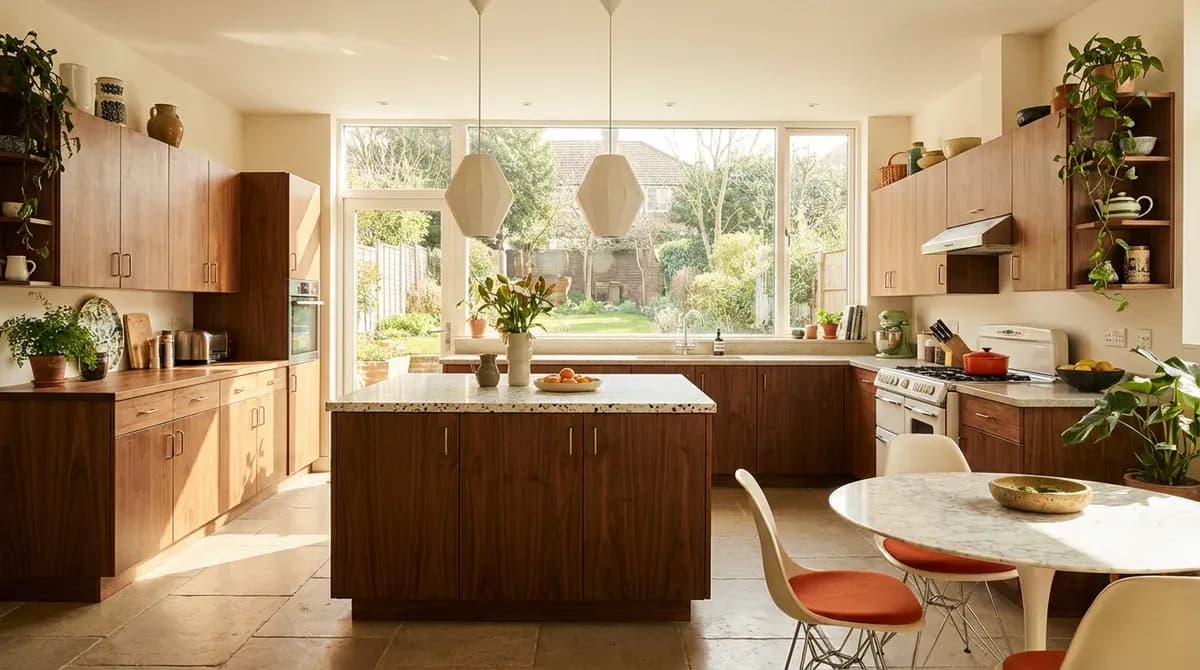
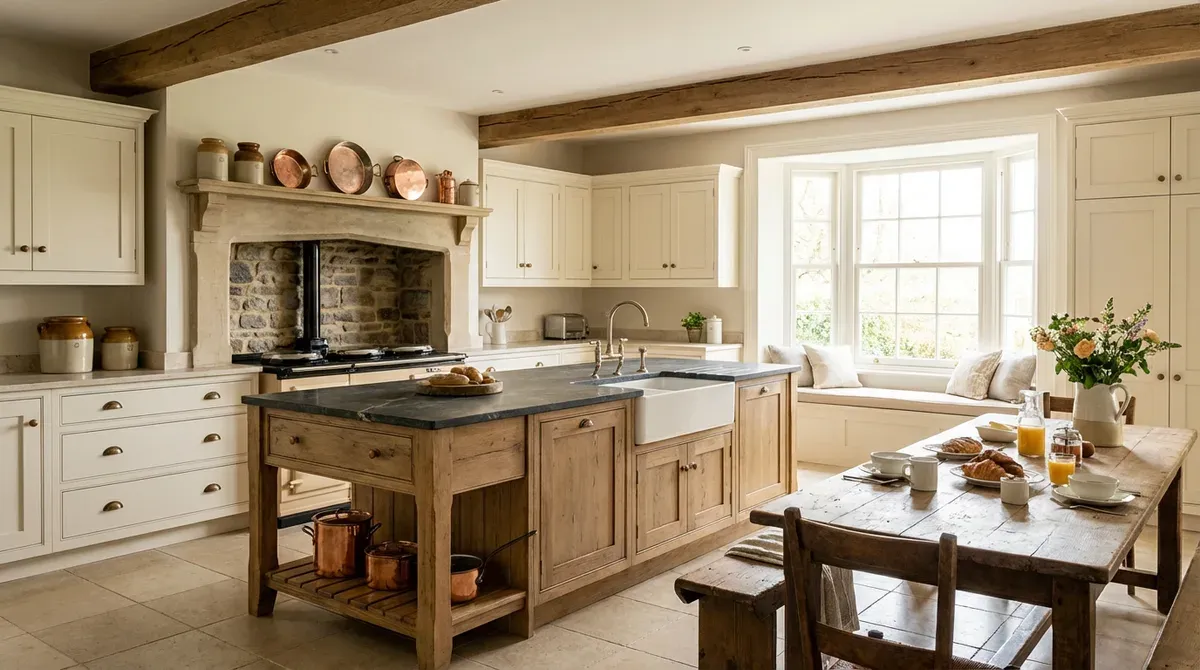
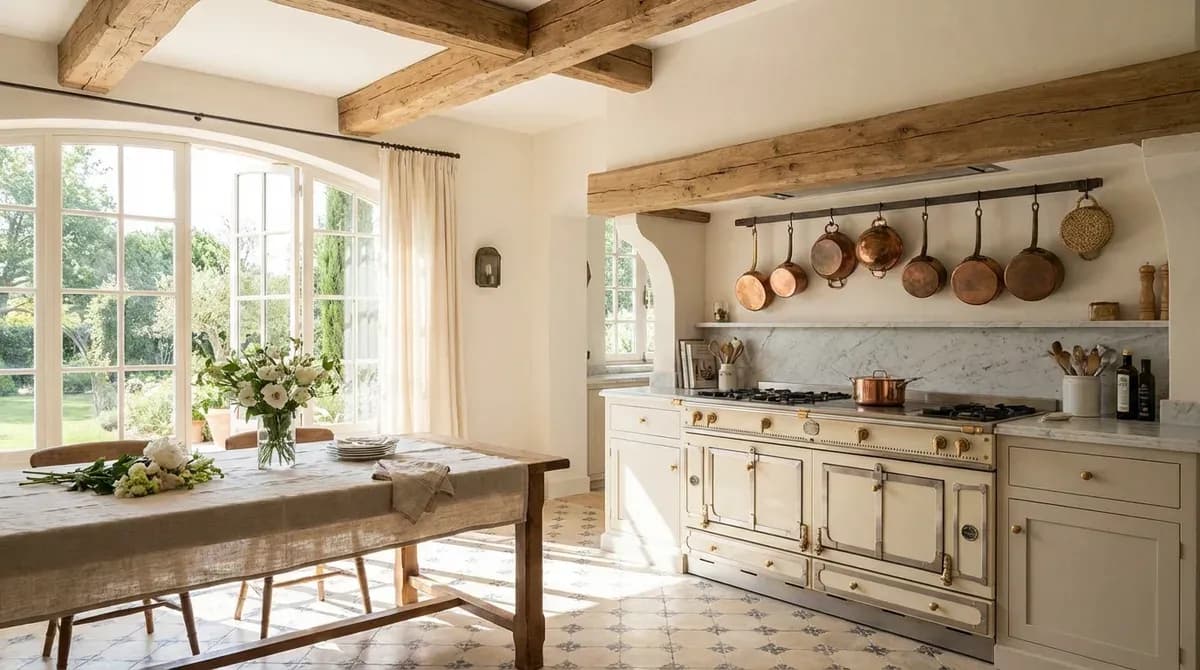
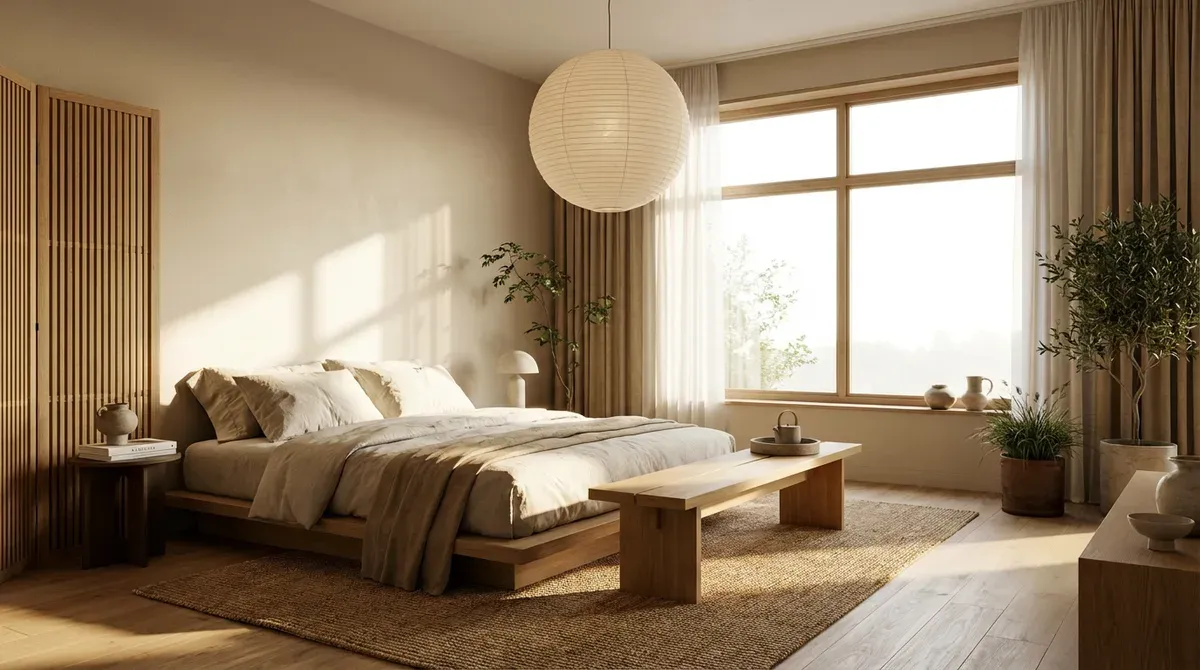
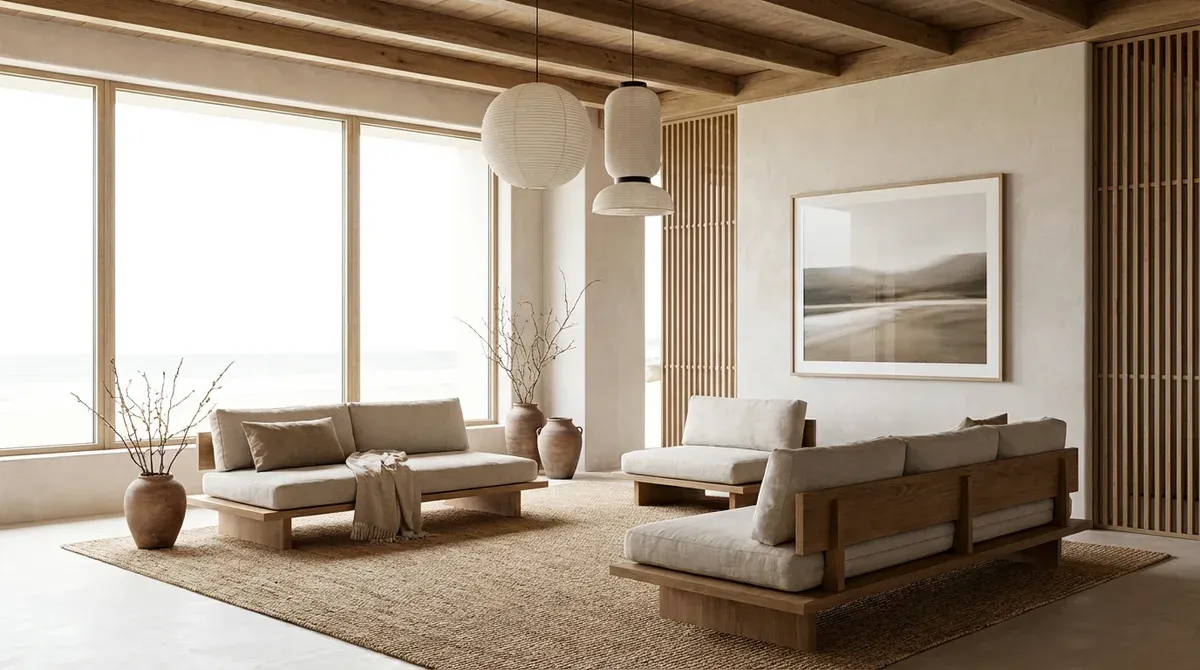
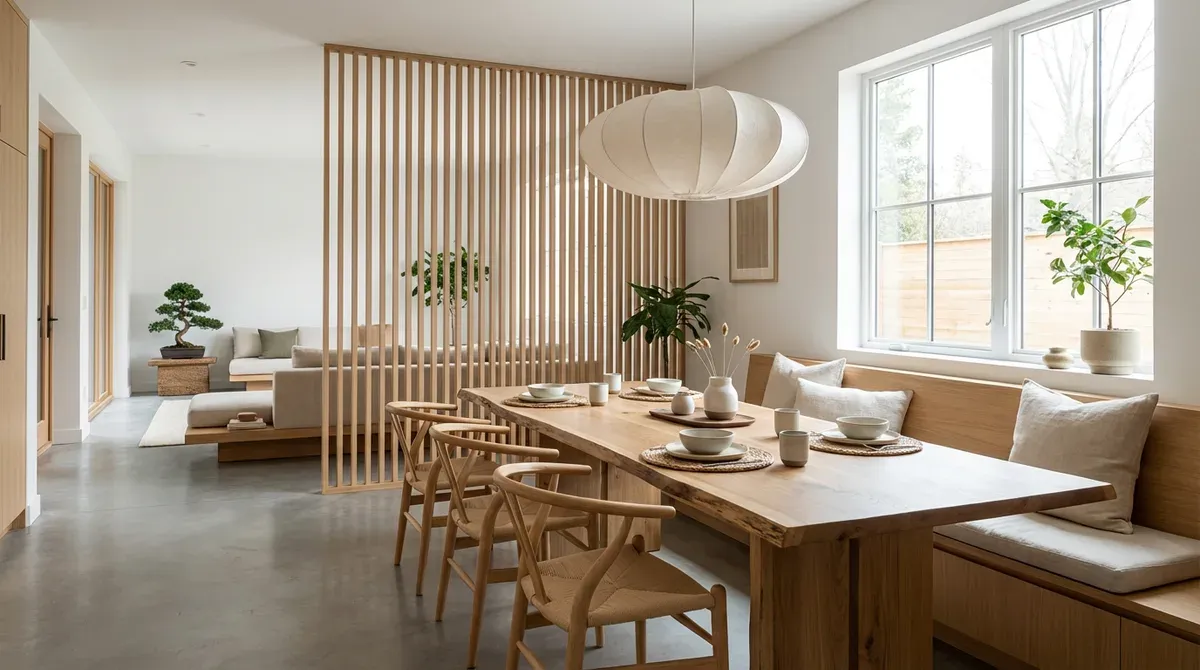
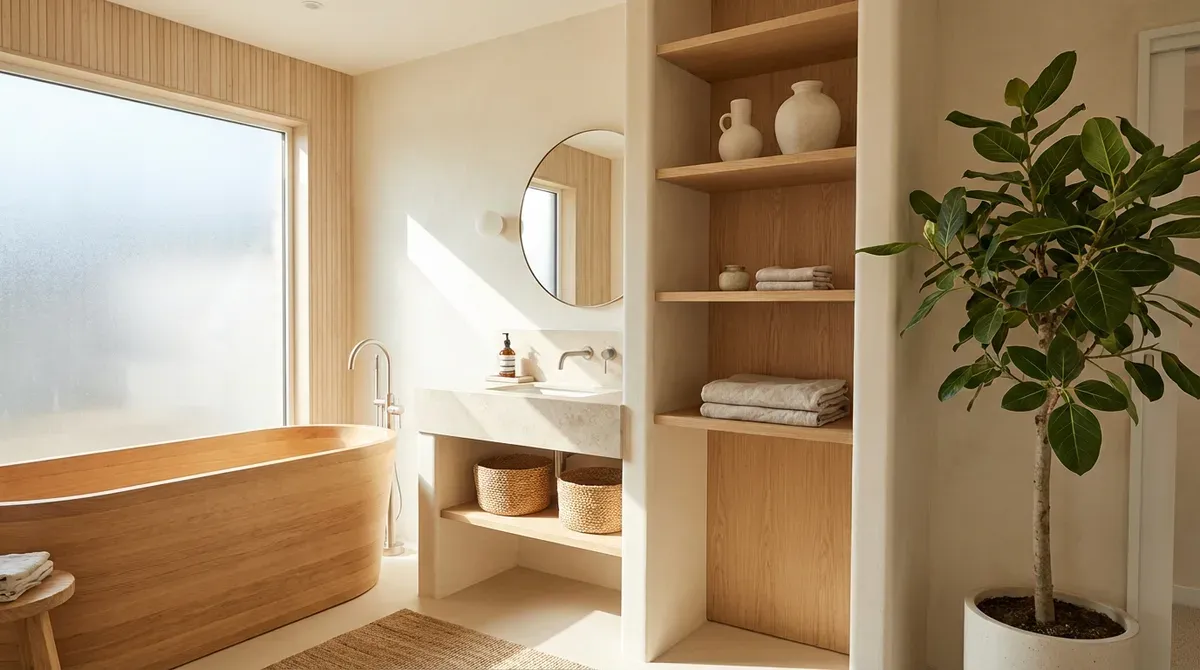
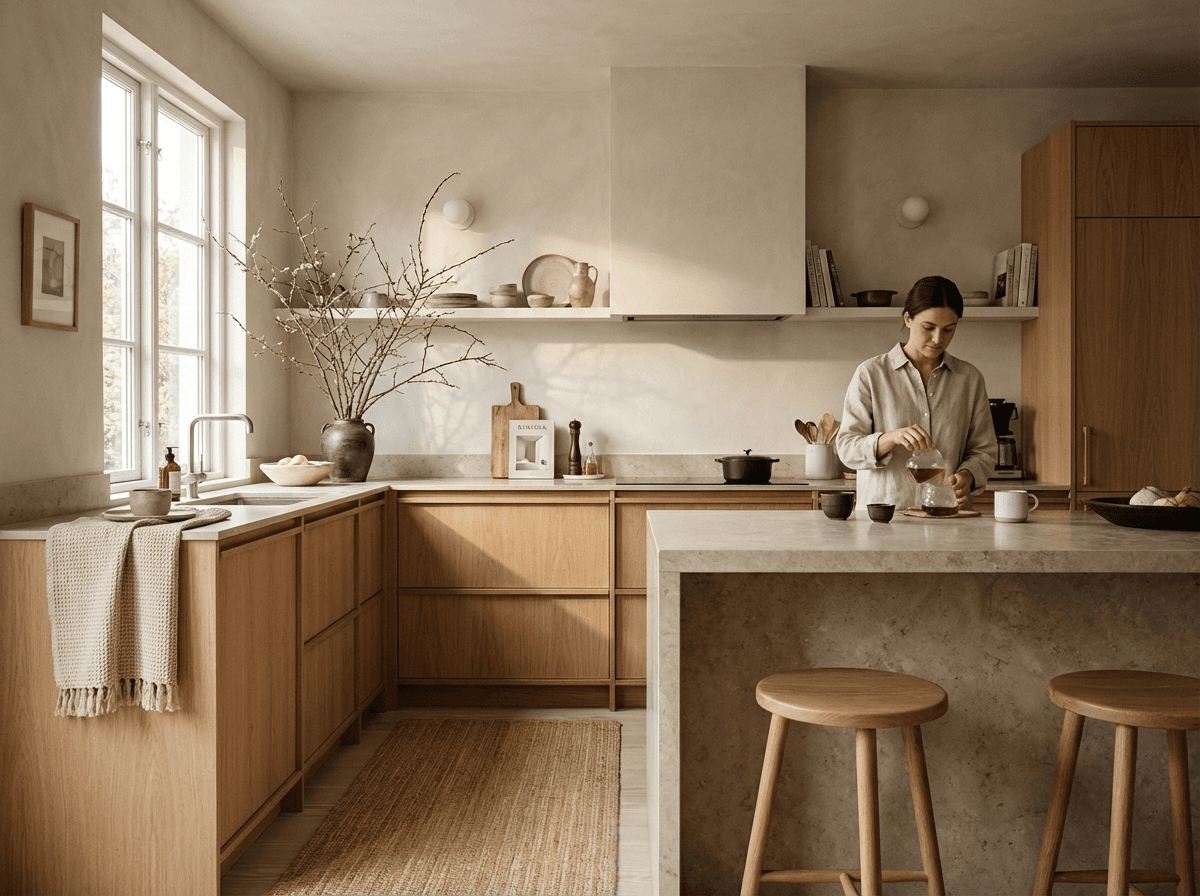
Japandi Kitchen interior inspiration
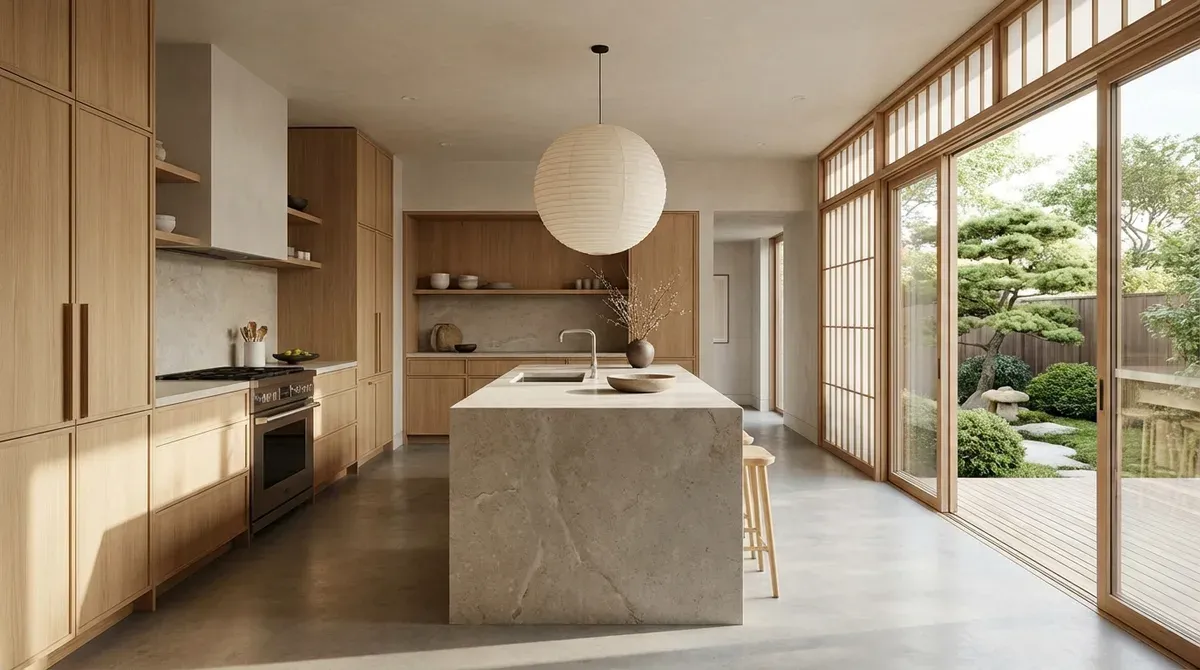
A Japandi kitchen distills cooking to its essence: honest materials, thoughtful storage, and just enough beauty to make the daily ritual of preparing food feel intentional. The cabinetry is typically flat-fronted in a warm neutral — think greige or pale oat — with one section in natural wood to break the monotony. Hardware is minimal or absent, letting the grain and finish of the materials speak for themselves. Countertops lean toward the organic: honed concrete that develops character over time, a thick slab of solid oak that doubles as a cutting surface, or leathered granite that invites touch. Open shelving replaces some upper cabinets, creating display niches for hand-thrown ceramic bowls and simple glass jars. Every item on the shelf earns its place through daily use or genuine beauty. The Japandi kitchen works because it treats cooking as a craft worthy of a considered environment. A single linen tea towel draped over the oven handle, a wooden spoon resting in a ceramic holder, a small herb plant on the windowsill — these are not decorations but evidence of a kitchen that is used, loved, and carefully maintained.

This Room in Every Style

Explore more design styles for your kitchen

More Japandi Rooms

See Japandi design in other rooms

Frequently Asked Questions

Tutto quello che devi sapere su RoomLift — per designer, agenti e chiunque trasformi spazi con l'AI.

What makes a Japandi kitchen different from a minimalist kitchen?
A minimalist kitchen prioritizes sleekness — often with glossy surfaces and stark whites. A Japandi kitchen is warmer: it uses natural wood, matte textures, and handmade ceramics to create a lived-in feel. The goal is not sterility but soulful simplicity.
What cabinet colors work in a Japandi kitchen?
Muted, nature-derived tones: warm off-white, greige, soft clay, or pale sage for the base, paired with a natural wood accent. Avoid bright white or high-contrast two-tone schemes. The palette should feel like it grew from the earth.
How do I organize a Japandi kitchen?
Adopt the Japanese principle of visible order. Keep countertops nearly empty with only daily-use items displayed. Use drawer inserts of natural wood or bamboo, and store everything else behind closed fronts. Open shelves show curated items — never a jumble.
Is a Japandi kitchen good for small spaces?
Excellent. The style's restraint and emphasis on open space actually make small kitchens feel larger. Light wood tones reflect light, minimal hardware reduces visual weight, and limiting objects on counters frees up both physical and visual space.
What flooring suits a Japandi kitchen?
Light wide-plank oak, pale bamboo, or matte natural stone tiles in warm gray. The floor should feel like a neutral canvas that grounds the room. Avoid bold tile patterns or dark wood stains — they compete with the serene Japandi atmosphere.
Inizia a progettare gratis

No credit card required. 10 free renders.