RoomLift Logo

Japandi Bathroom Design

AI-Powered Design Visualization

Upload a photo of your bathroom and transform it into stunning Japandi design in under 60 seconds.

Start designing now

No credit card required. 10 free renders.

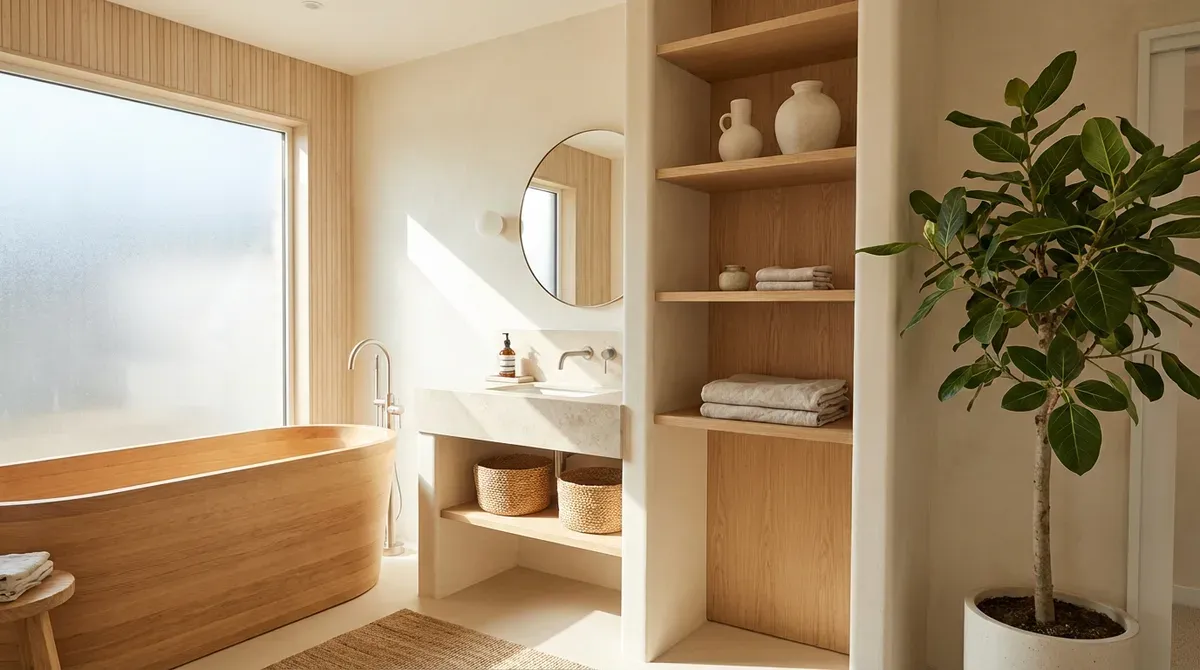
Japandi Bathroom design visualization

Color Palette

The essential colors of Japandi bathroom design

Warm Limestone
Basalt
River Pebble
Soft Chalk
Moss Green
Wet Sand

Design Tips

Expert recommendations for your Japandi bathroom

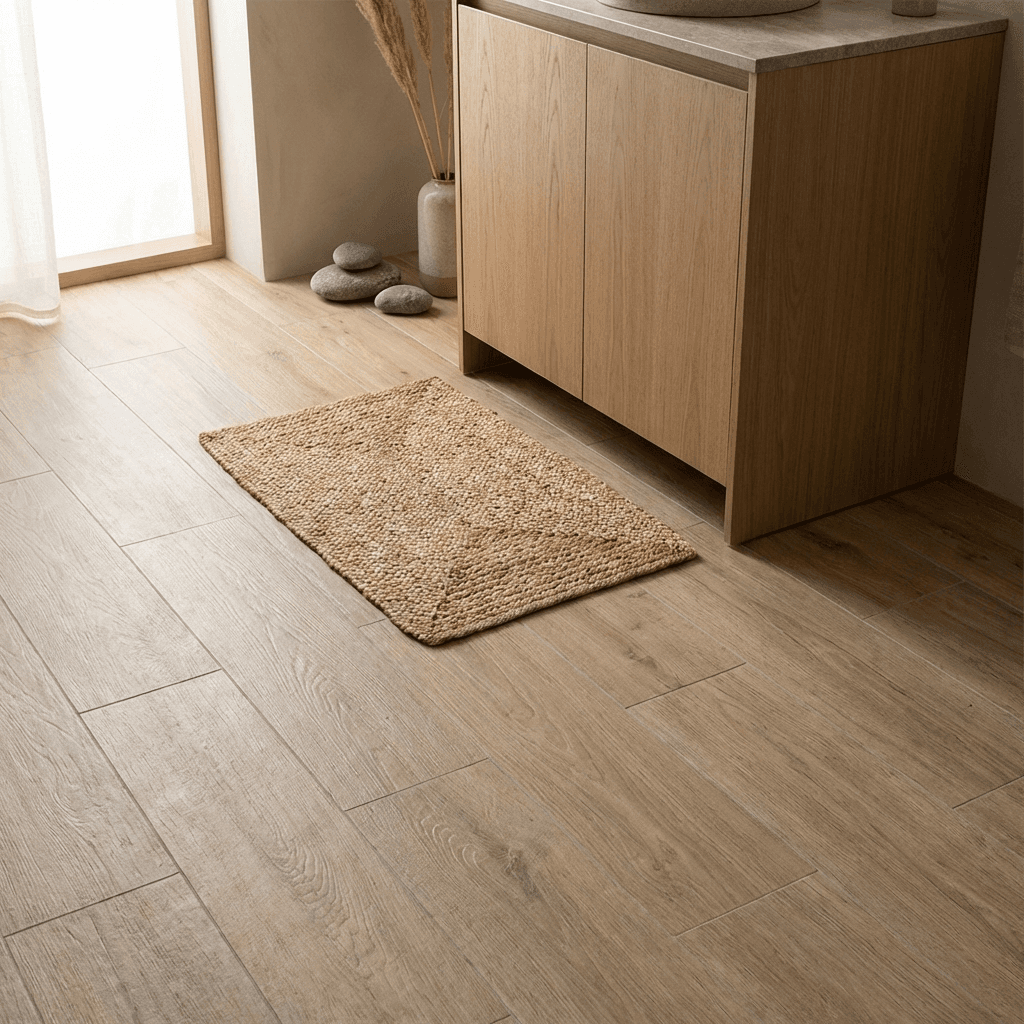
Use natural stone or wood-look tiles on the floor

Use natural stone or wood-look tiles on the floor

A matte limestone tile or a porcelain tile that mimics light oak brings the organic warmth essential to Japandi. Avoid glossy tiles or bold geometric patterns — the floor should feel like a continuation of the earth, not a decorative statement.

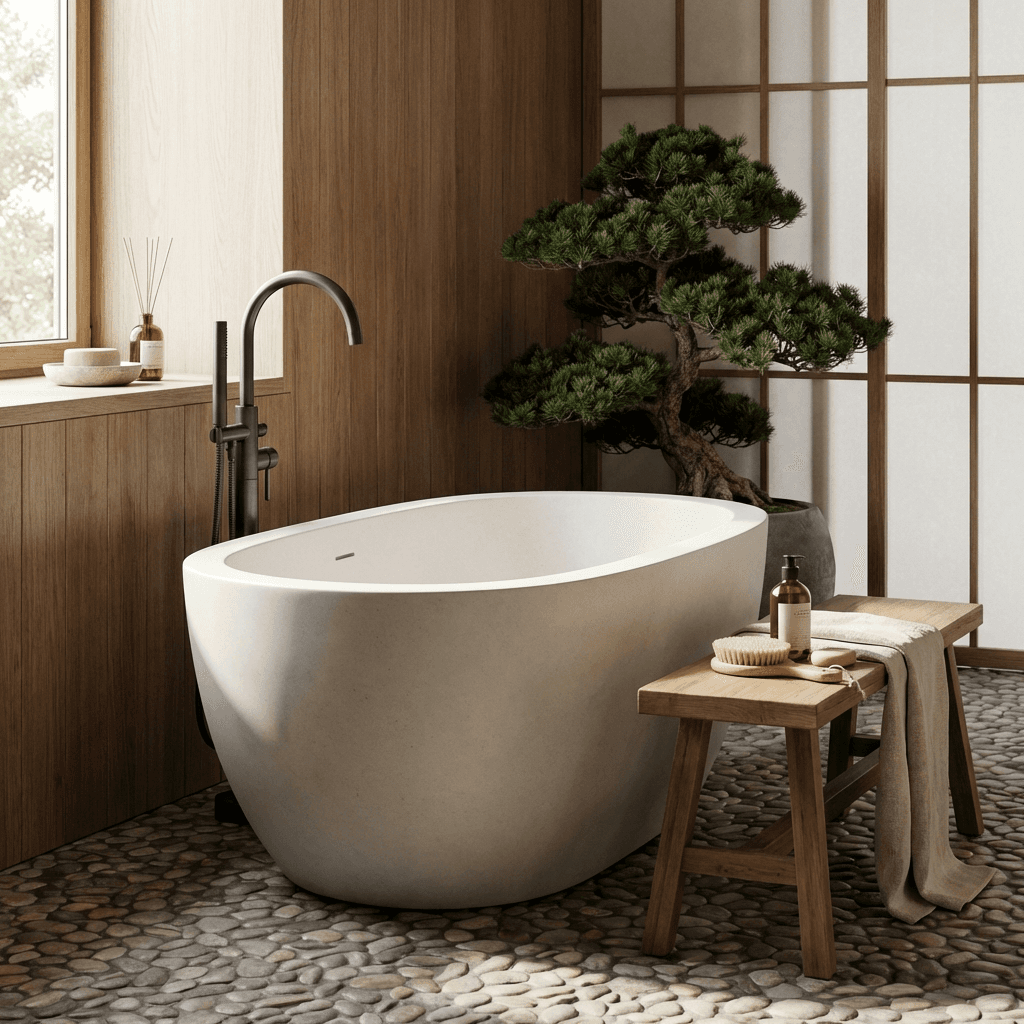
Install a freestanding soaking tub as the centerpiece

Install a freestanding soaking tub as the centerpiece

The Japanese ofuro tradition of deep, meditative bathing aligns perfectly with Japandi aesthetics. A freestanding oval tub in matte white or natural stone, positioned with space around it, turns the bathroom into a spa-like retreat.

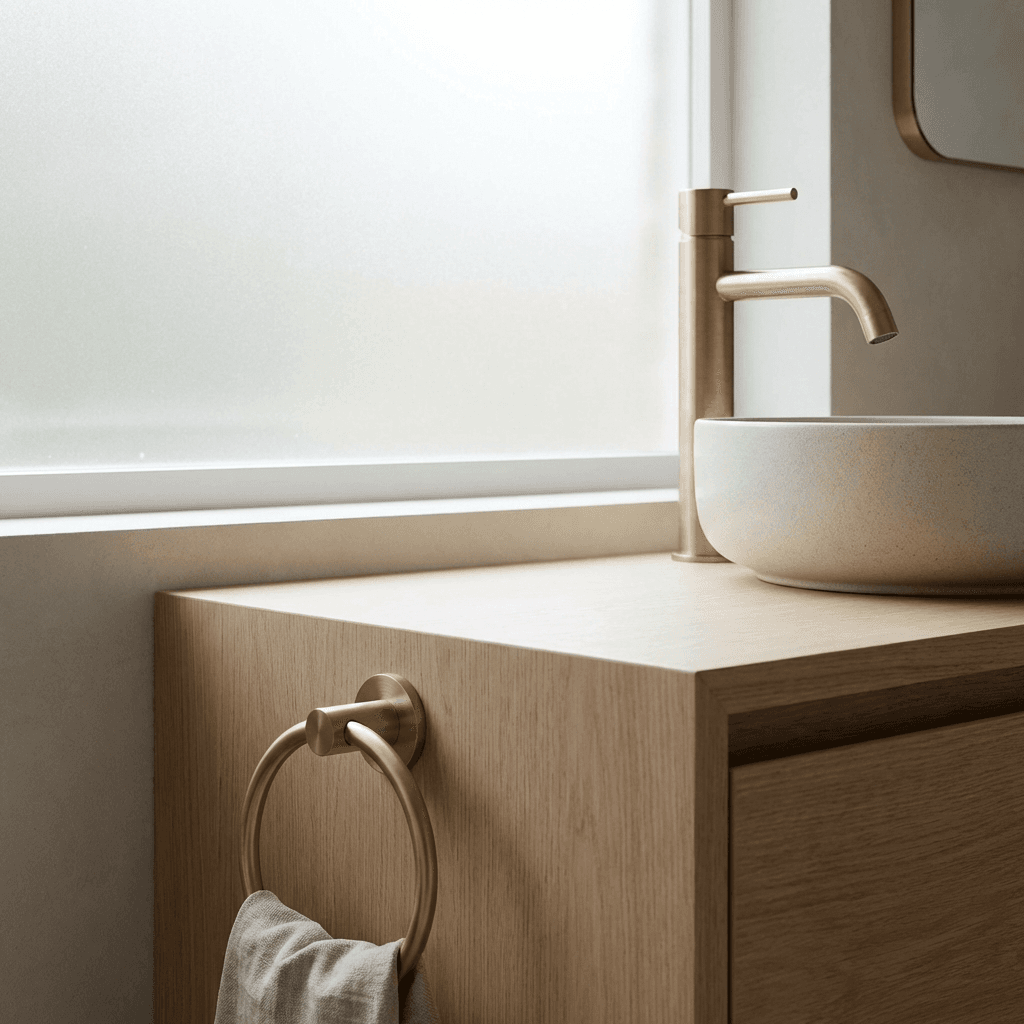
Choose matte black or brushed brass fixtures

Choose matte black or brushed brass fixtures

Tapware in matte black provides the Japanese-inspired dark contrast, while brushed brass offers a warmer Scandinavian touch. Either works — but commit to one finish throughout the bathroom for visual cohesion. Avoid chrome, which reads too industrial.

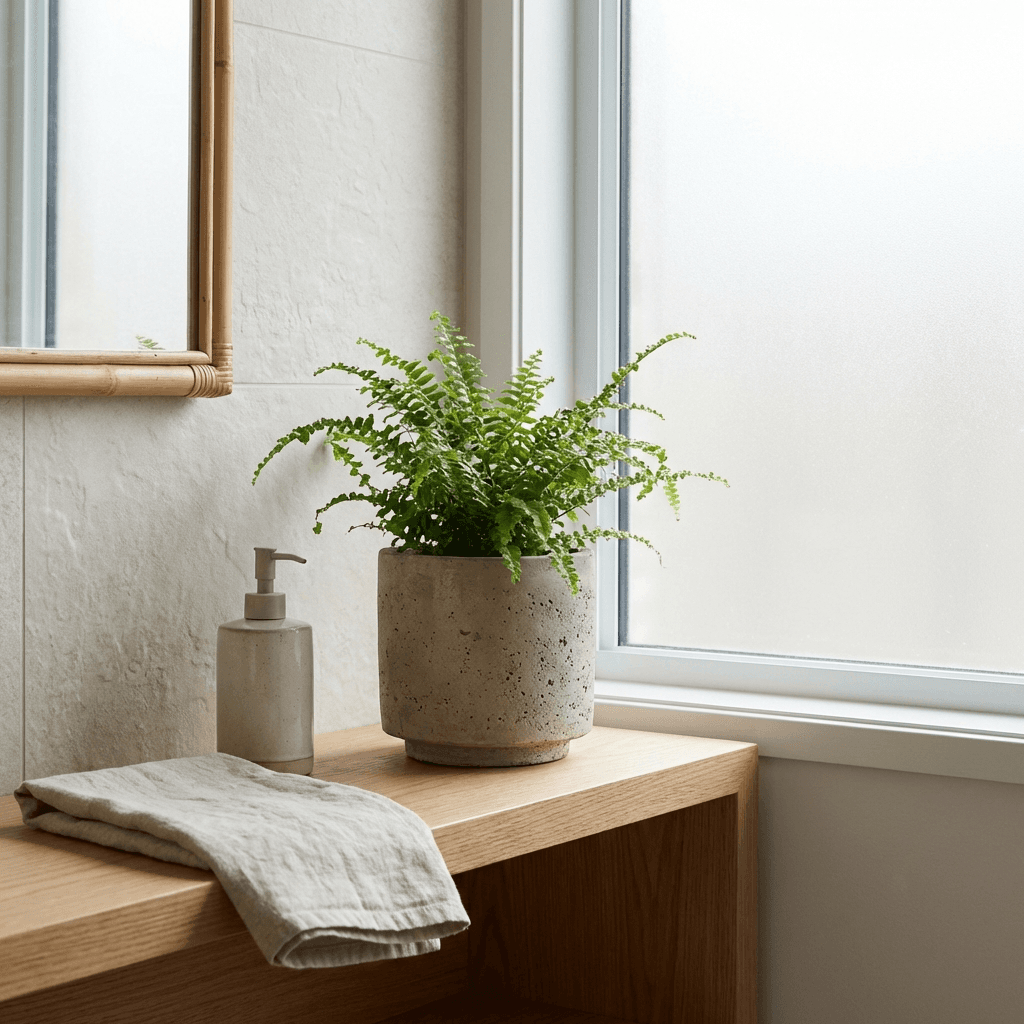
Introduce living greenery

Introduce living greenery

A potted fern on a wooden stool, a trailing pothos on a shelf, or a small moss arrangement beside the basin brings life and softness to the stone and wood surfaces. Plants thrive in bathroom humidity and connect the space to the natural world that inspires both design traditions.

Furniture Recommendations

Key pieces for the perfect Japandi bathroom

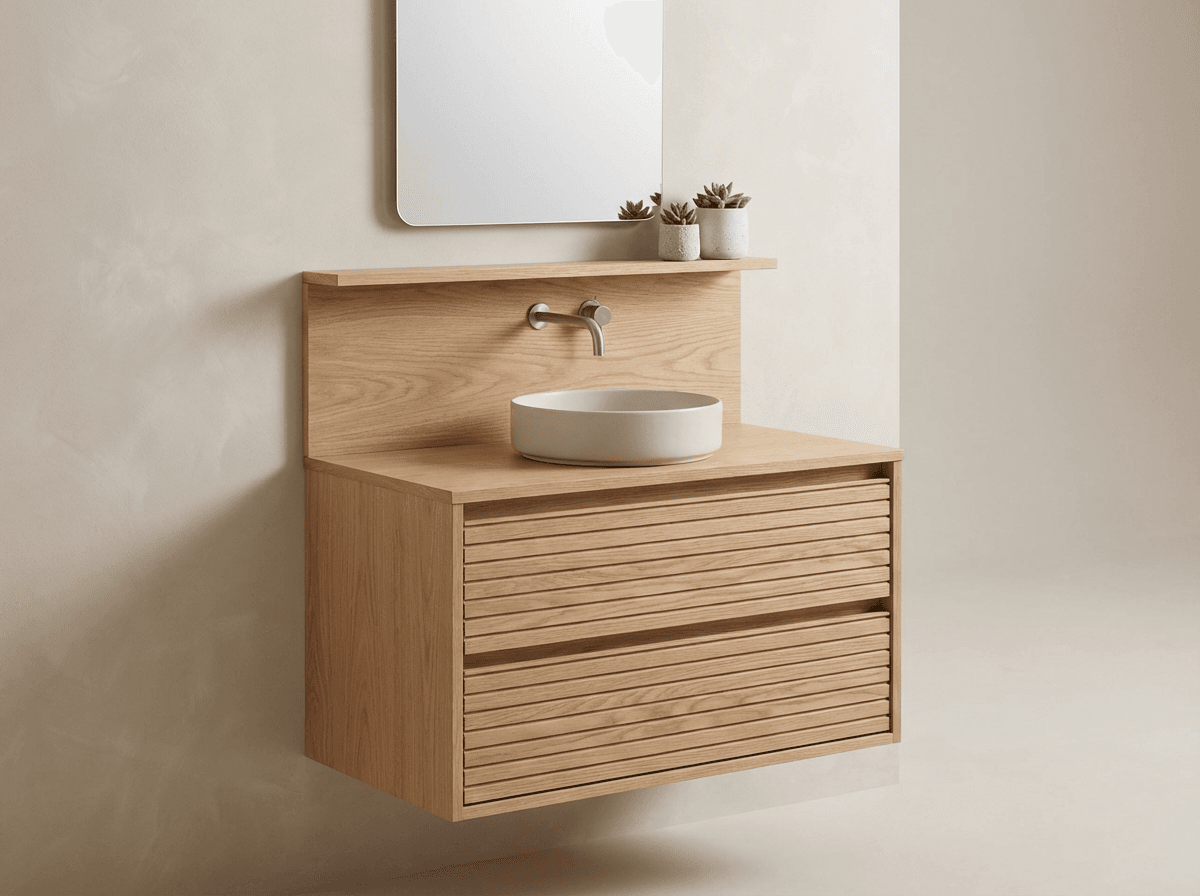
Wall-mounted timber vanity

Wall-mounted timber vanity

A floating vanity in natural oak or teak with a vessel basin on top. The wall-mounted design reveals the floor beneath, making the room feel more spacious, while the wood grain adds organic warmth to an otherwise hard-surfaced room.

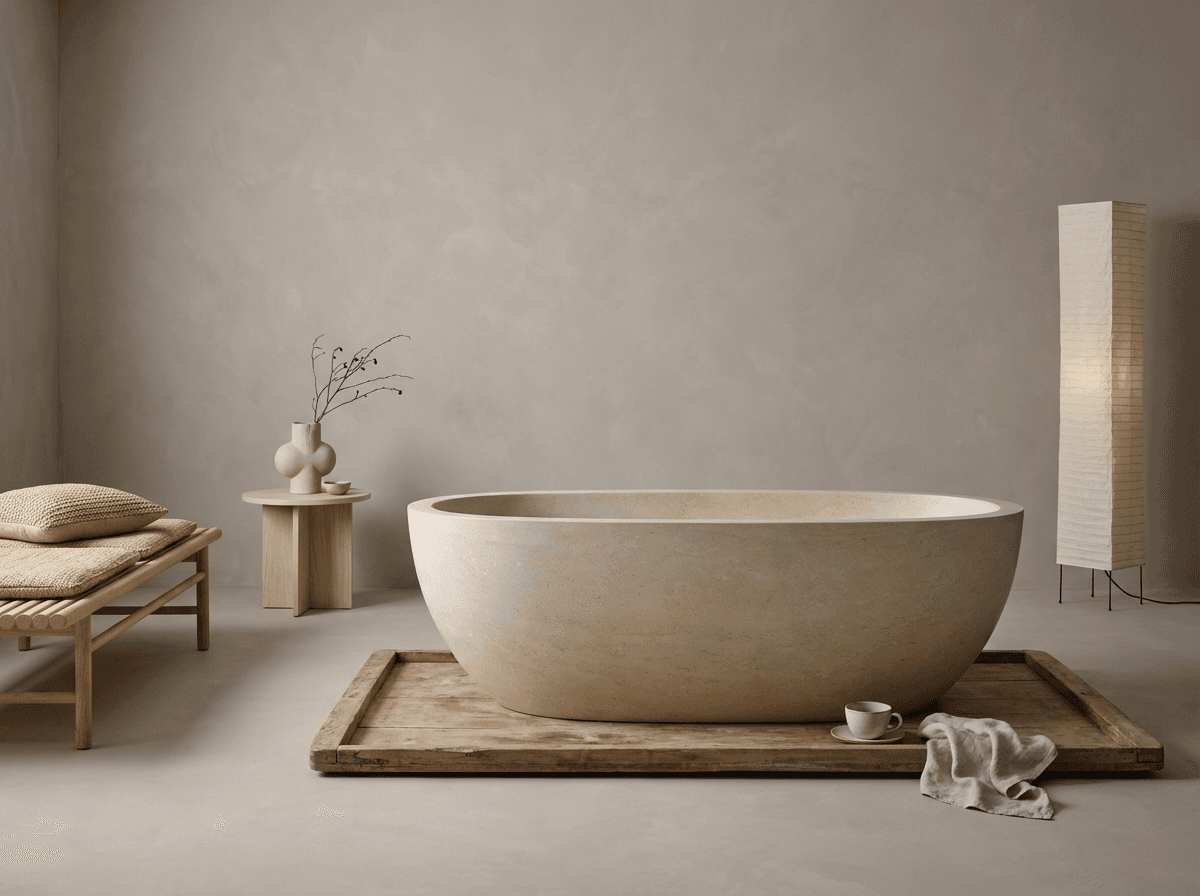
Freestanding stone soaking tub

Freestanding stone soaking tub

An oval or slightly tapered tub carved from natural stone or finished in matte composite, deep enough for full immersion. Positioned away from the wall with a simple floor-mounted filler, it becomes the room's meditative focal point.

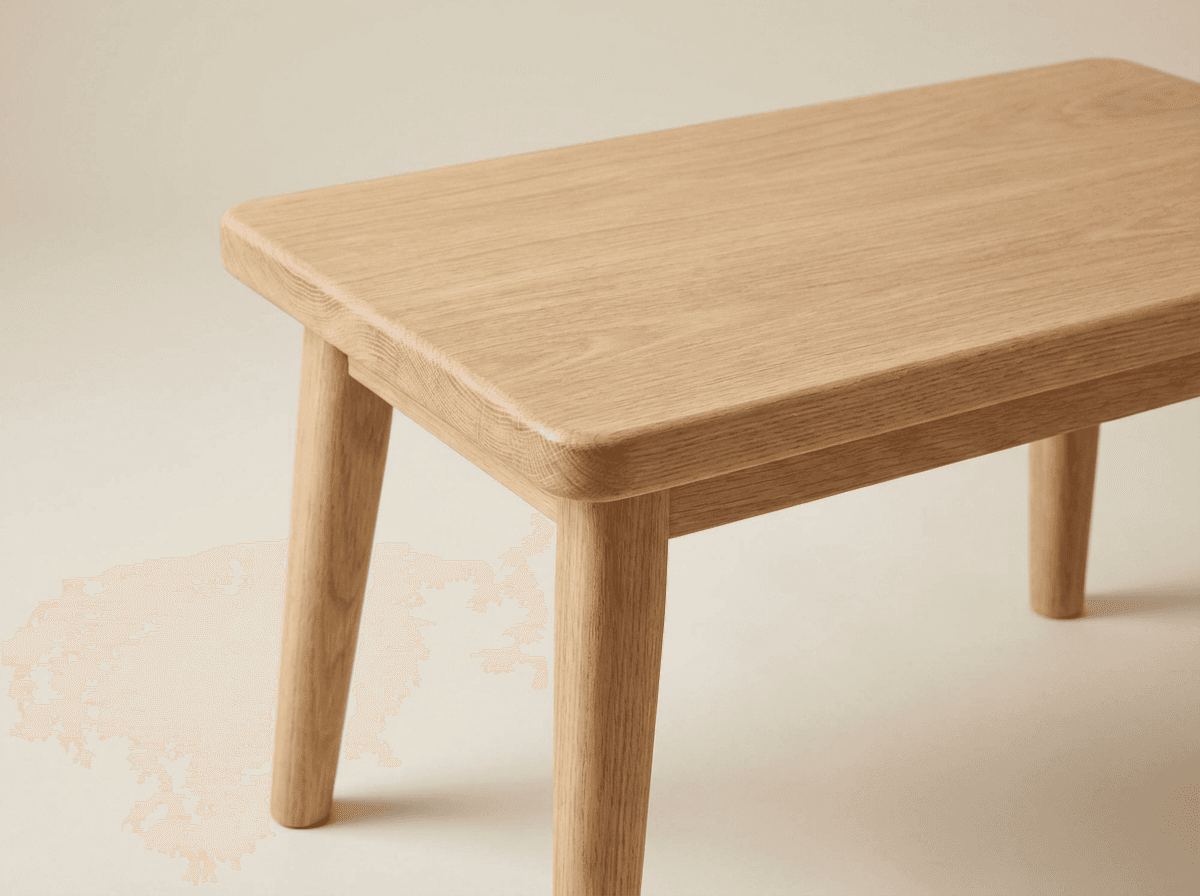
Wooden bath stool

Wooden bath stool

A small hinoki or teak stool used in the Japanese bathing tradition for sitting while washing. In a Japandi bathroom it serves as a plant stand, towel holder, or simply a sculptural accent that references the style's cultural roots.

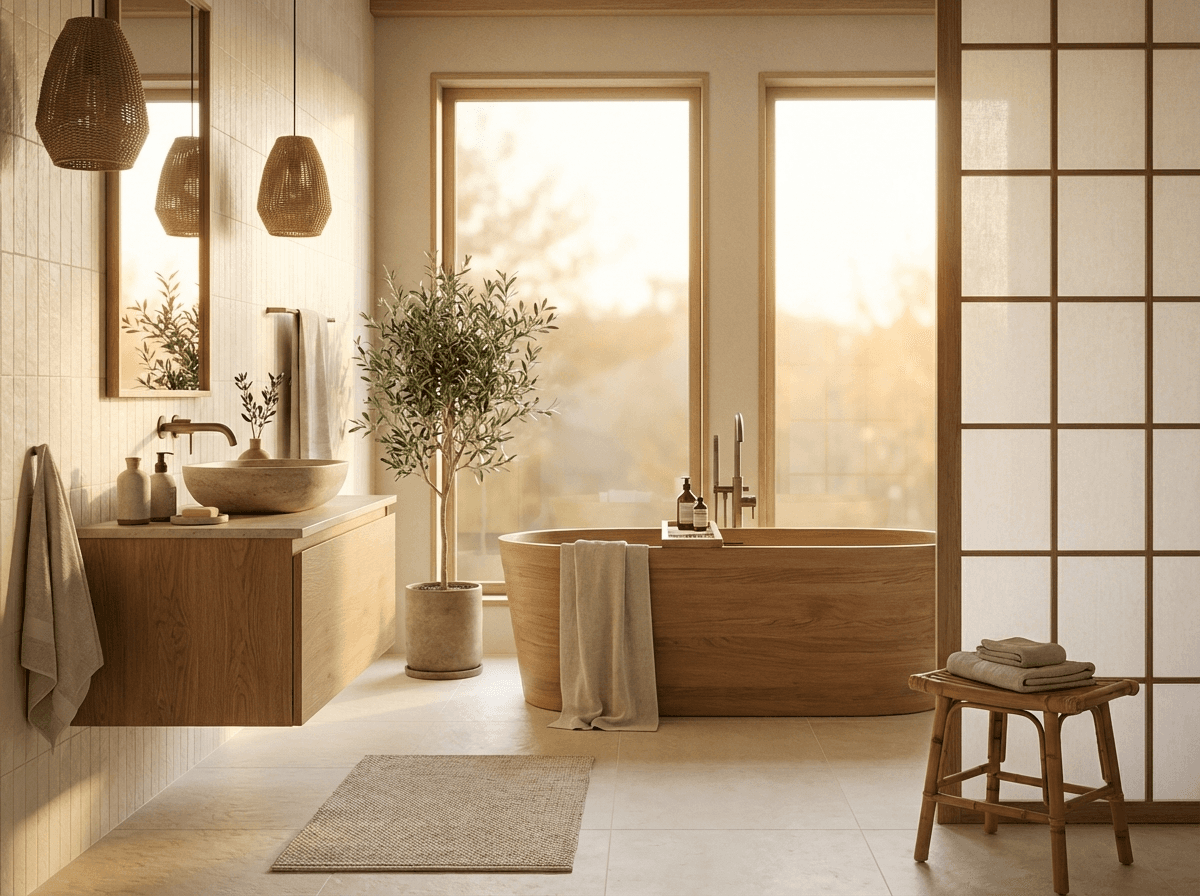
Japandi Bathroom interior inspiration
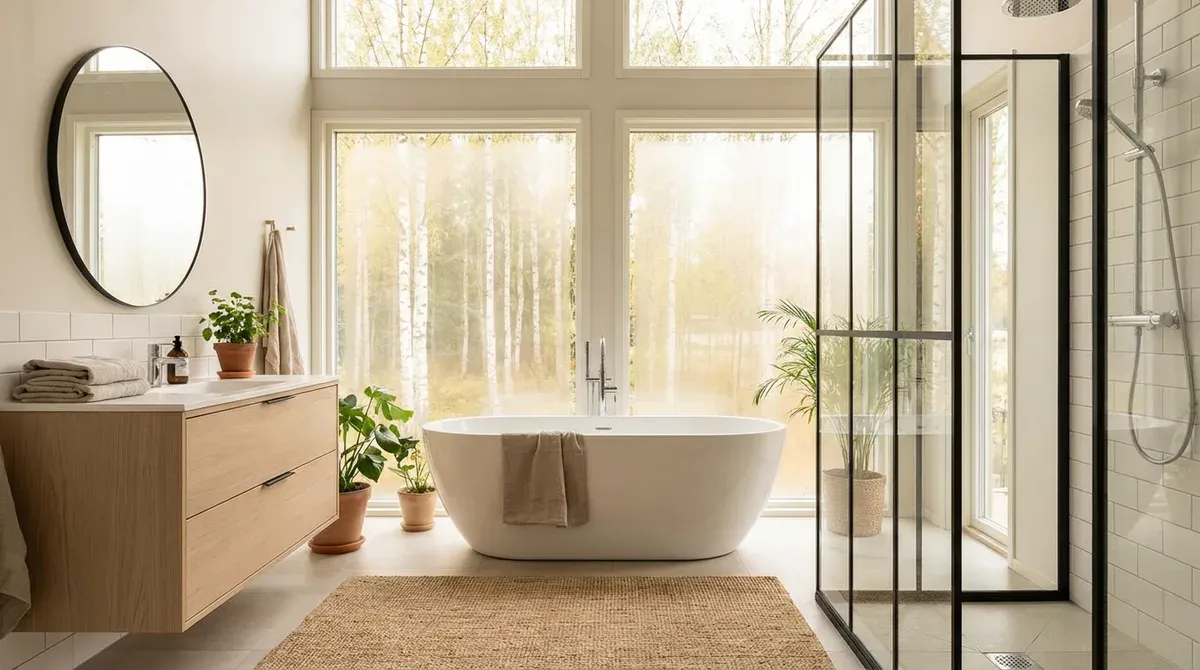
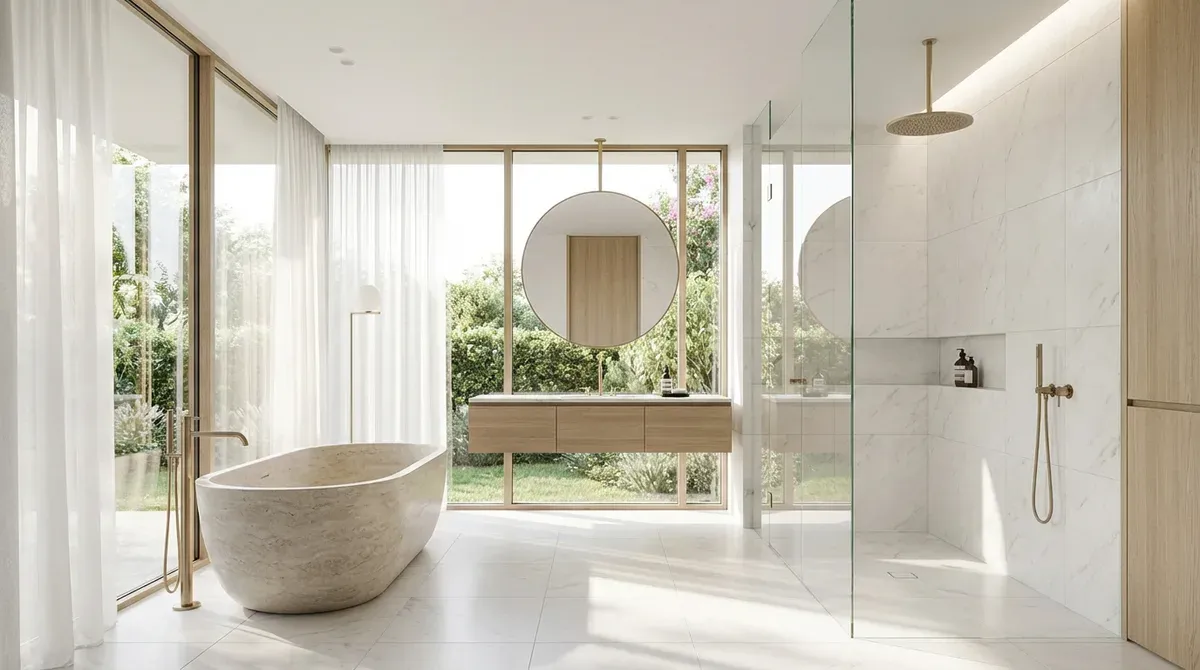
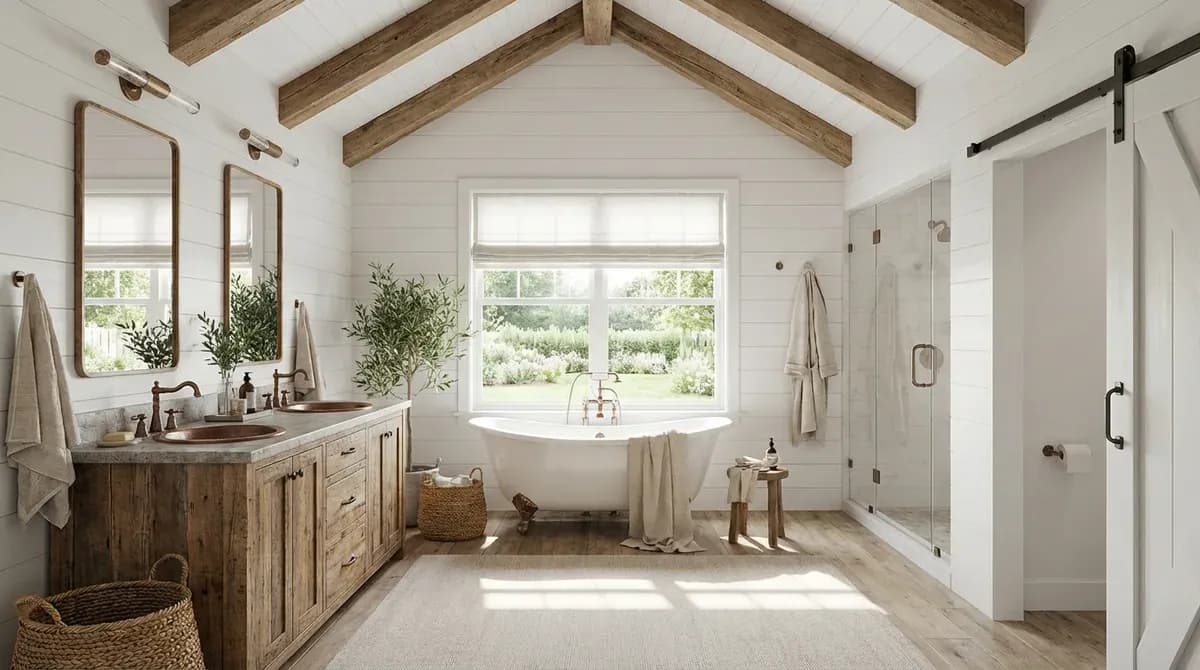
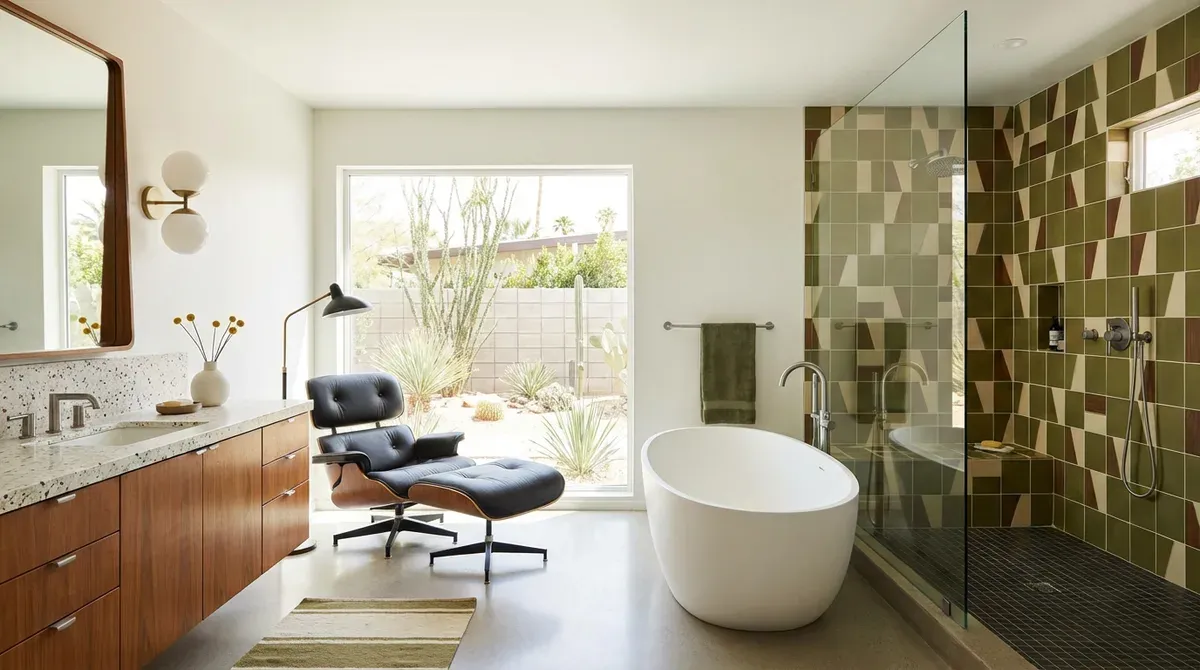
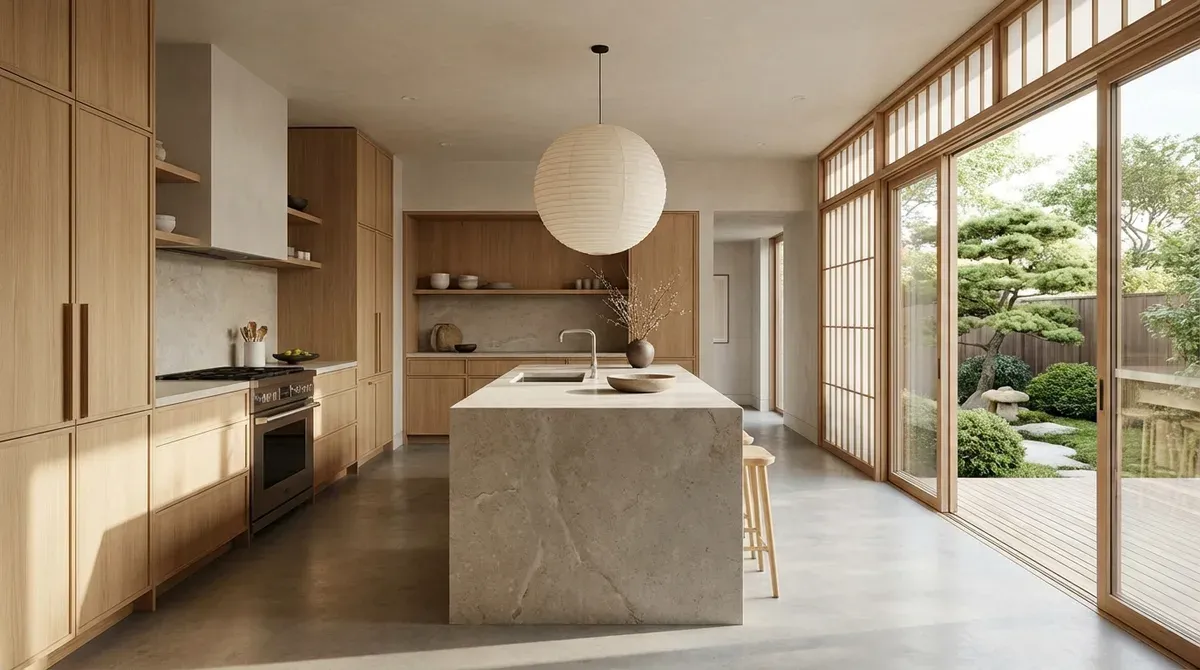
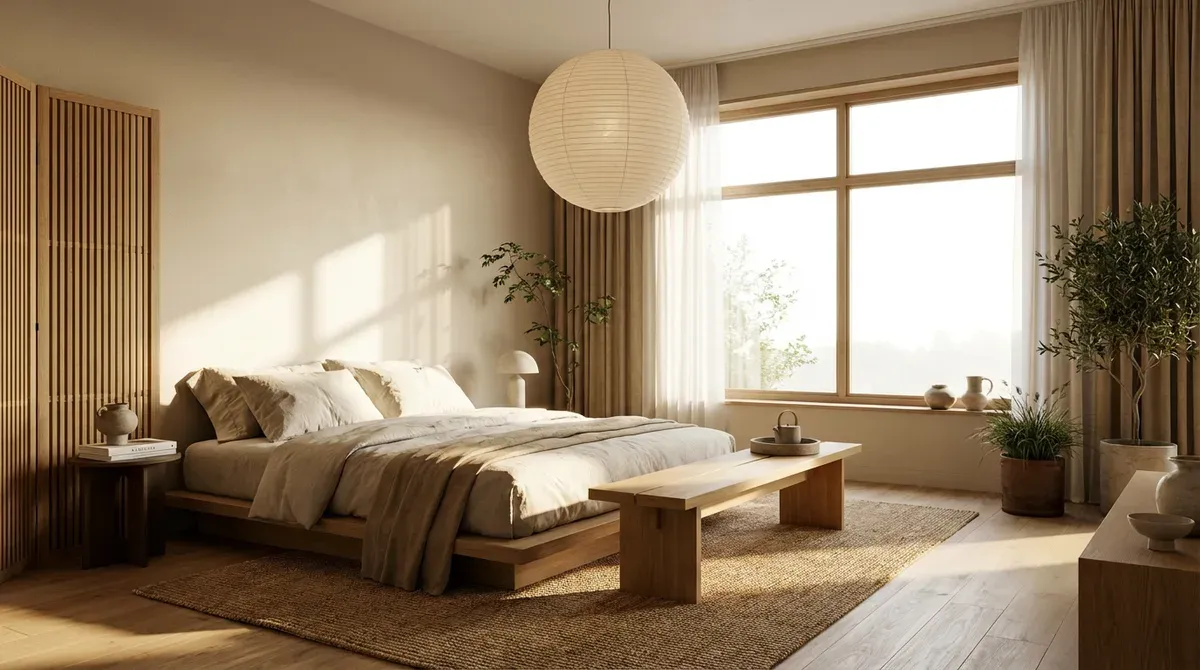
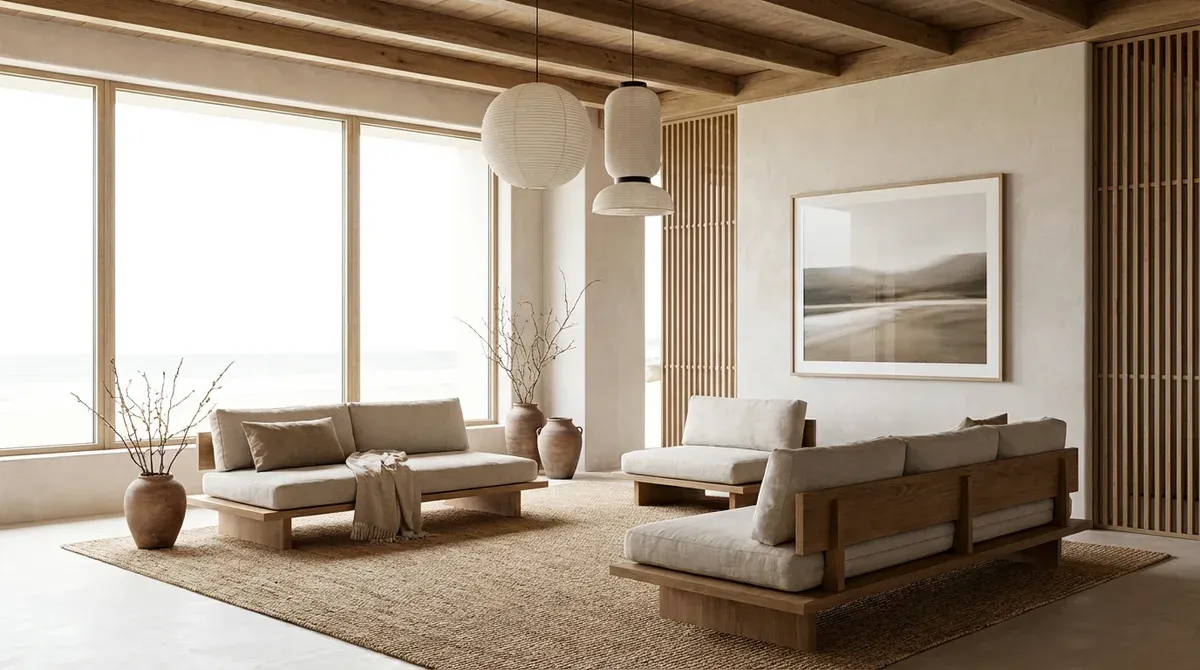
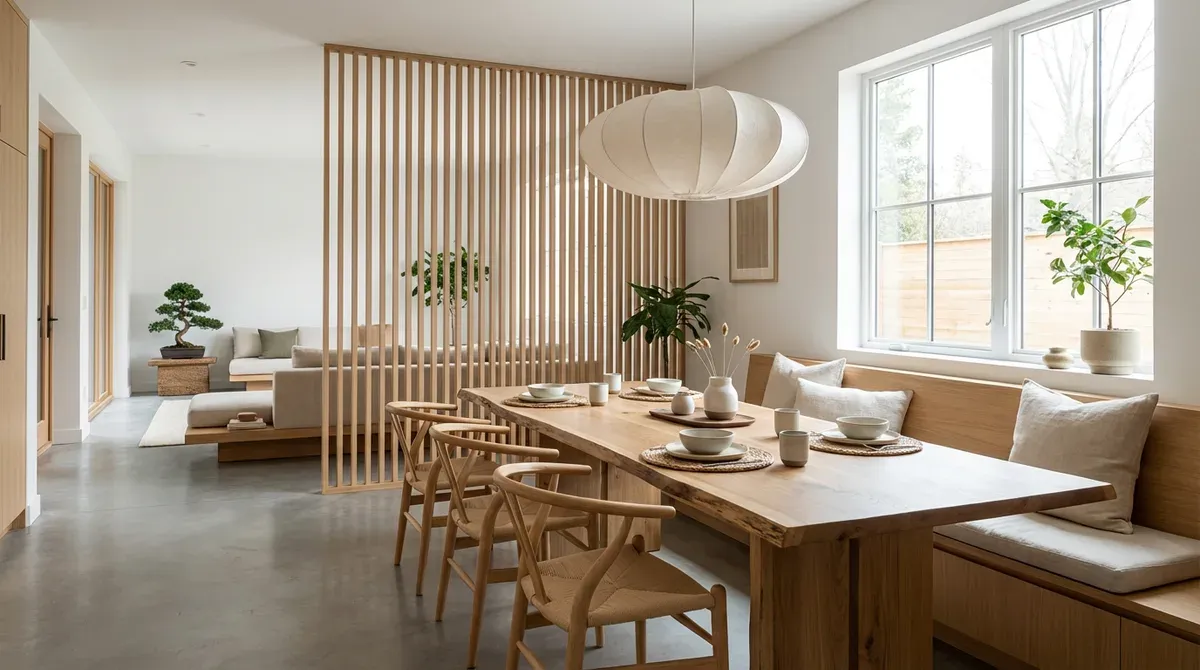
The Japandi bathroom reimagines the act of bathing as a daily ritual worthy of intention and beauty. Drawing from the Japanese ofuro tradition and the Scandinavian love of spa-like simplicity, this room balances hard and soft — matte stone and warm wood, still water and living greenery. The palette stays within a narrow range of limestone, pebble gray, and pale oak, creating a space that feels carved from nature rather than constructed from catalogs. A freestanding tub is the spiritual anchor, even in modest bathrooms. Positioned with breathing room around it, the tub invites slow soaking rather than hurried showers. The vanity floats on the wall, its timber surface aging gracefully in the humid air. Fixtures are matte black or brushed brass — never chrome — maintaining the tactile, understated quality that defines the style. Storage is concealed and disciplined. The countertop holds only what is used daily: a ceramic soap dish, a wooden brush, a small plant. Everything else disappears into drawers and recessed niches. The Japandi bathroom succeeds when you step inside and feel the pace of your thoughts slow to match the room.

This Room in Every Style

Explore more design styles for your bathroom

More Japandi Rooms

See Japandi design in other rooms

Frequently Asked Questions

Alles, was Sie über RoomLift wissen müssen — für Designer, Makler und alle, die Räume mit AI transformieren.

How do I create a Japandi bathroom on a budget?
Focus on accessories and paint rather than full renovation. Replace chrome fixtures with matte black, swap plastic dispensers for ceramic or wood ones, add a wooden bath mat, and paint walls a warm off-white. A few well-chosen objects can shift the entire atmosphere without touching the tile.
What tiles work best in a Japandi bathroom?
Large-format matte tiles in natural tones — warm gray, sand, soft taupe — create a seamless, spa-like surface. If you want texture, consider zellige-style handmade tiles on a feature wall; their slight irregularity embodies wabi-sabi. Avoid small mosaic tiles or bold color contrasts.
How do I keep a Japandi bathroom from feeling cold?
Layer warm-toned materials: a timber vanity, a wooden bath mat, a linen shower curtain, and warm bulbs (2700 K). Underfloor heating is the single best upgrade for comfort. Plants add visual warmth and soften hard edges.
What storage works in a Japandi bathroom?
A recessed niche in the shower wall for essentials, a vanity with soft-close drawers for daily items, and a small open shelf for a rolled towel and a plant. Keep countertops clear — one soap dispenser, one ceramic tray. Everything else lives behind closed doors.
Can I combine Japandi with a walk-in shower?
Absolutely — a frameless walk-in shower with a rain showerhead is one of the most popular Japandi bathroom features. Use a single large tile on floor and walls for continuity, add a teak shower bench, and install a linear drain for a sleek, barrier-free look.
Jetzt kostenlos designen

No credit card required. 10 free renders.