Traditional Bathroom Design
AI-Powered Design Visualization
Upload a photo of your bathroom and transform it into stunning Traditional design in under 60 seconds.
No credit card required. 10 free renders.

Color Palette
The essential colors of Traditional bathroom design
Design Tips
Expert recommendations for your Traditional bathroom

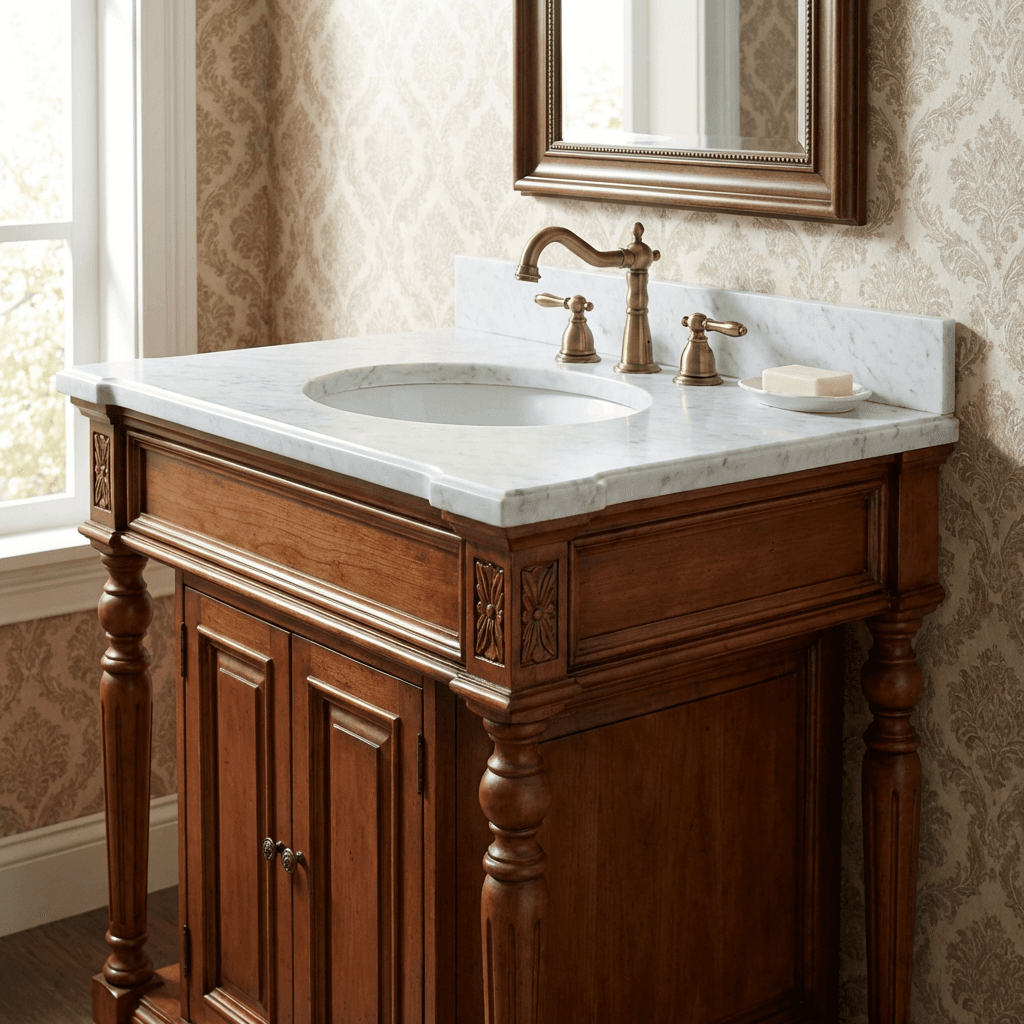
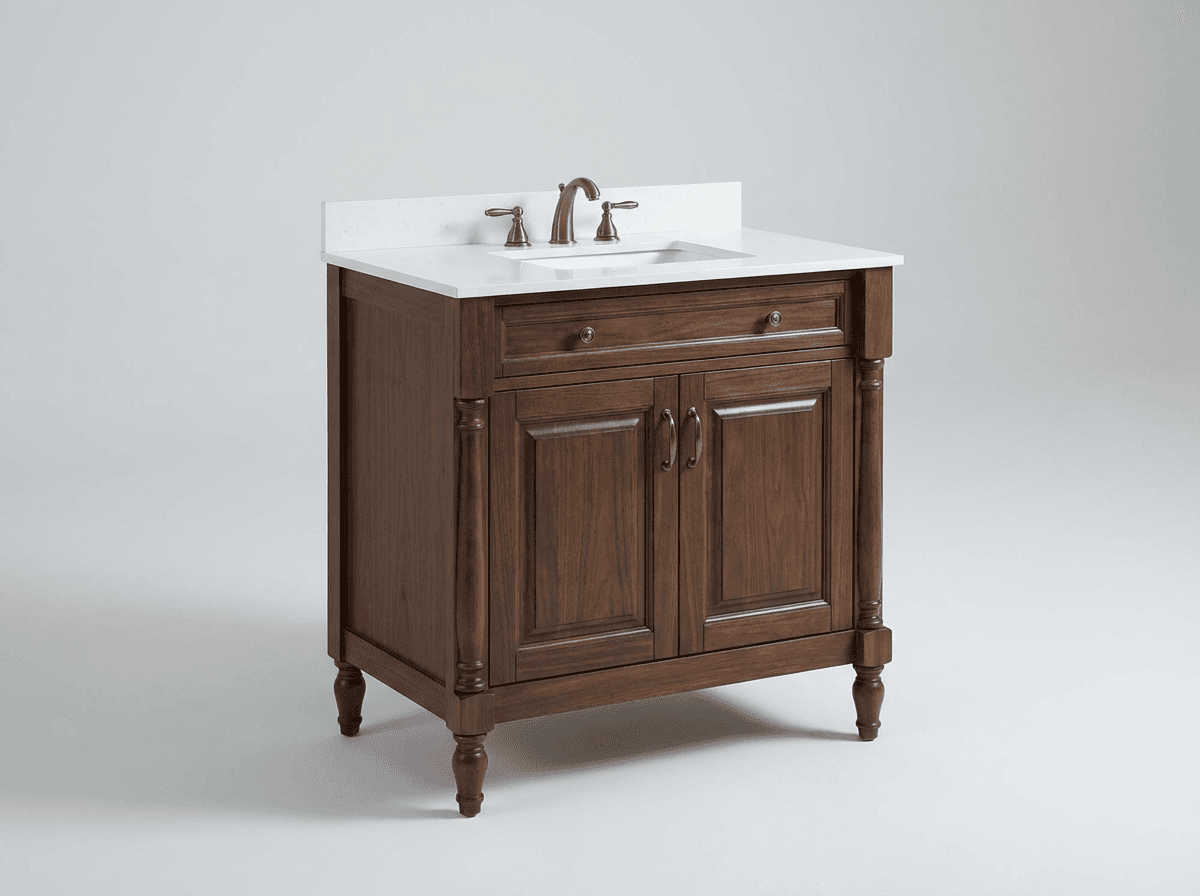
Install a furniture-style vanity with turned legs
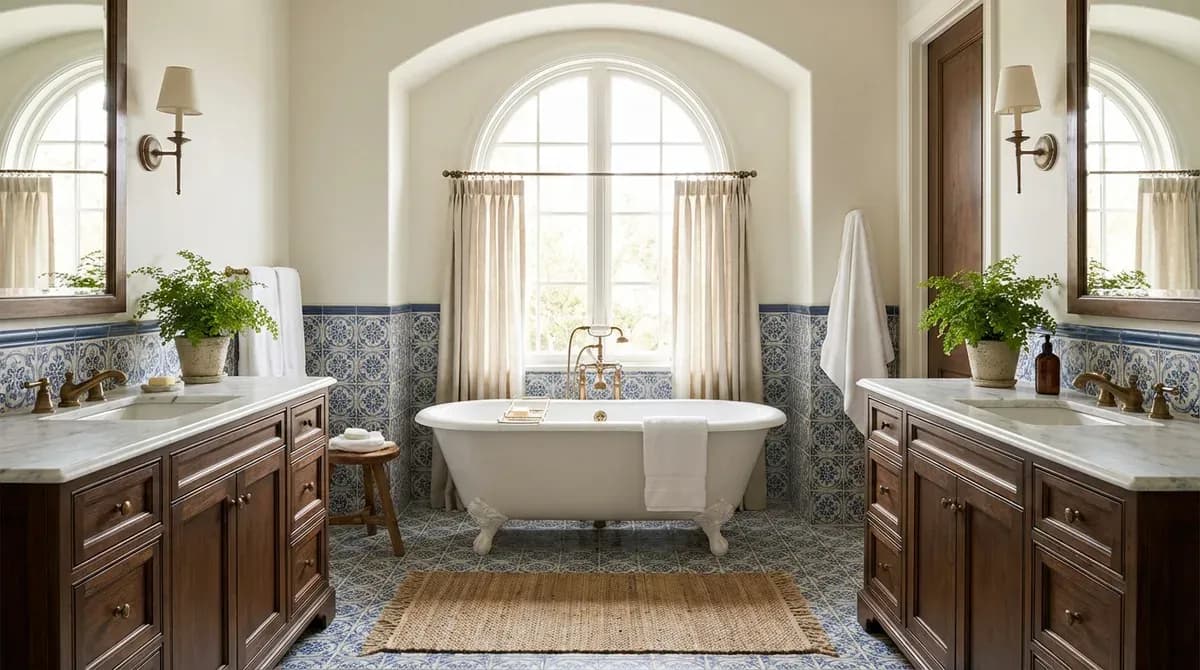
Replace a standard cabinet vanity with a piece that looks like converted furniture — a chest of drawers with a marble top and an undermount sink, or a console table with open storage below and turned or fluted legs. The vanity should be in the same dark wood family as the rest of the home's traditional furniture: cherry, mahogany, or dark walnut.

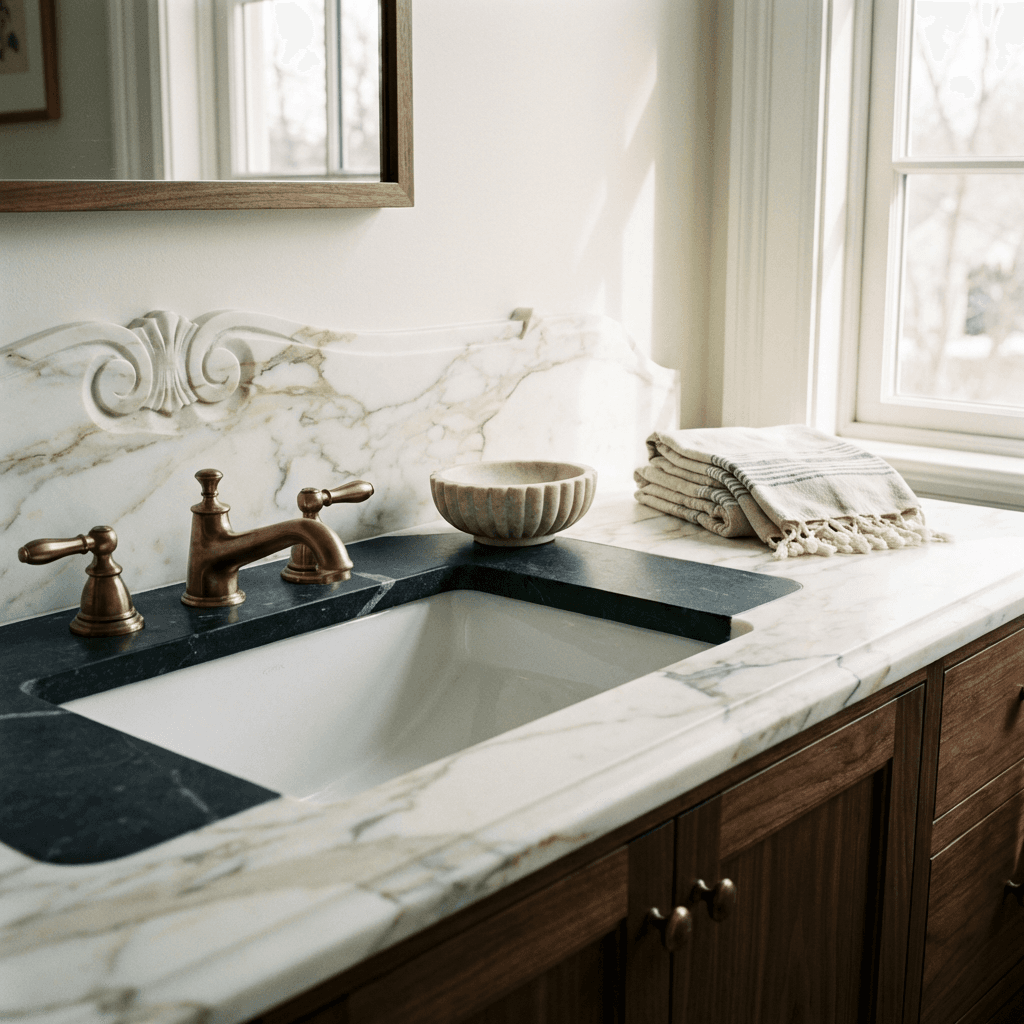
Use marble or stone for surfaces and accents
Carrara marble countertops, marble mosaic floor tiles, and a marble shower threshold create a consistent palette of warmth and refinement. A marble soap dish, toothbrush holder, and tray on the vanity extend the material into accessories. The soft veining of marble is inherently traditional and adds organic movement to the room.

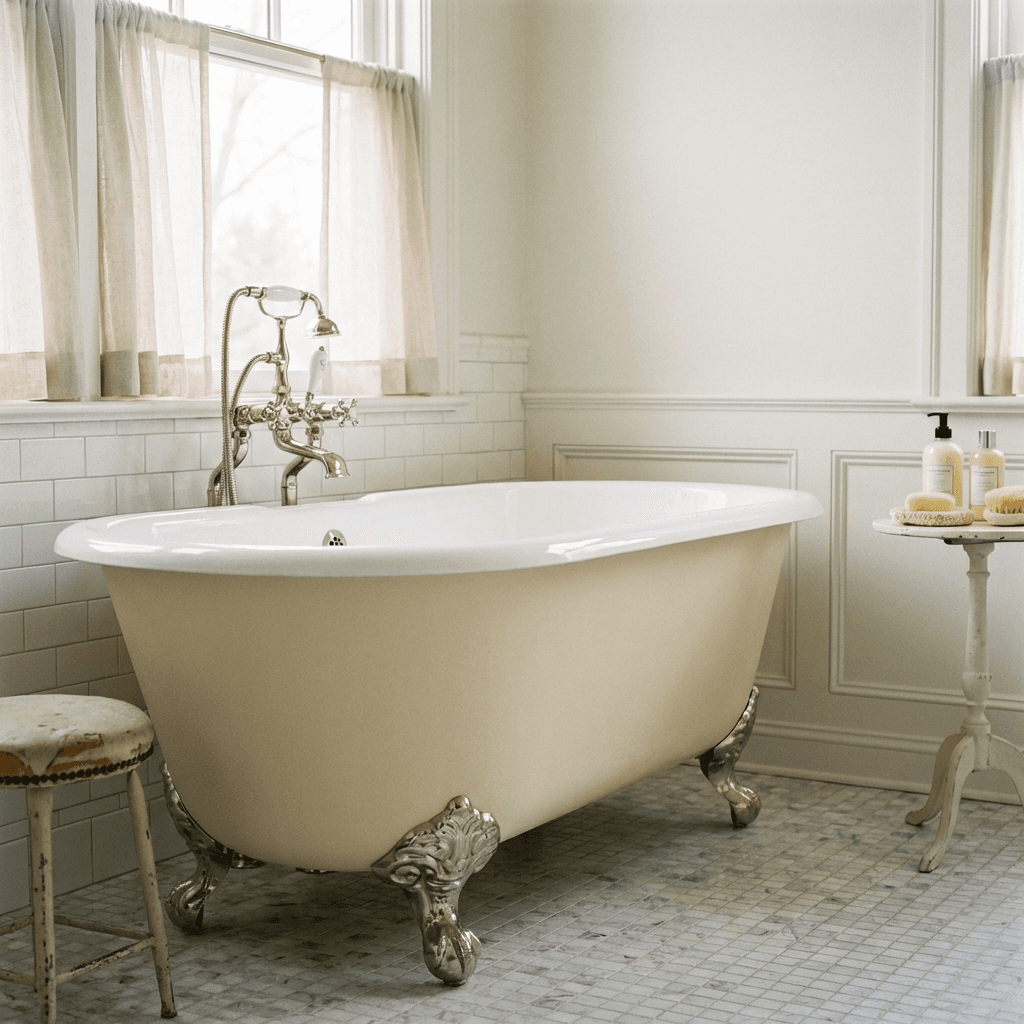
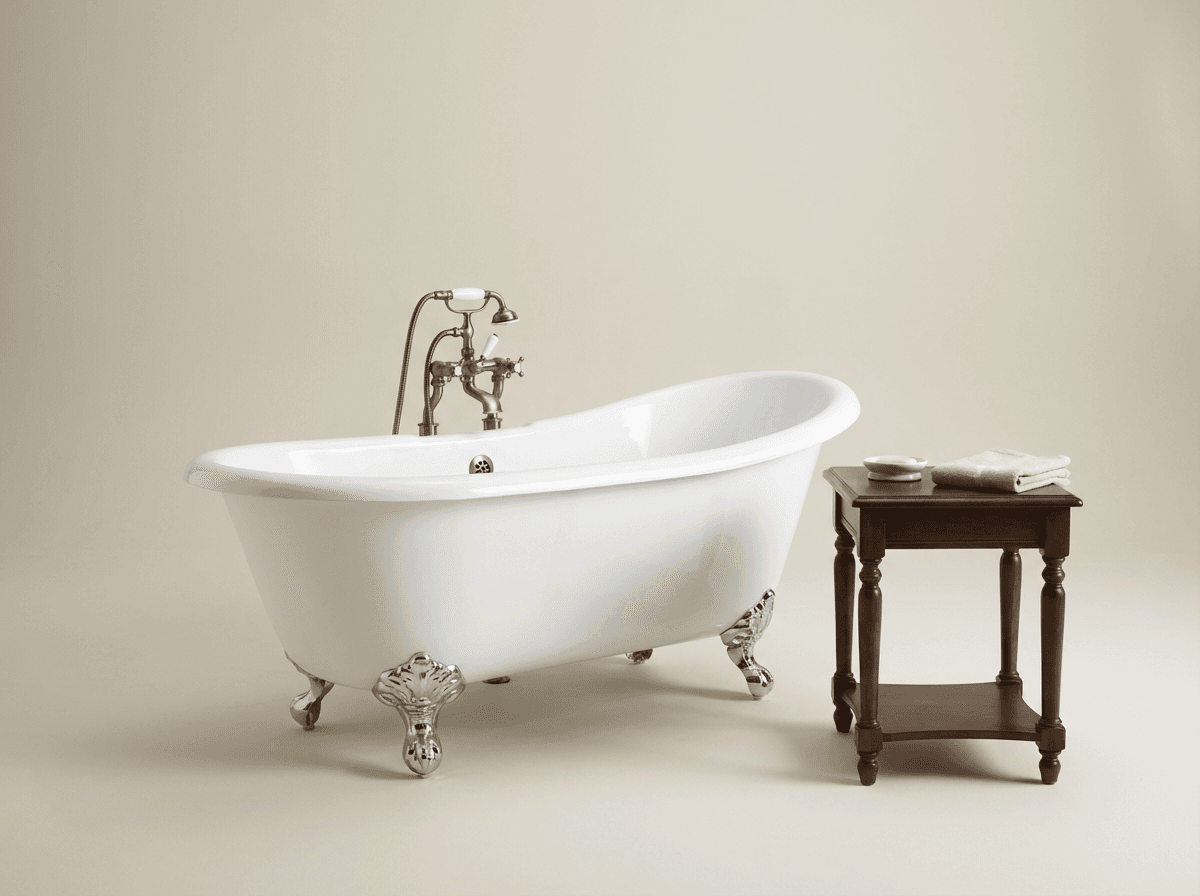
Incorporate a freestanding clawfoot or pedestal tub
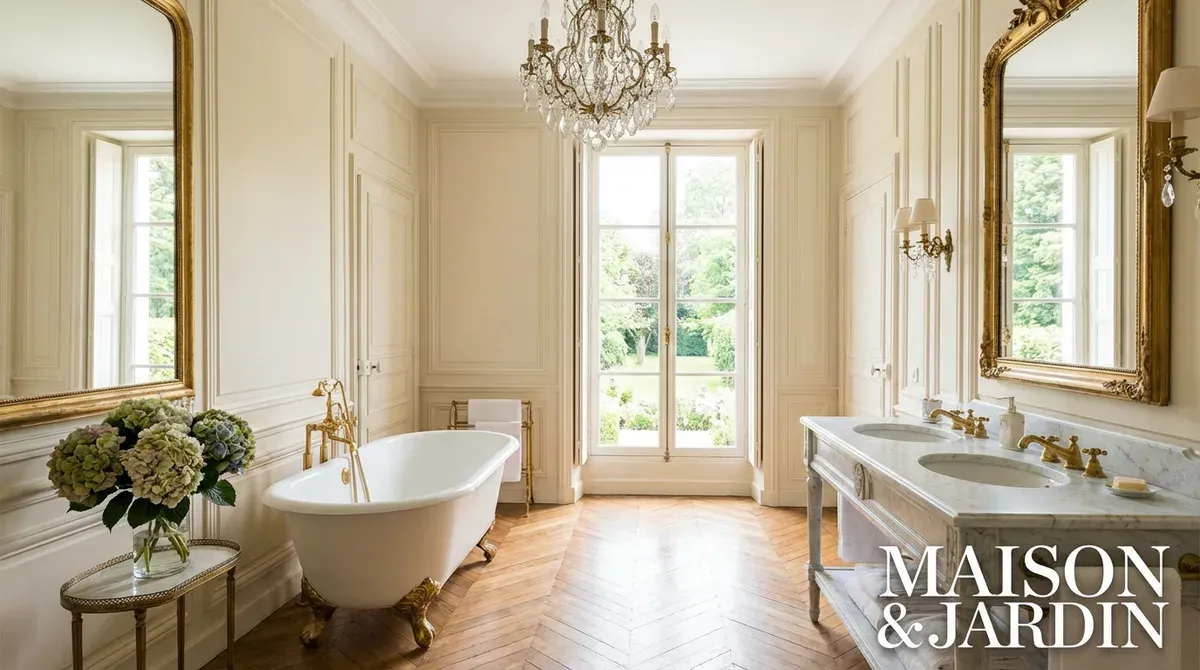
A freestanding tub is the luxury centerpiece of a traditional bathroom. A clawfoot tub in cast iron with a polished exterior (white, navy, or hunter green) and ball-and-claw feet in polished nickel is the most classic choice. Position it centered on the room's focal wall with a floor-mounted tub filler in a matching metal finish.

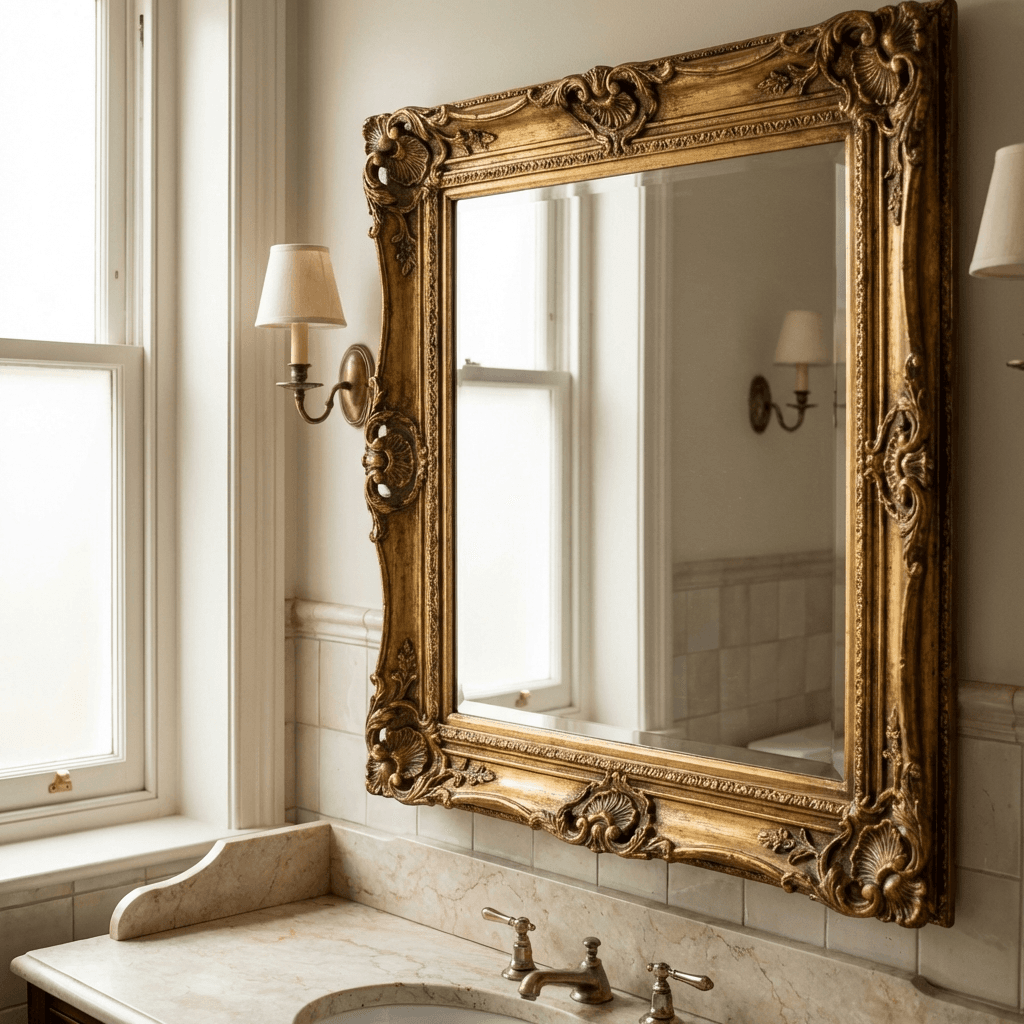
Frame the mirror with molding or choose an ornate gilded frame
Replace a plain plate-glass mirror with an ornate frame — a gold-leaf rectangle, a carved wood oval, or a mirror set within applied wall molding. The framed mirror is one of the fastest ways to elevate a bathroom from functional to traditional. For a double vanity, use two identical framed mirrors rather than one wide sheet of glass.
Furniture Recommendations
Key pieces for the perfect Traditional bathroom

Furniture-style vanity in dark wood
A 90-120 cm vanity crafted to look like a freestanding chest of drawers or washstand, in cherry or dark walnut with a Carrara marble top and an undermount porcelain sink. Turned legs or a shaped apron add furniture-grade detail. The hardware should be brass or polished nickel bail pulls matching the room's fixtures.

Clawfoot freestanding bathtub
A cast-iron clawfoot tub, 170-180 cm long, with a porcelain-enamel interior and a painted exterior in white, navy, or deep green. The ball-and-claw feet in polished nickel or brass anchor the tub visually. Pair with a hand-held shower attachment on a riser rail for daily use and a freestanding tub filler for baths.

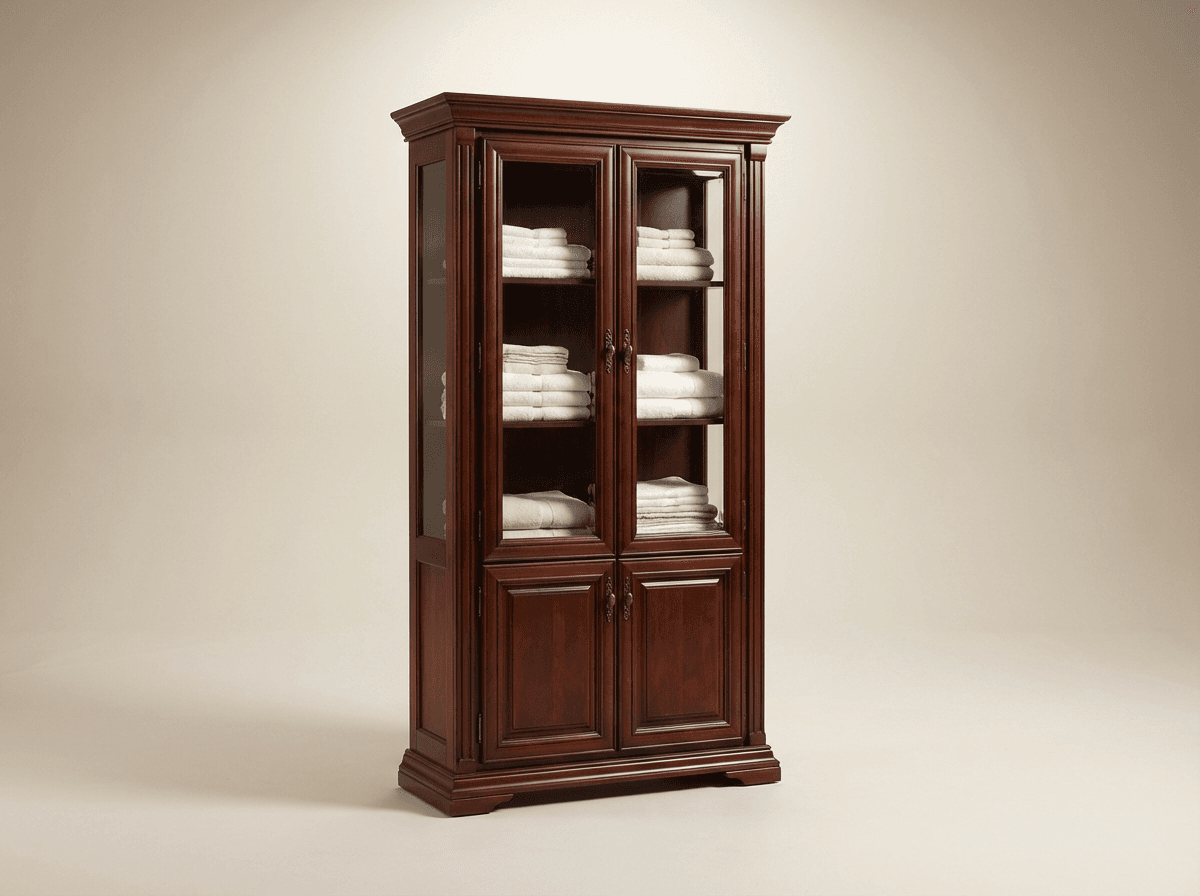
Glass-front linen cabinet
A tall, freestanding cabinet with glass-paned upper doors for displaying rolled towels and glass canisters, and solid lower doors for concealed storage. Finished in the same dark wood as the vanity, it provides the storage a traditional bathroom needs while acting as a beautiful piece of furniture.

This Room in Every Style
Explore more design styles for your bathroom
More Traditional Rooms
See Traditional design in other rooms
Frequently Asked Questions
Tout ce que vous devez savoir sur RoomLift — pour les designers, agents et tous ceux qui transforment des espaces avec l'AI.
- How do I create a traditional bathroom on a budget?
- Focus on three high-impact changes: swap your mirror for a framed one (gold-leaf frames are affordable), replace modern hardware with brass or oil-rubbed bronze fixtures, and add a marble-look vanity tray and accessories. A beadboard wainscoting kit and crown molding are also relatively inexpensive but dramatically change the room's character.
- What tile works in a traditional bathroom?
- Marble mosaic (basketweave, herringbone, or hexagonal) on the floor and subway tile or marble slab on the walls are the most classic choices. Use white or Carrara-toned tiles with dark grout for definition, or match grout to tile for a seamless look. Avoid large-format tiles or bold graphic patterns.
- Is a clawfoot tub practical for everyday use?
- Yes, with modifications. Add a riser rail and hand shower for daily bathing, and install a circular shower curtain rod if you need a full shower enclosure. Modern clawfoot tubs have improved drainage and are available in acrylic (lighter than cast iron) for easier installation. The bathing experience is generous — they are deep and wide.
- What hardware finish is best for a traditional bathroom?
- Polished nickel, antique brass, and oil-rubbed bronze are the most authentic options. Polished nickel reads as refined and slightly formal; antique brass adds warmth; oil-rubbed bronze creates a darker, more rustic traditional look. The key is consistency — match faucets, towel bars, hooks, and light fixtures in the same finish.
- How do I add storage to a traditional bathroom?
- A freestanding linen cabinet with glass doors, a wall-mounted shelf with brackets, baskets under a console vanity, and a small side table or stool beside the tub. Traditional bathrooms look best when storage feels like furniture rather than built-in cabinetry. A vintage ladder repurposed as a towel rack is another classic solution.
No credit card required. 10 free renders.