Kunden für Innenarchitektur gewinnen: der Pitch im Erstgespräch
Jun 24, 2026 · 9 Min. Lesezeit
Wie Sie als Innenarchitekt:in Kunden gewinnen: woher sie kommen, wie Sie schnell ein Portfolio aufbauen und mit welchem Pitch Sie das Erstgespräch für sich entscheiden.
Wie gewinnen Sie Kunden für Ihre Innenarchitektur? Der schnellste Weg ist nicht Werbung. Es ist die Kombination aus Empfehlungen aus Ihrem Netzwerk und sichtbarer, fotorealistischer Arbeit. Den Interessenten gewinnen Sie dann im Erstgespräch, indem Sie ihm ein Konzept seines eigenen Raums zeigen, statt es nur zu beschreiben. Neue Designer:innen, die mit einer fertig wirkenden Visualisierung auftreten, schließen Aufträge ab, bevor Mitbewerber überhaupt auf die Anfrage reagiert haben. Dieser Leitfaden zeigt, woher Kunden tatsächlich kommen, wie Sie schnell ein Portfolio aufbauen, mit welchem Pitch Sie das Erstgespräch gewinnen und wie aus einem Kunden viele werden.
Woher Kunden in der Innenarchitektur wirklich kommen
Bevor Sie einen einzigen Euro in Marketing stecken, sollten Sie wissen, welche Kanäle zahlende Kunden bringen. Sie sind nicht alle gleich.
| Kanal | Startkosten | Tempo bis zum ersten Kunden | Am besten für |
|---|---|---|---|
| Empfehlungen (Netzwerk, frühere Kunden) | Kostenlos | Schnell | Alle, besonders Einsteiger:innen |
| Kooperationen mit Maklern und Handwerkern | Kostenlos | Mittel | Stetige, wiederkehrende Pipeline |
| Instagram / Pinterest / TikTok | Kostenlos–gering | Mittel–langsam | Reputation und eingehende Anfragen |
| Houzz und Verzeichniseinträge | Kostenlos–gering | Mittel | Lokale Suchende mit hoher Kaufabsicht |
| Website + Google-Unternehmensprofil | Gering | Langsam | Langfristige Anfragen und Vertrauen |
| Bezahlte Anzeigen | Mittel–hoch | Schnell, aber teuer | Etablierte Designer:innen mit bewährtem Angebot |
Empfehlungen schließen am schnellsten ab, weil das Vertrauen bereits von der Person übertragen wurde, die Sie empfohlen hat. Die anderen Kanäle halten Ihre Pipeline zwischen den Empfehlungen voll und sorgen dafür, dass Sie glaubwürdig wirken, wenn ein empfohlener Interessent Sie unweigerlich online prüft. Wenn Sie die geschäftliche Seite noch aufbauen, geht unser Leitfaden zum Aufbau eines Innenarchitektur-Geschäfts genauer auf Preise, Verträge und Positionierung ein.
Schritt 1: Nutzen Sie Ihr Netzwerk, bevor Sie werben
Ihre ersten drei bis fünf Kunden kommen fast immer von Menschen, die Sie bereits kennen. Der Fehler vieler Einsteiger:innen ist, über den Wechsel ins Design zu schweigen.
Erstellen Sie eine einfache Liste: Freunde, Familie, ehemalige Kolleg:innen, Nachbarn, jeder, der schon einmal vom Umgestalten gesprochen hat. Sagen Sie ihnen klar, was Sie jetzt tun und dass Sie Projekte annehmen. Bieten Sie einer kleinen Gruppe eine vergünstigte oder kostenlose Raumgestaltung an, im Tausch gegen die Erlaubnis, das Ergebnis zu fotografieren, und ein Testimonial. Sie verschenken nicht Ihre Karriere. Sie kaufen Portfolio-Material und Mundpropaganda zum günstigsten Preis, den Sie je zahlen werden.
Diese Phase hat zwei Ziele: ein paar echte Projekte zum Vorzeigen und ein paar Menschen, die Sie weiterempfehlen.
Schritt 2: Schnell ein Portfolio aufbauen (auch ohne einen einzigen Kunden)
Ohne vorzeigbare Arbeit gewinnen Sie keine Kunden, und ohne erste Kunden kommen Sie nur schwer an vorzeigbare Arbeit. AI-Designtools durchbrechen diesen Kreislauf. Statt monatelang auf bezahlte Projekte zu warten, erstellen Sie in wenigen Tagen ein überzeugendes, fotorealistisches Portfolio.
Es gibt drei schnelle Wege, ein Portfolio zu füllen:
- Gestalten Sie Ihr eigenes Zuhause neu und dokumentieren Sie das Vorher und Nachher.
- Bieten Sie zwei bis drei kostenlose oder vergünstigte Makeover für Freunde an und machen Sie professionelle Fotos.
- Erstellen Sie Konzeptprojekte aus echten Inseratsfotos — nehmen Sie einen leeren oder veralteten Raum und zeigen Sie Ihre Designvision.
Die dritte Variante skaliert grenzenlos. Mit AI für Innenarchitektur laden Sie ein Raumfoto hoch, wählen einen Stil und erzeugen in unter einer Minute eine fotorealistische Neugestaltung, für rund 1 € bis 5 € pro Bild statt der hunderte Euro, die ein klassisches Rendering kostet. So zeigen Sie Bandbreite über Stile, Raumtypen und Budgets hinweg, ohne einen einzigen unterschriebenen Vertrag.
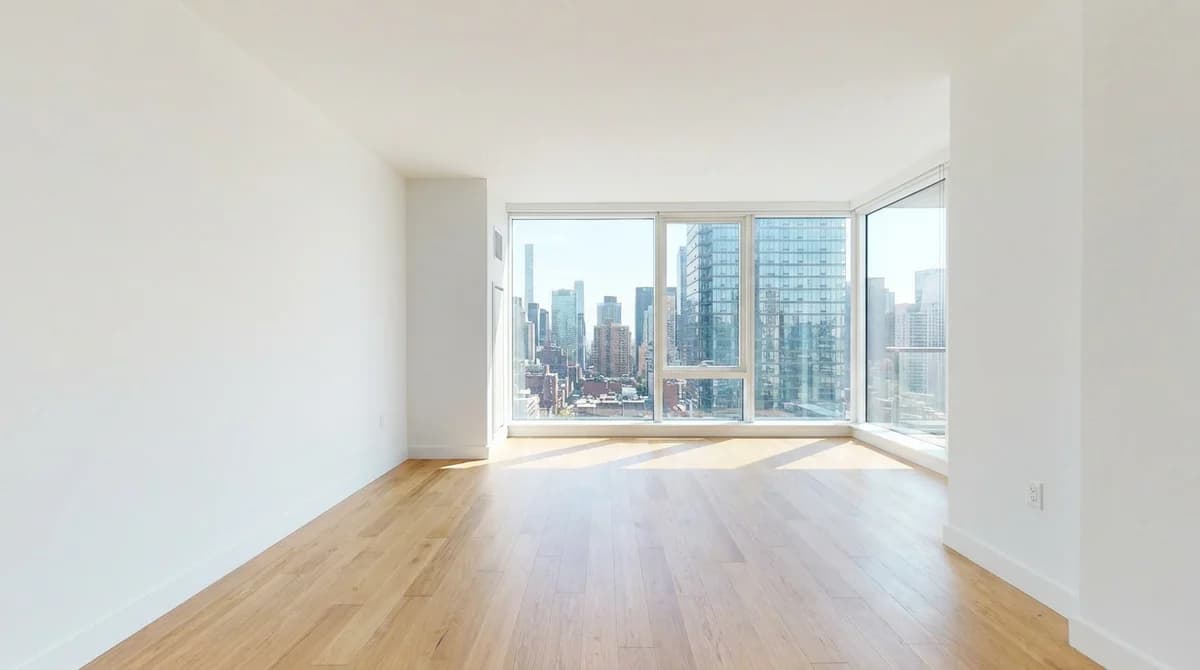
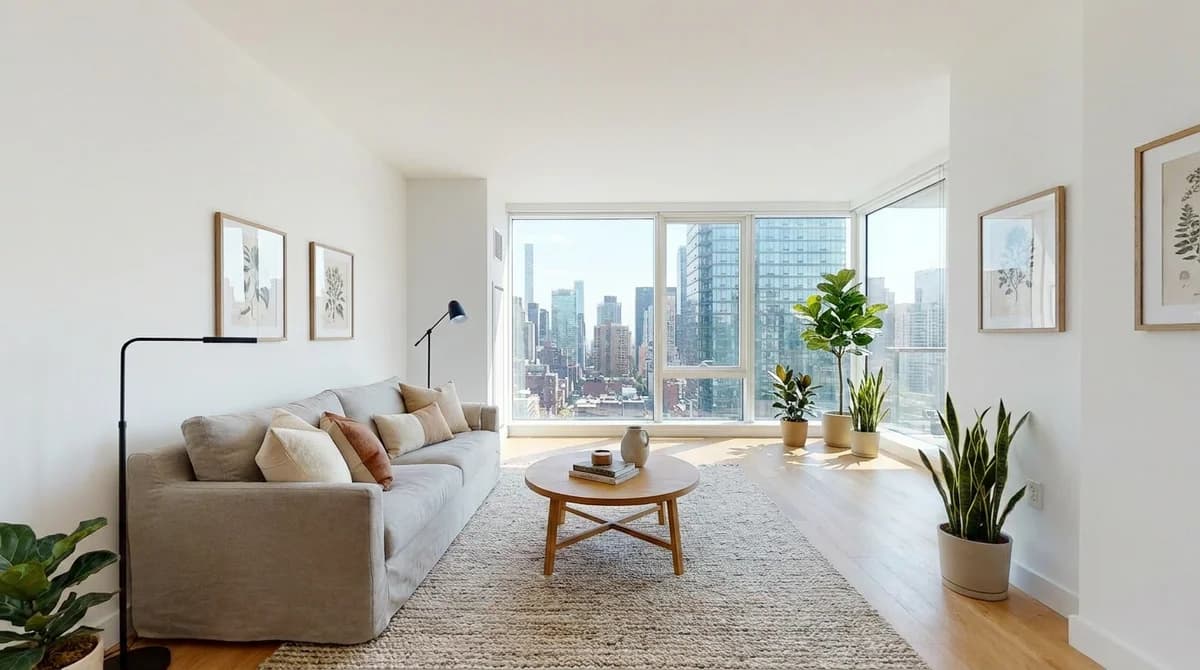
Ein Vorher-nachher-Slider wie der oben gezeigte ist das überzeugendste Element in einem Portfolio, weil er die Verwandlung zeigt und nicht nur ein hübsches Endergebnis. Interessenten kaufen die Veränderung.
Schritt 3: Der Pitch im Erstgespräch, der den Auftrag gewinnt
Genau hier verlieren die meisten Designer:innen Aufträge, die sie gewinnen sollten, und genau hier können Sie sich absetzen. Das typische Erstgespräch ist ein Gespräch: Der Interessent beschreibt seinen Raum, der Designer beschreibt Ideen, und am Ende vereinbart man, sich „wieder zu melden". In dieser Lücke zwischen Treffen und Folgetermin schauen sich Interessenten anderswo um und der Schwung verpufft.
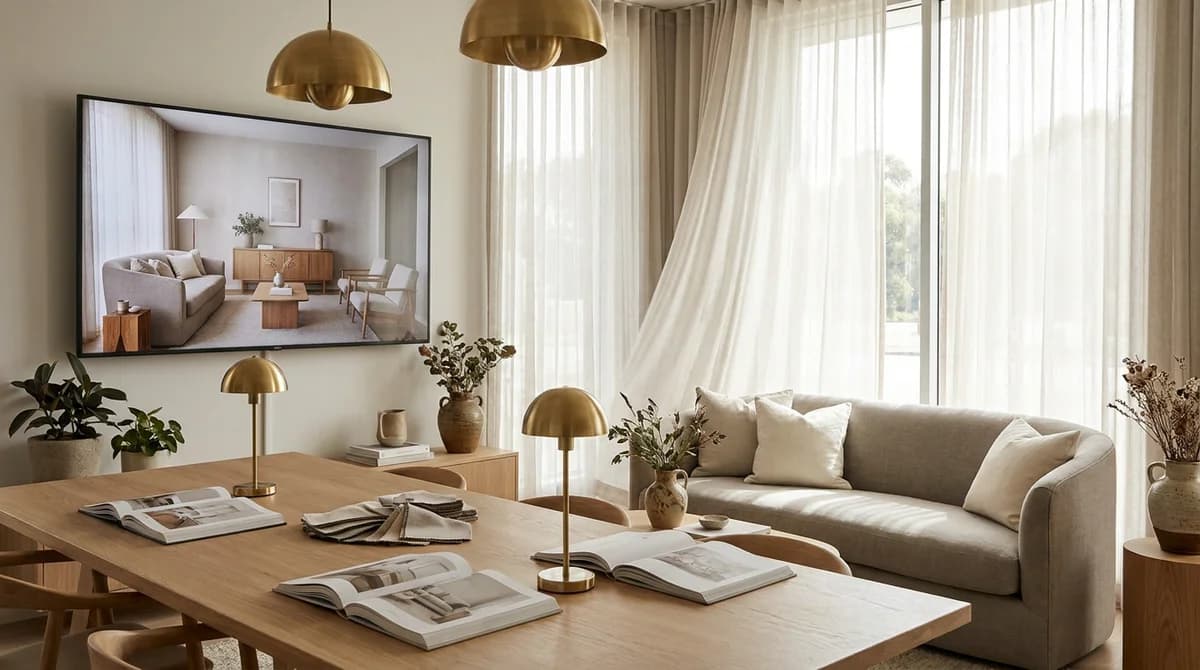
Gewinnen Sie den Pitch, bevor Mitbewerber reagieren, indem Sie zeigen statt erklären. Bitten Sie den Interessenten vor dem Termin um ein oder zwei Fotos des Raums. Erzeugen Sie dann ein fotorealistisches Konzept seines konkreten Raums und bringen Sie es mit.

Das eigene Wohnzimmer verwandelt zu sehen — kein Katalogfoto, kein vages Moodboard — bewirkt dreierlei auf einmal:
- Es schließt die Vorstellungslücke. Die meisten Kunden können sich einen leeren oder veralteten Raum fertig nicht vorstellen. Sie liefern ihnen die Antwort.
- Es überträgt sofort Glaubwürdigkeit. Eine fertig wirkende Visualisierung signalisiert Kompetenz schneller als jeder Portfolio-Durchgang.
- Es verkürzt den Verkaufszyklus. Während Mitbewerber einen zweiten Termin ansetzen, um „ein paar Ideen zusammenzustellen", besprechen Sie bereits Umfang und Vertragsabschluss.
Es ist genau der Ablauf, mit dem Designer:innen Kundenfreigaben gewinnen, und er funktioniert ebenso gut, um den Kunden überhaupt erst zu gewinnen. Sie können mehrere Stilrichtungen für denselben Raum erzeugen und den Interessenten reagieren lassen. Das dient zugleich dazu, seinen Geschmack zu erkunden.
Gehen Sie in Ihren nächsten Pitch mit einem fotorealistischen Konzept des konkreten Kundenraums, erstellt in unter 60 Sekunden. Jetzt kostenlos gestalten.
Stage your first room in 20 seconds. No design skills needed.
Lenken Sie das Gespräch nach der Präsentation auf Ergebnis und Umfang, nicht auf Ihren Stundensatz. Beginnen Sie damit, wie sich der fertige Raum anfühlen wird und was das Projekt umfasst. Bepreisen Sie das Paket, nicht die Minuten.
Schritt 4: Den ersten Kunden so bepreisen, dass er sich festlegt
Sich für die ersten Kunden zu unterbieten ist verlockend und meist ein Fehler. Es zieht Schnäppchenjäger an und stellt Sie als billig dar. Strukturieren Sie Ihr Angebot stattdessen so, dass der Interessent sich früh finanziell bindet.
| Preismodell | Übliche Spanne (Einsteiger:innen) | Wann sinnvoll |
|---|---|---|
| Bezahlte Beratung | 150–500 € € | Anfragen qualifizieren, für den Pitch bezahlt werden |
| Stundensatz | 50–150 € € / Stunde | Kleine Aufträge mit unklarem Umfang |
| Pauschale pro Raum | 1.000–5.000 € € / Raum | Die meisten Wohnprojekte |
| Prozent des Budgets | 10%–30% des Projekts | Größere, möbelintensive Projekte |
Eine bezahlte Designberatung oder ein Konzeptpaket vorab erfüllt zwei Zwecke: Es filtert Schaufensterbummler heraus und sorgt dafür, dass der Interessent vor Projektstart bereits etwas zu verlieren hat. Das fotorealistische Konzept, das Sie ins Erstgespräch mitgebracht haben, ist genau das, was Sie als Paket schnüren und berechnen können.
Schritt 5: Aus einem Kunden viele machen (Empfehlungen und Spezialisierung)
Ein einzelner zufriedener Kunde ist der Anfang einer Pipeline, nicht das Ende eines Auftrags. Zwei Schritte verstärken Ihre frühen Erfolge.
Bitten Sie im Moment der größten Freude um Empfehlungen. Dieser Moment ist die Präsentation, wenn der Kunde seinen fertigen Raum zum ersten Mal sieht. Sagen Sie nicht „Melden Sie sich, wenn Sie jemanden kennen". Bitten Sie um eine konkrete Vorstellung: „Kennen Sie eine Person, die erwähnt hat, einen Raum umgestalten zu wollen?" Konkrete Bitten bekommen konkrete Antworten.
Spezialisieren Sie sich, um empfohlen zu werden. Man wird viel leichter weiterempfohlen, wenn man für etwas bekannt ist: kleine Wohnungen, Ferienwohnungen, Familienhäuser oder einen bestimmten Stil. Eine Nische macht Mundpropaganda präzise und Ihr Marketing schärfer. Sie lässt Sie außerdem über Expertise statt über den Preis konkurrieren.
Bauen Sie schließlich Empfehlungspartnerschaften mit den Profis auf, die Ihre Kunden zuerst erreichen: Makler, deren Immobilien gut aussehen müssen, Handwerker mitten in der Renovierung und Home-Stager. Wenn Sie auch Verkäufer:innen bedienen: Die Forschung zum Home-Staging spricht für Sie. Laut National Association of Realtors verkaufen sich eingerichtete Immobilien schneller als leere, und die Real Estate Staging Association berichtet, dass eingerichtete Immobilien im Schnitt 1 bis 5 Prozent mehr erzielen. Designer:innen, die einem Makler ein eingerichtetes Konzept einer Anzeige zeigen können, werden zum Empfehlungsmagneten.
Wenn Sie das strukturiert verpacken möchten — konzeptbasierte Pitches, mehrere Stiloptionen, schnelle Lieferung — zeigt unsere Seite zu Online-Innenarchitektur den durchgängigen Ablauf, den Sie für Ihre eigene Praxis anpassen können.
Häufig gestellte Fragen
Wie kommen Innenarchitekt:innen zu ihren ersten Kunden?
Die meisten neuen Designer:innen gewinnen ihre ersten Kunden über das eigene Netzwerk, nicht über Kaltakquise. Erzählen Sie jedem Kontakt, was Sie machen, bieten Sie zwei bis drei Freunden eine günstige Raumgestaltung an, um ein Portfolio aufzubauen, und bitten Sie danach jeden zufriedenen Kunden um eine Empfehlung. Ergänzen Sie das mit einem gepflegten Instagram-Profil oder einer Website, die Vorher-nachher-Arbeiten zeigt, und tragen Sie sich bei Houzz ein. Empfehlungen und sichtbare Arbeit überzeugen am Anfang schneller als Werbung.
Wo finden Innenarchitekt:innen ihre Kunden?
Über fünf Hauptkanäle: persönliche und berufliche Empfehlungen, Social Media (Instagram, Pinterest, TikTok), Verzeichnisplattformen wie Houzz, Kooperationen mit Maklern, Handwerkern und Home-Stagern sowie lokale Suche über Website und Google-Unternehmensprofil. Empfehlungen konvertieren am besten, aber eine starke visuelle Präsenz füllt den Funnel dazwischen.
Wie baue ich ein Innenarchitektur-Portfolio ohne Kunden auf?
Gestalten Sie Ihr eigenes Zuhause neu, bieten Sie zwei bis drei kostenlose oder vergünstigte Makeover für Freunde an oder erstellen Sie Konzeptprojekte aus echten Inseratsfotos. AI-Designtools beschleunigen das: Sie erzeugen fotorealistische Vorher-nachher-Konzepte in unter 60 Sekunden für rund 1 € bis 5 € pro Bild. So entsteht ein überzeugendes Portfolio in Tagen statt Monaten.
Wie gewinne ich einen Kunden schon im Erstgespräch?
Zeigen statt erklären. Kommen Sie mit ein oder zwei fotorealistischen Konzepten des konkreten Raums Ihres Interessenten, nicht mit einem generischen Moodboard. Den eigenen Raum verwandelt zu sehen schließt die Vorstellungslücke, schafft sofort Vertrauen und lässt Sie abschließen, während Mitbewerber noch Folgetermine vereinbaren. Lenken Sie das Gespräch danach auf Ergebnis und Umfang, nicht auf Ihren Stundensatz.
Was sollte ich neuen Kunden in der Innenarchitektur berechnen?
Neue Designer:innen berechnen häufig 50 € bis 150 € pro Stunde, eine Pauschale von 1.000 € bis 5.000 € pro Raum oder 10 bis 30 Prozent des Projektbudgets. Viele starten mit einer bezahlten Beratung von 150 € bis 500 €, um Anfragen zu qualifizieren und für den Pitch bezahlt zu werden. Berechnen Sie ein Konzeptpaket vorab, damit Interessenten gebunden sind, bevor das eigentliche Projekt beginnt.
Wie bekomme ich mehr Empfehlungen in der Innenarchitektur?
Bitten Sie genau dann darum, wenn der Kunde am glücklichsten ist, meist bei der Präsentation, und bitten Sie um einen konkreten Namen statt um eine vage Bitte. Bleiben Sie mit einem kurzen Follow-up nach einigen Monaten präsent und bauen Sie Empfehlungspartnerschaften mit Maklern, Handwerkern und Home-Stagern auf, die dieselben Kunden bedienen. Ein einziger zufriedener Kunde, der einen Freund weiterempfiehlt, kann eine junge Praxis innerhalb eines Jahres verdoppeln.
Bereit, Ihre Anzeigen zu transformieren?
Richten Sie Ihren ersten Raum ein in 20 Sekunden. Keine Designkenntnisse nötig.